
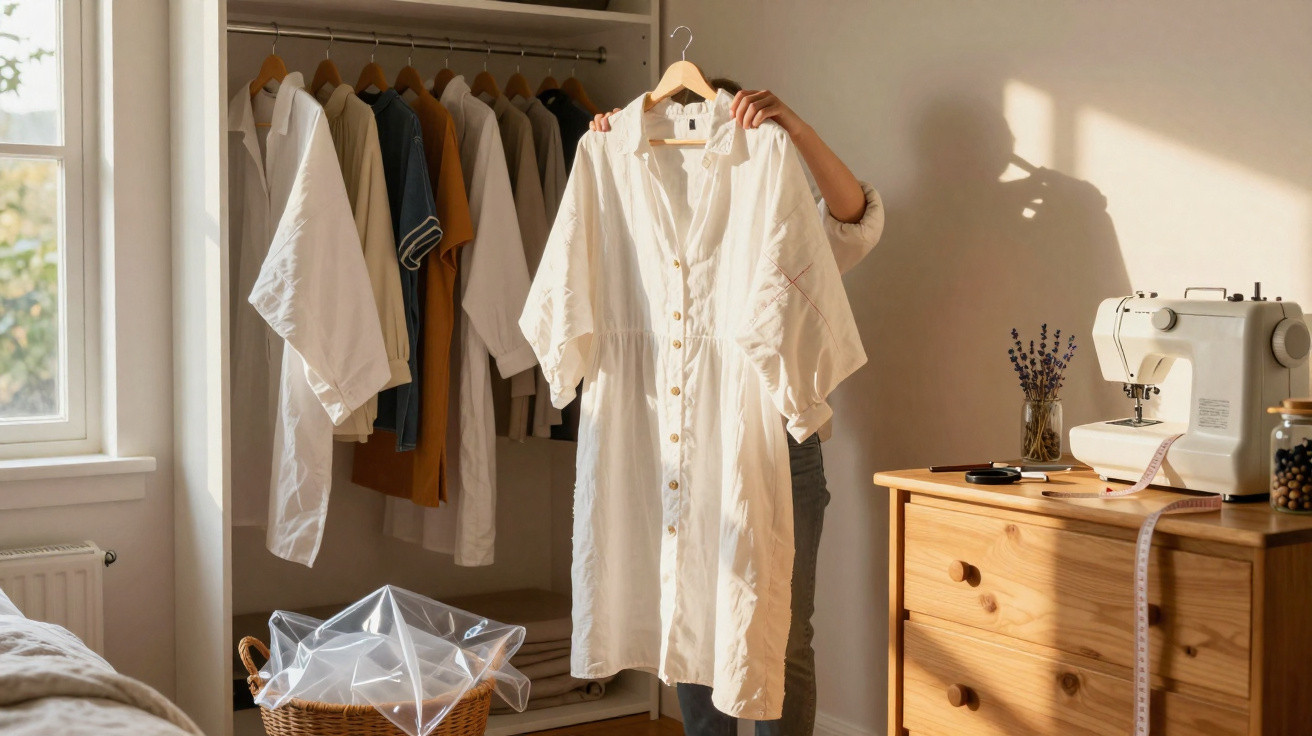
Every spring brings the same routine: heavy coats, wool jumpers and occasion dresses are moved to the back of the wardrobe, while lightweight blouses and T-shirts take their place at the front. Many people automatically reach for plastic garment covers from a furniture store or online retailer. They may seem practical initially, but over several months they can cause more harm than expected. A far better, healthier and even free alternative is a simple old bed sheet.
Why plastic damages your clothes over time
Moisture, mildew marks and static electricity
Plastic covers turn the wardrobe into a miniature greenhouse. They do not allow air to circulate and trap every trace of remaining moisture inside. If you put a winter coat into a sealed cover after its last walk in slightly misty weather, that damp film is locked in too.
“In a closed plastic cover, moisture can barely escape – creating the ideal breeding ground for mildew marks, musty smells and yellowed patches.”
Synthetic covers also build up static electricity quickly. This attracts dust, which settles around collars and shoulders. Delicate knitwear is particularly affected: fibres cling together, individual threads are pulled, and the fabric soon looks more worn. Using plastic for high-quality wool coats, suits or formal dresses can therefore unknowingly shorten their lifespan.
Suffocated fibres rather than breathable fabrics
Clothing needs air circulation. Natural fibres such as cotton and wool continually release and reabsorb tiny amounts of moisture over weeks and months. In an airtight cover, this exchange is unable to happen properly. As a result, garments can feel dull, clammy or slightly “old” when unpacked, even if they were stored freshly washed.
There is also the familiar plastic smell, which gradually transfers to clothing. People with a sensitive sense of smell notice it immediately when they open the wardrobe again in autumn for the colder season.
The overlooked all-rounder: old bed sheets
Cotton and linen as a natural protective layer
Many homes have older bed sheets and duvet covers tucked away in a cupboard: no longer attractive enough for the bed, yet too good to throw away. These are exactly the items that make ideal protective covers for clothes.
“A plain cotton or linen sheet protects against dust, lets air reach the fabric and prevents heat build-up – all without creating plastic waste.”
The benefits of natural fibres at a glance:
- Breathable: Moisture can escape, so clothing does not “sweat”.
- Dust protection: Dirt particles settle on the sheet rather than on the jacket.
- Gentle: No static charge, less friction and soft contact with the fabric.
- Sustainable: An existing textile is given a second life instead of going into the bin.
Heavier cotton, linon or an old linen sheet work especially well. These fabrics are durable, drape neatly over garments and even look far more refined in a wardrobe than shiny plastic.
How wardrobe conditions noticeably improve
Anyone who switches to fabric covers will notice a clear change after a few months. Opening the wardrobe doors no longer releases a stale, enclosed smell. Clothes smell neutral or faintly of laundry detergent, rather than plastic or a cellar.
Natural fibres absorb excess humidity from the air and release it again. This makes yellowish marks around collars or underarms on white shirts less likely. Woollen pieces also remain softer because they are not hanging in a “plastic sauna”, but are loosely covered instead.
Step by step: turning an old bed sheet into a garment cover
Materials that almost everyone already has
Only a few items are needed to make a simple but effective garment cover, and most people already have them at home:
- 1 old bed sheet or duvet cover, ideally made from sturdy cotton or linen
- 1 sharp pair of fabric scissors
- 1 needle and some thread, or a sewing machine
- Wooden hangers for coats, jackets or dresses
If you do not have a sewing machine, hand stitching will do. The seams do not need to be perfectly straight: the cover needs to be sturdy, not ready for a catwalk.
Sewing a protective cover in just a few steps
The method is similar to making a simple pillowcase:
- Cut a rectangle: For standard jackets, cut a piece measuring roughly 100 cm long by 60 cm wide for each cover.
- Fold it: Fold the fabric lengthways down the centre so that one long edge is closed.
- Sew: Stitch the two open long sides and the lower edge together. Leave the top edge open for now.
- Make an opening for the hook: Cut a small slit of a few centimetres in the middle of the top edge.
- Finish the edges: Fold over and stitch the edges around the slit so they do not fray.
- Insert the hanger: Put the hanger into the jacket, coat or dress, pull the cover over it, and pass the hook through the slit.
“In less than a quarter of an hour, an old bed sheet becomes a made-to-measure cover – often sturdier and more attractive than shop-bought versions.”
If you wish, organise the covers by size: shorter ones for blazers, longer versions for coats or evening dresses. A large duvet cover can provide enough fabric for several covers.
What your clothes gain in the long term
Less yellowing and no musty odours
Lighter items, including white shirts, blouses and wedding dresses, are especially sensitive to poor storage conditions. Yellow stains, particularly around shoulders and collars, develop more quickly in airtight covers. Fabric covers made from natural fibres act as a buffer.
Textiles retain their original colour for longer, smell fresh and feel ready to wear straight away, even after spending the whole summer or winter in the wardrobe. This gentle storage method is especially useful for anyone who prefers a smaller, high-quality wardrobe.
Greater everyday sustainability without feeling deprived
Moving away from plastic covers is also a small yet noticeable step towards a more sustainable home. Instead of buying new organisers, you make use of materials already available. That saves money, conserves resources and reduces waste.
Many people also find that the wardrobe feels calmer and more harmonious when fabric covers in muted shades replace rustling plastic. The clothing collection takes on almost a boutique-like character, without requiring expensive fittings.
Practical additions for a healthy wardrobe
Natural aids against odours and moths
If you are already reorganising the wardrobe, a few simple extras can be included:
- Small sachets filled with lavender or cedarwood shavings for fragrance and moth deterrence
- A small bowl of bicarbonate of soda in the wardrobe to absorb moisture and odours
- Briefly airing the wardrobe on a regular basis by leaving the doors open for a few hours during the day
Together with textile protective covers, these measures create a much more pleasant environment for clothes – and for everyone choosing something to wear in front of the wardrobe each morning.
When fabric covers are particularly useful
This technique is not limited to a conventional bedroom wardrobe. Homemade covers from old bed sheets are also extremely useful in the following places:
- In a cellar or loft, where seasonal clothing is hung
- In a guest room used to store less frequently worn items
- For traditional costumes, evening dresses or suits that are worn only once or twice a year
If space is limited, leave the covers open at the bottom. The fabric will then fall loosely over the clothes, keeping dust away without obstructing air circulation.
An old bed sheet therefore becomes a simple, clever tool that protects your wallet, the environment and treasured clothes at the same time – while looking surprisingly professional in the wardrobe.





Comments
No comments yet. Be the first to comment!
Leave a Comment