
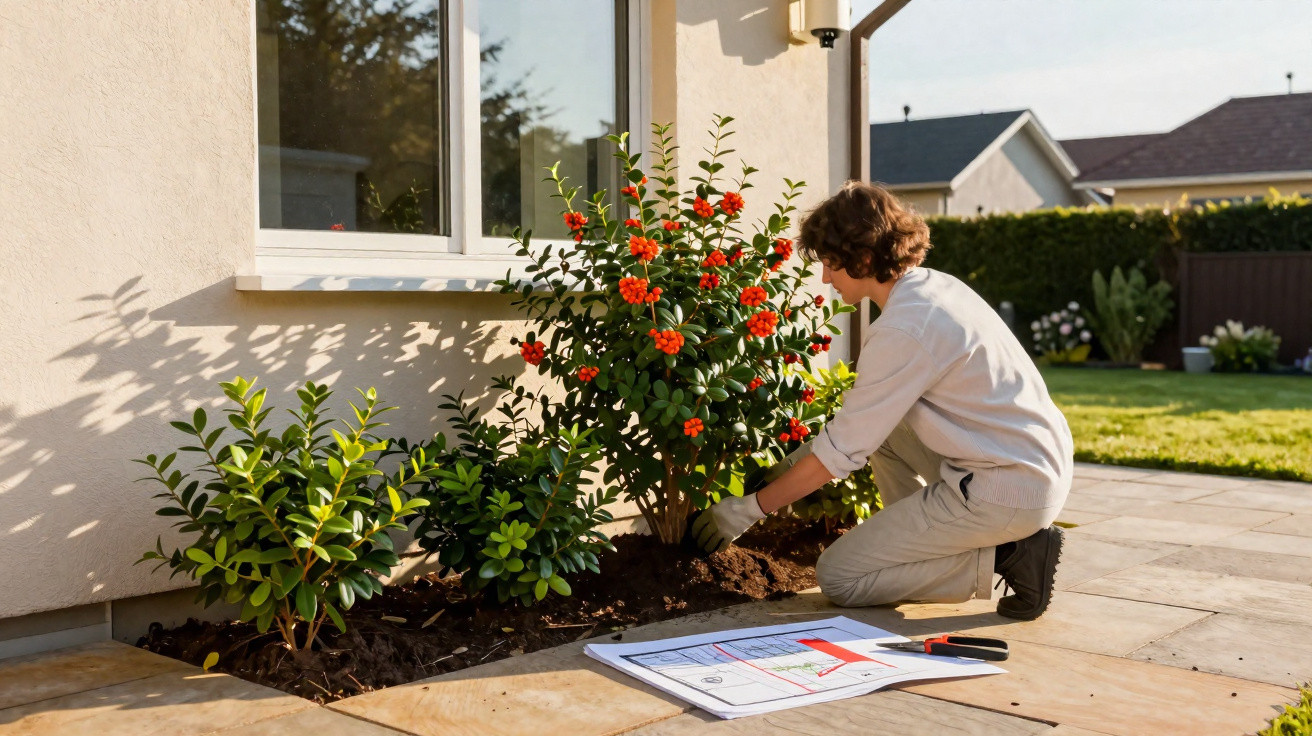
Home alarms, cameras and security doors are the familiar choices for burglary prevention. Yet many homeowners overlook their own garden, even though it can become a surprisingly effective line of defence. By placing deliberately chosen, unpleasantly thorny plants, you can make access to the house so unattractive that burglars are more likely to move on.
Why thorny shrubs genuinely deter burglars
A burglar will always favour the simplest route: get in quickly, leave quickly, stay as quiet as possible and avoid any risk of injury. This is exactly where a defensive garden can help. Dense shrubs with formidable thorns slow every movement, scratch skin and clothing, and create noise when branches snap or someone gets caught while trying to rush through.
“The more uncomfortable the access, the more likely offenders are to avoid choosing your property in the first place.”
Security specialists have long pointed out that a well-designed plot can make burglary considerably more difficult. This includes:
- thorny hedges at likely points of entry
- noisy gravel on paths and beneath windows
- motion-sensor lighting in dark corners
- an unobstructed view of the front door from the street
Plants are not a replacement for an alarm system. Instead, they complement one – and work around the clock without electricity, an app or a subscription.
Four plants that turn the garden into a thorny barrier
There are countless thorn-bearing shrubs, but four types are particularly suitable for planting close to a home. They are hardy, comparatively easy to maintain and exceptionally unpleasant to force a way through.
Pyracantha – firethorn as a natural roll of barbed wire
Pyracantha, commonly known as firethorn, is the classic choice for defensive hedging. It forms dense growth, responds well to pruning and produces razor-sharp thorns that few people would willingly contend with.
- Best location: along fences and walls, or below low windows
- Spacing: approximately 50 to 70 centimetres between plants
- Height: easily maintained at 1.5 to 2 metres
Anyone attempting to climb through a firethorn hedge is likely to come away with bloody scratches. For burglars, that means a greater chance of leaving DNA traces – an additional deterrent.
Berberis – the understated but relentlessly prickly barrier
Barberries may appear harmless at first glance, and some varieties even look decorative with their reddish foliage. Their thorns tell a different story: short, hard and extremely uncomfortable.
- Best location: side passages, narrow paths and concealed routes beside the house
- Advantage: compact growth that requires little space
- Effect: turns convenient shortcuts into genuine no-go areas
A row of barberries can almost completely block transitions from the street into parts of the garden that are not directly visible. Anyone trying to push through will quickly realise the effort is not worthwhile.
Rosa rugosa – a robust shrub rose belt beneath windows
Shrub roses such as Rosa rugosa may look romantic – until someone tries to step through the middle of them. Their branching stems and numerous prickles create an effective protective strip beneath windows while remaining visually appealing.
- Best location: beneath easily accessible windows and in front of patio doors
- Effect: makes it harder to position ladders or brace against the building
- Additional benefit: attractive flowers and rose hips loved by insects and birds
Burglars prefer fast, unrestricted movement. Having to cross a wide band of shrub roses means catching on prickles, getting snagged and making noise – a nightmare for anyone trying to remain unnoticed.
Cherry laurel – dense privacy screening in front of glazing
Cherry laurel does not prick, but it offers a different benefit: a dense visual barrier. Planted in front of large glazed areas, such as picture windows or full-height doors, it can significantly reduce temptation because people can no longer casually look into the living room.
- Best location: in front of conservatories, patio fronts and large window areas
- Function: privacy screening and a barrier against direct approaches to glass
- Feature: evergreen, so it remains effective throughout the year
Combined with thorny shrubs along either side, it creates a boundary that slows down curious looks and opportunistic attempts to gain entry.
How to arrange the plants without turning the garden into a fortress
No one wants their garden to resemble a fortress. With some planning, defensive plants can be incorporated in a way that looks balanced while still providing a clear deterrent.
“The key is to reinforce only the critical access points while keeping every route for residents and emergency services clearly open.”
A practical basic layout could look like this:
- Street-facing side: cherry laurel as a privacy hedge, with a broad gravel strip at its base.
- Side boundaries: a densely planted mixed hedge of firethorn and barberry.
- Beneath ground-floor windows: bands of shrub roses at least one metre deep.
- Main entrance: a fully gravelled path to the front door with good lighting.
The front door should remain clearly visible rather than concealed behind shrubs. This helps visitors feel safe and allows neighbours to keep an overview if necessary.
Legal spacing and safety hazards in your own garden
Before reaching for the spade and hedge trimmers, it is worth checking the neighbouring-property rules in your federal state. Many regulations set minimum distances from the boundary, especially for taller hedges.
As a broad guide, a hedge exceeding two metres often has to be planted around two metres from the boundary. Exact requirements differ by region, so a quick check with the local council or town administration can prevent disputes later on.
Safety for children and visitors also matters. Extremely thorny shrubs should not be planted immediately beside:
- play equipment
- trampolines
- pool or pond edges
- heavily used narrow garden paths
Planting too close in these areas simply shifts the risk of injury from burglars to your own family.
Maintenance: when defensive plants become a risk to you
Thorny hedges can also work against you. If they are not pruned regularly, they can develop into dense thickets where people and animals may hide. Rather than disturbing burglars, they can then provide ideal cover.
Prune them once a year, or preferably twice. When doing so:
- Aim for open, clear forms rather than impenetrable walls.
- Maintain sightlines around entrances and garages.
- Light concealed corners with motion sensors.
Anyone maintaining these plants without gloves and long sleeves will soon understand why they are so effective – they are simply uncomfortable.
How plants, technology and behaviour work together
A thorny garden by itself will not prevent a professional burglary. The approach becomes genuinely strong when several layers work together:
| Element | Benefit |
|---|---|
| Thorny plants | make access harder, increase the risk of injury and create noise |
| Gravel areas | make heavy footsteps almost impossible to keep silent |
| Motion-sensor lighting | surprises intruders and signals activity |
| Security windows and doors | significantly extend the time required to gain entry |
| Alert neighbours | increase the risk of being observed |
Together, these measures create an environment in which offenders have to overcome obstacle after obstacle while rarely feeling unobserved.
Practical measures for the holiday period
Even if you do not want to undertake major planting just before travelling, you can still take action. Several quick measures make use of existing features:
- Spread gravel or chippings in front of the patio door and basement lightwell.
- Fit motion sensors on the rear side of the house.
- Cut back bushes so that windows are plainly visible.
- Do not leave high-value garden furniture and equipment openly on display.
Over the medium term, it is worth creating a plan that positions the four plant types mentioned above strategically. Planting in spring will often produce a noticeable barrier by the following year.
Risks, misunderstandings and sensible combinations
Some homeowners rely too heavily on appearance. A pretty flowering hedge with loose growth will not stop anyone. What matters is thorns, density and placement directly at potential points of entry.
Another misconception is: “The denser, the safer.” A completely opaque hedge can conceal offenders perfectly once they are inside. A better option is a combination of defensive planting and visibility. Being able to spot someone lingering in the front garden from outside gives you a clear advantage.
The concept becomes especially effective when defensive plants are paired with everyday habits: neighbours who occasionally empty the letterbox, lights operated on timers, and a car that is not left in the same spot permanently. The thorns then handle the final, unpleasant part – making a burglary so uncomfortable that many offenders do not even begin.






Comments
No comments yet. Be the first to comment!
Leave a Comment