
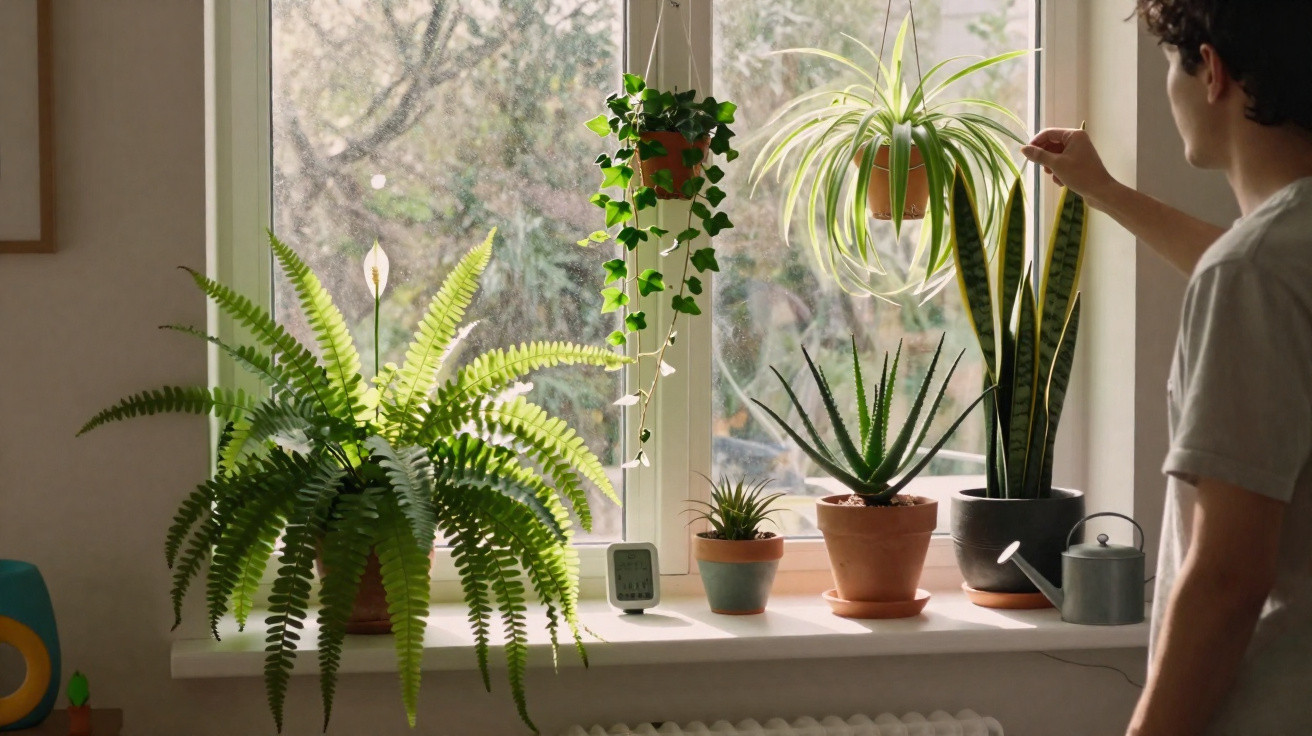
Waking up to a wet window frame is often a sign that the humidity in your home is out of balance. Rather than immediately reaching for specialist paint or harsh chemicals, part of the issue can be tackled surprisingly simply: with carefully chosen houseplants placed right on the windowsill.
Why damp windows are more than a cosmetic issue
Warm indoor air is able to hold far more moisture than cold outdoor air. When this humid air meets a cold windowpane in winter, it cools rapidly. The excess water then forms tiny droplets: condensation.
If this moisture remains on the glass, frame and seals day after day, two things can happen. Paintwork may swell, silicone can become brittle, and micro-organisms find ideal conditions. Small grey specks tend to appear in corners first; later, they can develop into a black coating: mould.
Once relative humidity remains above around 60 per cent for prolonged periods, the risk of condensation and mould rises considerably.
Indoor-environment specialists recommend relative humidity of between 40 and 60 per cent in living spaces. A simple hygrometer on the windowsill will quickly reveal whether the readings are suitable. Anyone regularly exceeding this range will recognise the consequences:
- misted-up, milky-looking panes in the morning
- water droplets running down the window frames
- a musty smell, particularly in corners and alcoves
- the first black marks on silicone seals and wallpaper
As well as causing damage to the building, this can lead to health concerns, including aggravated allergies or asthma symptoms. Damp windows are therefore a genuine warning sign, not merely an unsightly nuisance.
How houseplants on the windowsill can help with damp
Many houseplants originate in tropical climates. Although they thrive in humid air, they can also actively absorb water from their surroundings. Their leaves and roots act as small moisture buffers, taking in water and releasing it again with a delay.
This helps to reduce humidity peaks. In particularly damp locations - usually directly beside windows where condensation develops - plants absorb some of the moisture. Over the course of the day, they release this water back into the room more gradually through evaporation. The result is a slightly more balanced climate around the window frame.
Several studies into indoor air quality also suggest that certain species can filter pollutants from the air. This additional benefit is especially welcome on kitchen windows, where cooking vapours, grease and moisture often combine.
Plants are not a replacement for airing a room or for a working ventilation system - they are a natural additional measure for easing pressure on critical damp areas.
To prevent mould problems from developing in the plant pot itself, follow these rules:
- use a pot with a drainage layer of expanded clay or gravel
- empty the saucer after watering
- do not keep the compost permanently soaking wet
- remove yellow leaves and plant debris regularly
Six suitable plants for damp windowsills
1. Boston fern - the classic choice for bathrooms and kitchens
The Boston fern feels at home in humid rooms. It prefers bright but largely indirect light, along with air that can be a little more “humid”. A bathroom or kitchen windowsill where condensation often collects in the morning is an ideal spot.
Its delicate fronds create a very large surface area for evaporation. As a result, the plant takes in plenty of moisture from the air and works like a natural sponge. At the same time, it brings rich green colour to practical rooms that can otherwise feel rather plain.
2. Peace lily - attractive, effective and somewhat toxic
The peace lily, which is often sold under this name, is considered a hardy plant for beginners. It suits semi-shaded window positions and copes easily with high humidity. Its leaves can absorb a noticeable amount of water, helping to ease the climate around the window.
However, households with pets should keep it out of the reach of cats and dogs. Its leaves and flowers contain substances that are toxic if eaten. A narrow windowsill in a bathroom or hallway is therefore an ideal place for a peace lily.
3. English ivy - the climber for mould-prone corners
English ivy is among the species that cope particularly well with humid, fairly cool air. It performs well in many studies of indoor-air purification: it binds certain pollutants and is also comfortable in slightly draughty areas near windows.
A hanging pot near a vulnerable kitchen or cellar windowsill makes good use of rising humid air. It also adds greenery to the often bare space above radiators and gives the room more structure.
4. Spider plant - an easy air-improver for the living room
The spider plant will grow in almost any position, provided it receives sufficient light without direct midday sun. A living-room window generally offers exactly that: plenty of brightness but usually no excessive heat.
Its long, arching leaves add extra surface area for absorbing moisture. It is regarded as easy to care for, forgives watering mistakes and quickly produces offsets, making it ideal for filling several windowsills at once.
5. Aloe vera - a succulent for very bright windows
Aloe vera is originally a desert plant, yet it does surprisingly well on very bright, slightly cooler windowsills. Its thick leaves retain water internally, so it needs watering only rarely.
Aloe vera remains resilient at strongly sunny windows where other plants may scorch. While it is sensitive to waterlogging, it can still draw some moisture from its surroundings. Anyone using the leaves carefully also has access to a popular gel for minor skin irritations.
6. Snake plant - tough and ideal for bedrooms
The snake plant, also commonly called mother-in-law’s tongue, is considered almost indestructible. It tolerates changing temperatures well and also copes with dry air from central heating. It will usually be happy by a cool bedroom window that experiences occasional high humidity.
Its upright leaves absorb moisture and release oxygen at night - an advantage, particularly in bedrooms. Here too, it is better to water too little than too much so that the roots do not rot.
Combining plants, ventilation and simple measures
Anyone hoping to prevent mould should treat houseplants as one part of an overall approach. A practical everyday routine could look like this:
- Air rooms through for ten minutes each morning, opening windows wide and turning down the heating briefly.
- Wipe away condensation with a cloth instead of allowing it to dry naturally.
- Position suitable plants specifically on the dampest windowsills.
- Do not fully cover radiators, so that air can circulate.
- Monitor the hygrometer and act quickly if readings exceed 60 per cent.
People living in rented accommodation cannot usually just install new windows. Well-positioned plants, regular ventilation and correct heating can then provide a practical three-part approach to keeping damage to a minimum.
When plants reach their limits
Some issues cannot be solved, however many pots are placed on the windowsill. If water is entering the wall through leaking frames, professional repair work is the only answer. The same applies where large areas of wall are already affected by mould.
Warning signs that should be assessed by professionals include:
- large damp patches on walls or ceilings
- flaking plaster or swollen wallpaper
- a mouldy smell that barely disappears despite ventilation
- persistent breathing problems or irritated eyes in particular rooms
Practical tips for everyday life with damp-window plants
Those just getting started should not fill every windowsill straight away. It makes more sense to trial plants at one or two typical problem windows, such as those in the bathroom and kitchen. Place a hygrometer beside them and check over the following weeks whether humidity levels become measurably more stable.
A combination of different plant types can be useful: a large-leaved plant such as a peace lily, supplemented by trailing English ivy and a spider plant. This creates varying heights and evaporation surfaces, which may enhance the effect while also making the display more visually interesting.
If mould frequently develops in plant compost, consider using a mineral substrate or mixing expanded clay into part of the compost. The right pot matters too: pots with drainage holes and saucers are clearly preferable to sealed containers.
Carefully selected houseplants on the windowsill offer more than decoration. They can improve the indoor climate to some extent, give damp problem areas a greener appearance and may help to make windows less hospitable to mould in the first place.





Comments
No comments yet. Be the first to comment!
Leave a Comment