
The first warning is so subtle that it is easy to dismiss. Water lingers in the sink for a little longer than usual, the pipes give off a soft gurgle, or a pale ring of soap scum appears to return overnight. You promise yourself you will sort it out “tomorrow”. A day becomes a week, and then, on an evening when you are already running late, the kitchen sink stops draining. You are left looking at a greasy little pool reflecting the light overhead.
Out come the familiar remedies: vinegar and baking soda. You pour them in, wait and listen. Nothing changes. There is only the sharp smell and the same immovable puddle.
For a brief, frustrating moment, you wonder whether there is an easier answer.
There is - and it may already be sitting, forgotten, in your cupboard.
Why drains seem to block at the worst possible moment
Blocked drains never seem to happen on peaceful, quiet days. They appear while you are preparing food for visitors, when the children need a bath, or when all you want is to sink into the sofa. It makes sense: pipes work hard throughout the day. Food particles, hair, soap, fat, coffee grounds and cosmetic residue all pass through them. These tiny remnants gradually collect, layer by layer, beneath your home.
From above, the sink may appear spotless: polished steel, clear water and a clean sponge. Below it, however, the S-shaped bend can hold a sticky mixture that slowly turns into sludge.
Consider the bathroom basin in a small flat. There may be just one person using it, with nothing especially unusual going down the drain: toothpaste, a little foundation, hand soap and perhaps an occasional facial scrub. Over six months, a light coating of these products can build up on the inside of the pipe. Add hair, plus mineral deposits in a hard-water area, and one ordinary Monday morning the water no longer spins away but simply sits there.
When a plumber is called for this sort of blockage, they often find the same thing: a grey, paste-like mass resembling chewed chewing gum, only with a far worse smell. A professional can pull it out in seconds using a drain snake, leaving you to wonder how routine everyday habits created something so unpleasant.
What happens inside the pipe is entirely physical. Grease and soap behave like glue, catching whatever travels past them, including crumbs, hair and lint. Hot water softens the build-up, while cold water makes it firmer. Over time, the blockage becomes a waxy plug that the fizz from vinegar and baking soda cannot always penetrate. The reaction can look impressive, with plenty of bubbles and foam, but it has limited effect on a thick, sticky clog. You might clear a small section, only for the problem to return a few days later.
The half-glass ingredient that does the hard work
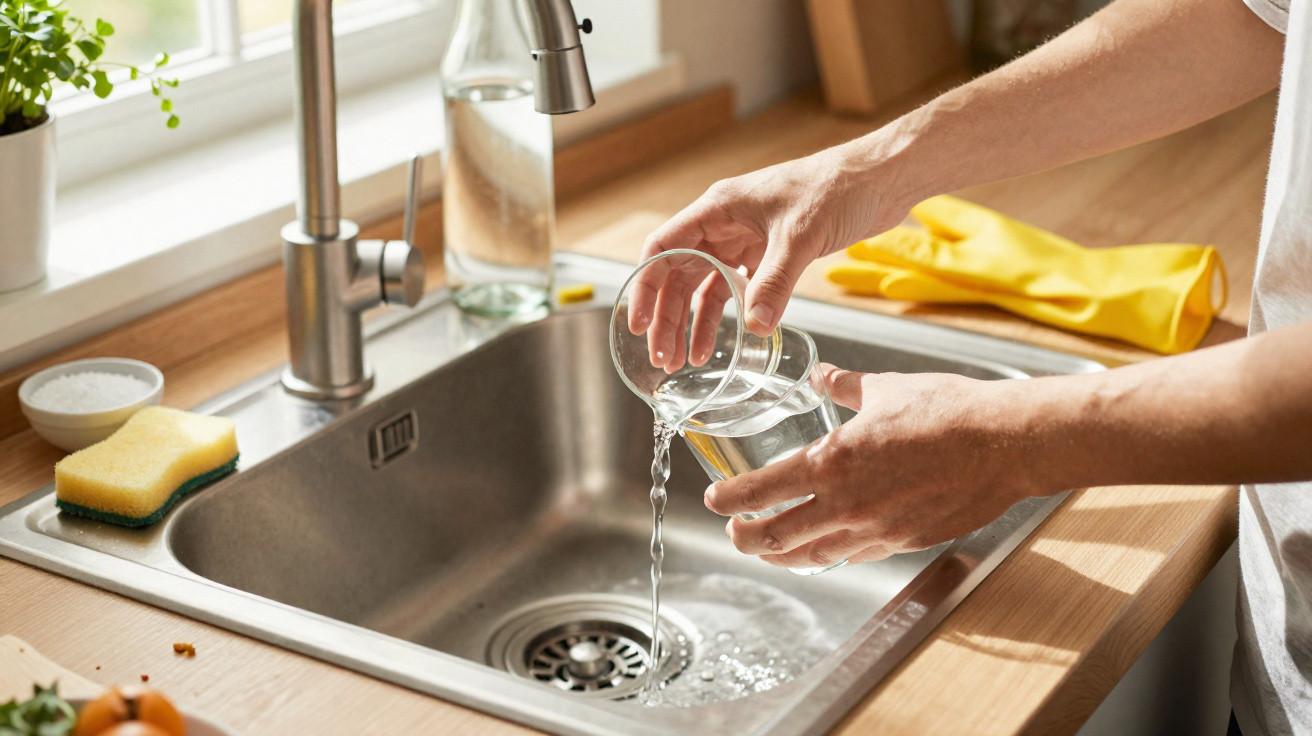
The useful ingredient is neither rare nor expensive, and there is nothing magical about it. It is ordinary dishwashing liquid - the same product used every day to remove grease from plates. Slowly pour half a glass directly into the drain, as though you were lubricating a rusty hinge. Leave it for at least fifteen to twenty minutes. Do not add hot water yet, prod the drain with a fork or tap the sink impatiently.
Dish soap is highly effective because it contains surfactants. These reduce water’s surface tension and bind to fats much as a magnet grips metal. In the pipe, that half-glass of liquid works its way along the sides, coating the greasy blockage and reducing the way it holds together.
Imagine a kitchen sink that has drained slowly for weeks. Every wash-up leaves a thin greasy layer in the water. One evening, rather than using a harsh chemical gel, you try a different approach: pour half a glass of concentrated dishwashing liquid straight down the drain before going to bed. Watching the thick stream disappear can be strangely satisfying. Leave it for half an hour, then run very hot water for one full minute.
The following morning, you may turn on the tap with some hesitation. Then the familiar vortex forms again, like a tiny whirlpool coming back to life. There is no fuss, smell or chemical vapour - only the quiet sense that something has been restored with very little effort.
The reason is almost frustratingly straightforward. Dishwashing liquid is made to surround fat molecules and carry them away with rinse water. It works the same way inside a drain. Rather than attacking the blockage from the top with a volcanic fizz, it flows around it and sticks to it, softening and lubricating the greasy material. Once you follow with a steady stream of very hot water, the plug is weaker and more slippery. Much of it can break away and move further down the pipe, where the channel is wider and water flow is stronger. You have not “miraculously dissolved” years of bad habits, but you have helped the system breathe again with a very gentle nudge.
How to clean drains with dish soap without making it a chore
The basic process could hardly be simpler. Begin with an almost empty sink, ensuring the drain opening is clear. Take your dishwashing liquid, ideally a concentrated formula, and slowly pour around half a glass into the drain. Leave it untouched for fifteen to thirty minutes. During that time, do not run water, wash your hands or rinse cups in that sink.
Once the waiting time is over, boil one or two kettles of water. Pour the very hot water into the drain in one steady movement. It should be hot but safe to handle. The aim is a strong, continuous flush that takes the loosened, soapy residue away, rather than a weak trickle.
There is no need to repeat this every day. Realistically, nobody does it daily. For a busy kitchen sink, doing it once every two weeks is usually enough to avoid the dreaded slow swirl. In the bathroom, once a month is often sufficient, particularly when paired with quickly removing any visible hair from the plughole.
One major mistake is combining this mild approach with harsh chemical drain cleaners during the same session. It is unnecessary and may produce toxic fumes. Another common error is using cold water after the dish soap. Cold water will not soften fatty deposits; it merely sends a cold flow across a blockage that has not changed.
“People expect a heroic, instant solution for blocked drains,” laughs Aurélie, a plumber in Paris who spends a good part of her week fighting household clogs. “But most of the time, what works best is boring: hot water, patience, and a bit of soap. The drama usually comes from waiting too long.”
- Use concentrated dish soap for stronger degreasing action on older, sticky blockages.
- Allow the product to work on its own for at least 15–30 minutes, without running water over it.
- Always follow with very hot water, preferably from a kettle, to create a powerful, continuous flush.
- Do not combine it with chemical drain openers, which may react badly and are frequently unnecessary.
- Use the method regularly as a preventive measure, rather than waiting until the drain is fully blocked.
Living with drains that simply work
There is something surprisingly soothing about a home in which water drains without any trouble. There are no unexplained gurgles behind the walls at midnight and no sink that takes ten minutes to swallow a bowl of pasta water. This half-glass of dish soap is not a miracle solution; it is a small, barely noticeable habit that gradually works in your favour.
It can also alter the emotional pattern around household problems. Instead of reacting in an emergency - phoning a plumber while standing in wet socks - you move towards simple, low-key maintenance. It is much like blowing dust from a laptop keyboard or deleting old files from your phone: one small action that is rarely glamorous but can be genuinely effective.
Most people know the moment when an ordinary domestic issue fills the whole room with stress. A blocked drain can make you feel helpless and slightly ridiculous as you stand over the sink with a spoon, trying to scoop out soggy food. This dish soap method feels like the reverse of that experience. It is affordable, accessible and easy to remember.
Perhaps this is what modern home care looks like: fewer heroic fixes and more small routines that reduce stress. You try it once, it works, and before long you are the friend saying, “Forget the volcano experiment, just pour half a glass of this.” Then the water, almost as if relieved, begins to flow again.
| Key point | Detail | Value for the reader |
|---|---|---|
| Dish soap as a drain cleaner | Pour half a glass directly into the drain, leave it to work, then flush with hot water | Provides a straightforward, safe alternative to harsh chemicals for everyday blockages |
| Prevention over emergency | Use the method every 2 weeks in the kitchen and monthly in the bathroom | Lowers the chance of complete blockages and costly plumber call-outs |
| Understanding the clog | Fat and soap scum accumulate like glue, trapping hair and debris | Helps readers change their habits and respond sooner when drains become slow |
FAQ:
- Can I use any type of dishwashing liquid for this? Yes, most standard dishwashing liquids will work, although concentrated formulas remove grease more effectively and require smaller amounts.
- Is this method safe for all types of pipes? In general, yes. Dish soap and hot water are far gentler than chemical drain openers, including on older pipes.
- What if the drain is completely blocked and water doesn’t go down at all? First remove as much standing water as you can, then try the dish soap and hot water combination. If there is still no change, use a plunger or plumber’s snake as the next step.
- Can I combine this method with vinegar and baking soda? You can, but it is normally unnecessary. Use one method at a time and avoid filling the pipes with several mixtures.
- How long should I wait before flushing with hot water? Fifteen to thirty minutes is best, giving the soap time to coat the pipe walls and properly soften greasy deposits.






Comments
No comments yet. Be the first to comment!
Leave a Comment