
The shoes are the first thing you notice. Not the cheerful plant on the windowsill or the thoughtfully selected wall print - only the heap of trainers that seems to grow by the day. The hall is scarcely wider than your shoulders, the kitchen table also serves as your desk, and the “living room” amounts to one determined armchair trying to cope.
You make an effort to tidy up. You even buy boxes, baskets and, in one particularly hopeful moment, perhaps a label maker. Yet a week later, the same mug has travelled from worktop to sofa to bedside table, while the same jacket is draped over the same chair once more.
The home is not unclean. It simply never feels… settled.
Then one small adjustment changes the entire atmosphere of the room.
The subtle chaos of small spaces
Small homes rarely become untidy in one grand, dramatic moment. Instead, the mess builds quietly: a tote bag put down “just for now”, post you promise to “sort tonight”, a hoodie slung over a chair. Individually, none of these things matters much, but together they gradually take over the room.
In a studio or compact flat, visual clutter has nowhere to disappear. Every misplaced object catches your eye, and your brain notices it, even if you act as though it does not. At the end of the day, you come home feeling weary without quite understanding the reason. The space is not a catastrophe, but it does not feel peaceful either.
My friend Sara lives in 28 square metres with a cat and two bicycles. On my first visit, I was expecting the familiar chaos of a tiny flat. Instead, her home felt unexpectedly airy. There were books, plants and even a clothes airer in the corner, yet nothing appeared cluttered.
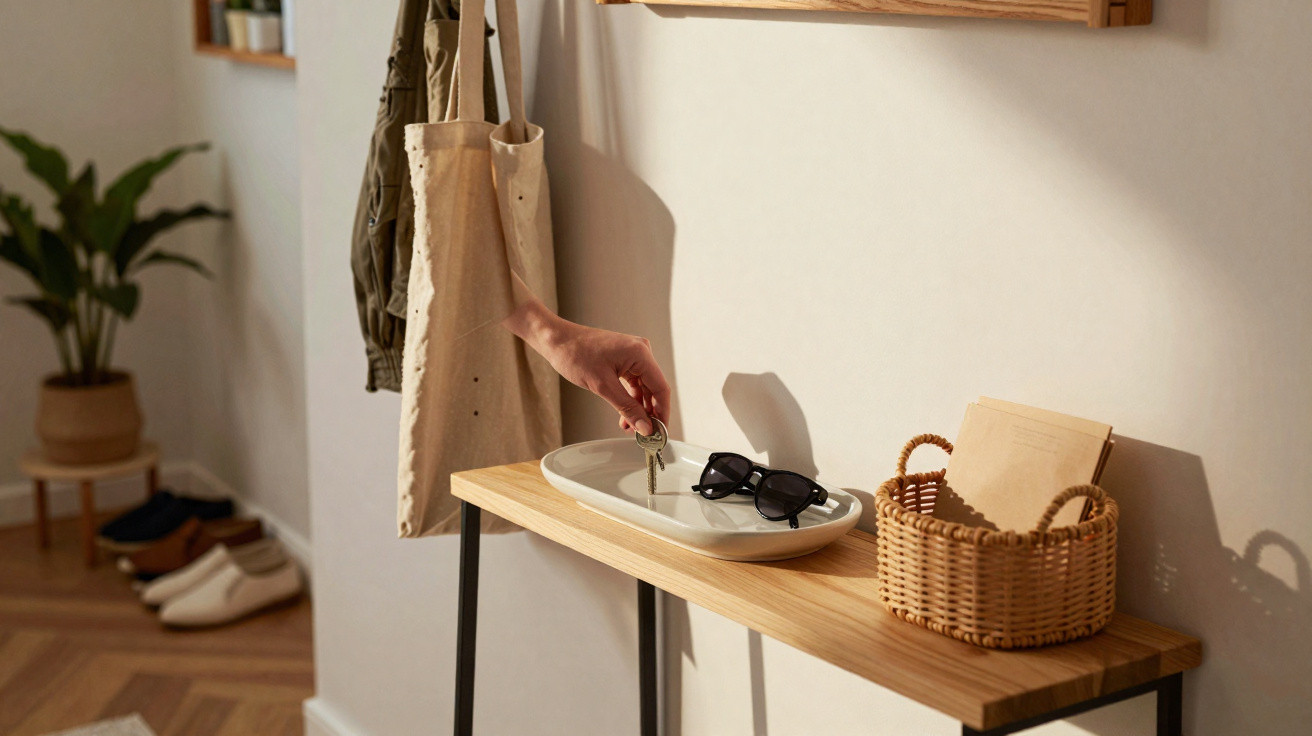
When I asked for her secret, she laughed. Rather than pointing to a gadget or ingenious item of furniture, she indicated a small tray on a shelf near the door. “This,” she said. “This is how I survive.” Inside were keys, sunglasses, headphones, lip balm and a pen. It was not immaculate - it was slightly full, with a receipt sticking out - but the rest of the room seemed almost spacious.
That was when I understood the straightforward approach that discreetly keeps small spaces organised: every item that drifts about needs its own clear, small home. Not an entire room or even a drawer, but a specific place - a tray, hook, bowl or box.
Our minds like predictability. When your keys always go into the same dish and the remote always returns to the same spot on the coffee table, the room no longer presents you with endless little questions. You do not have to search surfaces to find things; you simply carry on. The room feels more restful not because it is bare, but because it is easy to read.
The “landing zone” trick that transforms small spaces
The approach is almost ridiculously simple: set up small “landing zones” for the few objects you use every day. A dish beside the door for keys, a basket beneath the coffee table for remotes and chargers, or one magazine holder for all incoming post is enough.
You are not attempting to reorganise your entire life. You are simply giving the items that cause the most disorder an obvious, effortless place to land. The rule is this: if you pick something up more than once a day, it should have a visible home that you can reach without thinking. Putting it away should require roughly the same effort as dropping it wherever you happen to be.
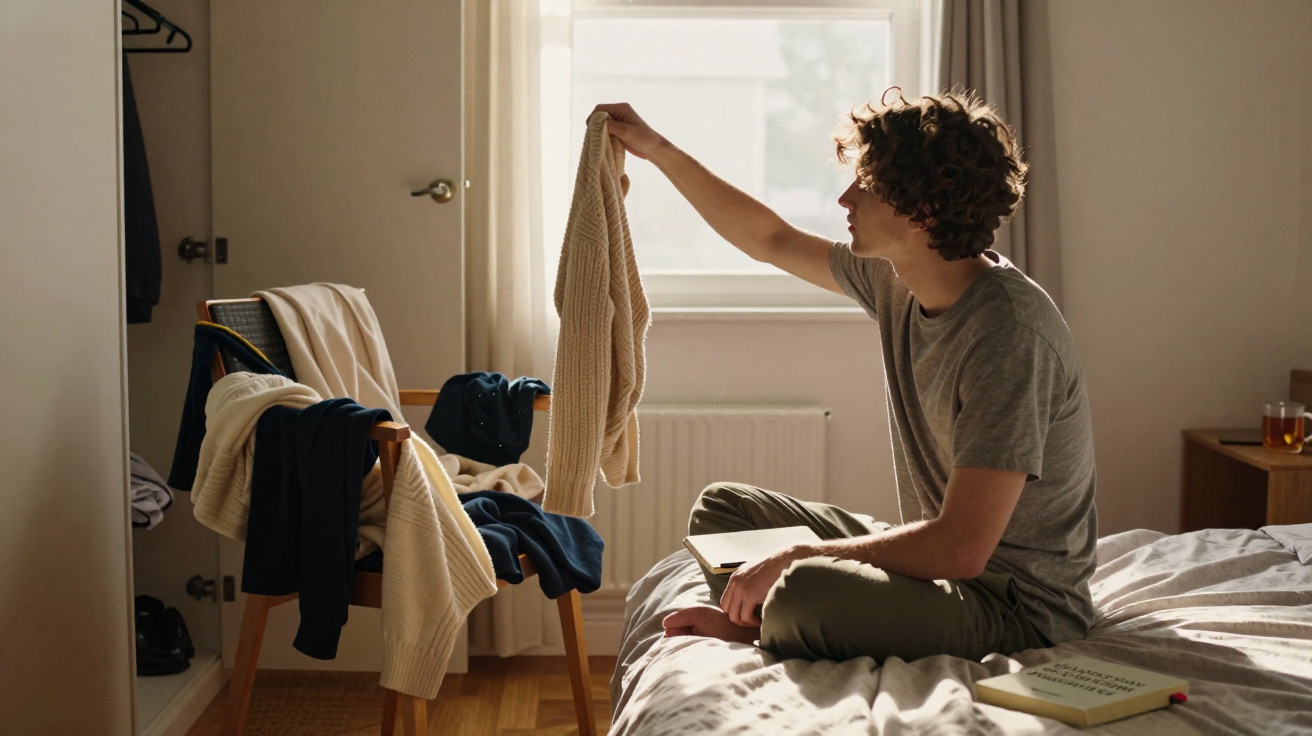
Consider the familiar bedroom chair that becomes a mountain of clothing. The issue is not necessarily that you have too many clothes, but that they lack a quick “in-between” location. They are not dirty enough for the laundry basket, yet not clean enough to return to the wardrobe.
One reader told me she fitted one hook inside her bedroom door and labelled it “Wear again.” Nothing more was needed. The neglected chair quietly returned to its actual purpose. The heap vanished, not because she suddenly became a naturally tidier person, but because her clothes finally had an approved, obvious landing spot that suited the habit she already had.
This succeeds because our brains are honestly rather lazy. Nearly every time, we follow the route that demands the least effort. If putting something “away” requires opening a wardrobe, shifting three items and hanging up a coat, the back of the chair will win - every time.
The answer is not to battle that laziness, but to plan around it. Landing zones reduce the gap between “I’m finished with this” and “This is put away” to a single small movement. That is why one little tray can alter the feel of a whole room. Your home will not turn into a magazine spread; it simply stops fighting against the way you truly live.
How to create landing zones that actually work
Begin with a single trouble spot rather than tackling the whole home. Choose the place that irritates you most: the pile in the entrance, the coffee-table jungle, or the desk that functions as a kitchen drawer. Stand there and note the objects usually buried in that mess: keys, passes, earbuds, receipts, bus passes or the dog lead.
Next, make one roomy, simple home for every category. Use a bowl for small items, a broad shallow box for technology, and a vertical paper sorter marked “Now / Later / Recycle.” Put each solution as near as possible to where the clutter naturally forms. Shift the battlefield by ten centimetres, not ten metres.
People usually struggle to stay organised not because they do not have enough storage, but because the storage is too distant from the action or overly complicated. Having three separate drawers for cables, chargers and adapters may sound sensible, but it falls apart in everyday life. One open basket under the television works because it respects how much energy you have on a Tuesday evening.
Let us be realistic: nobody manages this every day without exception. There will still be evenings when everything ends up wherever it ends up. What matters is that, on Saturday morning, each little refugee has an obvious place to return to. You gather, you drop, and the room exhales.
“Once I gave my clutter a home,” a reader named Luis told me, “I stopped saying ‘I need to be more disciplined’ and started saying ‘I need another hook.’ One feels like a failure, the other feels like a small fix. That changed everything.”
- Entrance bowl or tray: Keys, passes, coins and travel cards all go into one visible place as soon as you come through the door.
- Soft basket beside the sofa: The remote, games controllers, chargers, lip balm and even spare glasses stay here rather than covering every surface.
- “In-between” hook or chair: Half-worn clothes have one designated location, preventing them from spreading around the room.
- Paper corral on a vertical surface: Bills, flyers and letters are placed in one upright file, stopping the gradual overflow on the table.
- Micro-station in the bathroom: Everyday products are kept on a tray or in a caddy, leaving the sink area visually calm.
When small spaces finally feel like home
When you start assigning belongings small, obvious homes, your relationship with your space changes. You are no longer having a constant, low-level dispute with your own habits. The room begins to support you instead of working against you.
All at once, your 32 square metres feel less like a storage unit where you happen to sleep and more like a place that understands you. The table can function as a desk during the day and somewhere to eat in the evening because clearing it takes two minutes rather than a complete reset.
The amusing thing is that visitors may come in and say, “You’re so organized,” even though you know there is still a box under the bed marked “random stuff.” The difference is that everyday chaos is contained.
We have all had that moment of looking around and thinking, “I have no space,” when the real issue is that there are not enough small, convenient landing zones. This method will not conjure an extra room. It simply gives every object one clear, forgiving place to rest. Somehow, and quietly, that leaves you with more room to breathe.
| Key point | Detail | Value for the reader |
|---|---|---|
| Landing zones | Make small, visible homes for everyday items (tray, hook, bowl, basket) | Reduces visual clutter and decision fatigue in tight spaces |
| Design for laziness | Put storage where mess appears, using one-step actions | Makes tidying almost automatic, even on low-energy days |
| Start tiny | Start with one hotspot, such as the entrance or coffee table | Quick wins create momentum without becoming overwhelming |
FAQ:
- How many landing zones do I need in a small flat? Start with three: one near the door, one beside the sofa or main seating area, and one where you work or prepare food. Only add more when you spot recurring clutter that does not yet have a home.
- What if my space is extremely tiny, like a bedroom in a shared flat? Think vertically and keep it micro. Use wall hooks, over-the-door organisers and narrow trays on shelves. Even one hook and a shoebox beneath the bed can work as highly effective landing zones.
- Do I have to buy special organisers? No. Reuse bowls, shoeboxes, jars, old tins or lids. Function matters more than appearance. You can always upgrade later if you want to.
- What about things that move around a lot, like chargers or notebooks? Give them a “home base.” They can move around during the day, but should return to one place at night: a basket, shelf or drawer divider. That routine prevents them from turning into clutter.
- How long until this feels natural? Most people notice a change within a week or two. Consistency matters more than perfection. If you forget for several days, reset once and the habit will usually return quickly.
Comments
No comments yet. Be the first to comment!
Leave a Comment