
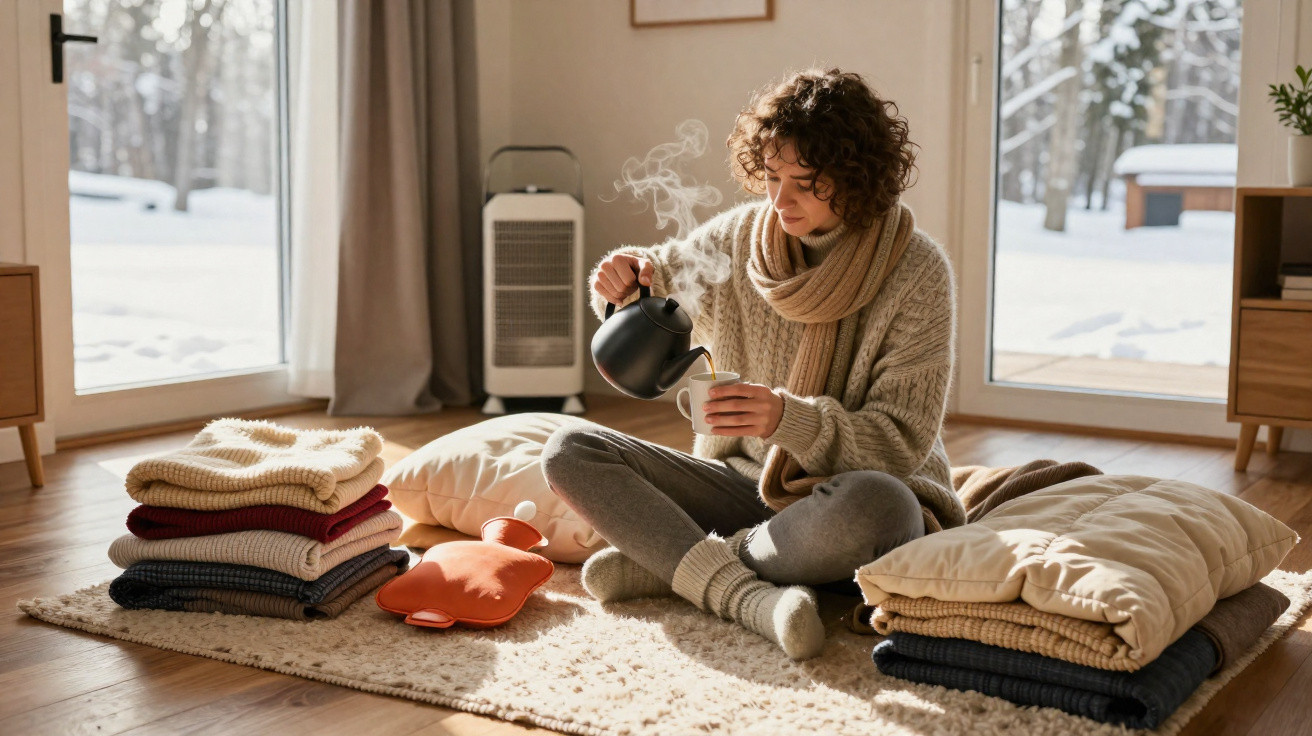
Outside, the sky is grey; indoors, it is 16 degrees – the kind of cold that quietly seeps into your bones. Your coat is on the hall stand, and you hesitate before putting it back on indoors, in your own home. Somewhere nearby, a neighbour’s kettle clicks and rattles. Suddenly, the coffee machine sounds like a luxury. We all know that moment when it hits us: winter has arrived faster than the next payment leaving our account. Electricity bills, gas costs, a broken boiler, arguments with the landlord – the causes vary, but the shivering feels the same. Then comes the question nobody really wants to admit they are asking.
When keeping warm suddenly becomes a project
On one such evening, Lara, 32, sits on the sofa in her fourth-floor rented flat wearing two jumpers. The heating stays off, partly on principle and partly because of money. She has lit candles not for romance, but because every flame adds a little warmth. Her laptop rests on a blanket, while the cat has long since curled itself into a furry sausage. Then Lara notices that the room no longer seems quite so cold. Not because it is 23 degrees, but because she has started actively managing the cold instead of simply enduring it.
A few houses away, an older couple sit on their sofa in wool socks with a hot-water bottle. No designer throws or smart-home thermostats – just old-fashioned remedies that have worked for decades. In a recent survey by the German Caritas Association, millions of people said they sometimes went cold during winter because of the cost. This is where the quiet adjustment begins: more layers, more movement, more hot drinks and less belief in the idea of “always 22 degrees”. Some people create a “winter room”; others practically live beneath their duvet. The approaches sound simple, yet they can completely change how home feels.
Keeping warm without heating is not a magic trick; it is about physics and routine. Our grandparents may have had few thermostats, but they knew how to make a room retain warmth. Fabrics hold body heat, closed doors keep out draughts, and a smaller room has less space to cool down. Once you understand that, it becomes clear that you do not need to heat the entire flat – only your own small world. The difference between “I’m cold” and “I have a warmth plan” is often just one honest evening of sitting down and making a few changes. And yes, it can also mean accepting that winter has to be lived differently from how it looks on Instagram.
Layers, rituals and small warm zones
The quickest way to tackle cold without heating is literally against your skin: layers. Rather than one heavy jumper, wear several layers that trap air. Start with a close-fitting thermal top, add a long-sleeved layer, then put on a jumper or cardigan. Do the same below the waist: leggings or tights beneath jeans, followed by thick wool socks. And yes, wearing a hat indoors may feel odd – until you realise how much warmth escapes through your head. Many people are not cold because their flat is “too cold”, but because they are dressed as if they were spending the day in a shopping centre.
One common mistake is staying still for too long: on the sofa, at a desk, or in bed scrolling on your phone. Your body slows down, and so does your circulation. Here is a simple tip any ski instructor would endorse: add a short burst of activity every 30–45 minutes. Do squats, walk up and down the stairs, or make a quick cleaning “sprint” around the flat. Five minutes is enough to get the blood flowing again. Let’s be honest: nobody actually does this every day. But anyone who makes a point of doing it on the coldest evenings soon finds that 17 degrees feels far less dramatic.
It gets interesting when you deliberately turn your home into a set of small warm zones. It might look like this:
“At some point, we stopped fighting the whole flat and focused on making only the bedroom and a reading corner in the living room properly warm,” says Jonas, 41. “Door shut, curtain over the doorway, rug on the cold tiled floor, hot-water bottle in the bed – and suddenly it was manageable.”
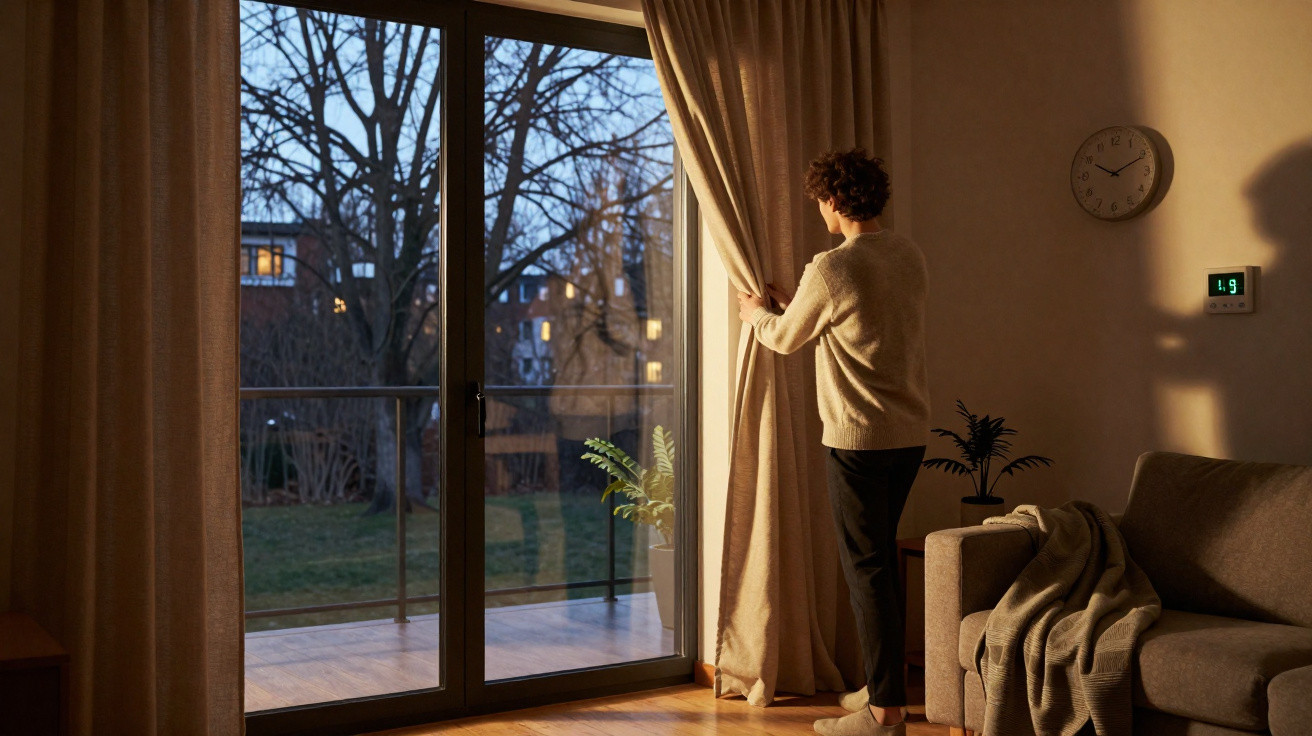
- Define a “winter room”: consistently seal off the room where you spend most of your time – close the door, block gaps, hang a heavy curtain, and you are done.
- Upgrade your textiles: put rugs over bare floors, throws on leather sofas, and an extra curtain over draughty windows, ideally in a heavy fabric.
- Concentrate heat sources: use hot-water bottles, wheat bags, candles (used safely!) and a fan heater for short periods – not scattered about at random, but placed where you are actually sitting or lying down.
Warm air is useful – a warm routine is better
The most effective trick, which many people only discover when they are ill in bed, is targeted warmth. Instead of trying to warm the whole flat, focus on your body. Soak your feet in hot water in a bucket or basin for 10 minutes, then immediately put on thick socks. Place a hot-water bottle or cherry-stone cushion against your back or stomach. Wear a large scarf around the flat like a portable heater. If you work from home, drape a thick blanket over your legs and place a laptop table over it. Your body becomes centre stage, while the room plays only a supporting role.
Many people underestimate how much dampness makes them feel cold. A chilly, slightly damp flat, thin cotton socks that have become a little sweaty during the day – and everything immediately feels twice as unpleasant. Here is an honest, unglamorous tip: change your socks more often, especially in the evening. Do not drink only coffee; have warm water or herbal tea between cups as well. And air your home briefly but properly: open the windows wide for five minutes instead of leaving one permanently on the latch. It may sound like caretaker wisdom, but it is a hard reality in the battle against that stale cold which wears you down from within.
Of course, concerns about electricity costs, fire risks and neighbours hang over all of this. Anyone experimenting with candles or tealight heaters can quickly fall into an Instagram trap. Tealight heaters are not a replacement for heating; at most, they offer a psychological boost. What matters more is taking a sober look at what genuinely helps:
“People underestimate what decent clothing and a well-planned daily routine can do, and they often overestimate miracle gadgets from the internet,” says an energy adviser I meet in the stairwell of an older block of flats.
- Make movement a ritual: schedule regular “warm-up breaks” rather than waiting until you are completely chilled through.
- Think in terms of a water cycle: drink warm drinks regularly, take a warm shower or bath if you can afford it, and put on warm clothes straight afterwards.
- Keep warm socially: invite people over, work in the same room as someone else, cook together – every body is a small heater, and every conversation distracts from the shivering.
Keeping warm as a shared task, not a private one
Anyone who has spent several evenings in a cold flat sees warm hubs, libraries and crowded cafés differently afterwards. Suddenly, they are not merely places with Wi-Fi but small public spaces for warmth. Perhaps you will linger over coffee for longer at a co-working space, take your laptop to the library, or move your evening walk to the shopping centre simply to soak up an hour or two of warm air. Winter then becomes a kind of journey between warm zones, with home just one stop among several. It may not sound romantic, but it can take a surprising amount of pressure out of the issue of heating.
| Key point | Detail | Benefit for the reader |
|---|---|---|
| Layering principle | Several thin clothing layers instead of one thick jumper | Better heat retention and more flexibility when temperatures change |
| Create warm zones | Use a “winter room”, textiles and targeted warmth | Lower energy demand while still creating comfortable corners at home |
| Rituals and movement | Regular activity, warm drinks and short airing periods | Your perceived warmth increases, making the cold feel manageable |
FAQ:
- Question 1: How cold can a flat really become before it is unhealthy? Most health authorities recommend around 20 degrees in living rooms, and at least 17–18 degrees over a prolonged period. Many people can cope with 16 degrees for a short time if they dress warmly and keep moving. Persistently very low temperatures become critical, particularly for children, older people and those who are unwell.
- Question 2: Is there any point in “heating” only one room when the heating is off? Yes, provided you separate that room off consistently: shut the door, seal gaps around it and use curtains. This also makes targeted heat sources, such as fan heaters used for short periods in the morning or evening, more worthwhile.
- Question 3: Are tealight heaters or candle heaters a genuine alternative to central heating? No. They produce noticeable but very limited warmth and carry fire and smoke risks if used incorrectly. They can serve as a small additional heat source, but they do not replace regular heating and must never be left unattended.
- Question 4: Which clothing is genuinely useful against cold indoors? Start with thermal underwear or thermal tops, then add cotton or wool, plus a thick jumper. Wear leggings or tights beneath your trousers, thick wool socks and, if needed, slippers. A thin hat and a scarf indoors can often work wonders.
- Question 5: How can I sleep in a cold bedroom without freezing? Use several blankets rather than one, put a good hot-water bottle or wheat bag in the bed, and reduce draughts in the room as much as possible. Thick sleepwear, and possibly a hat, will help. Air the room briefly before bed, but do not leave a window on the latch all night – the air will be fresh without leaving you cold until morning.


Comments
No comments yet. Be the first to comment!
Leave a Comment