
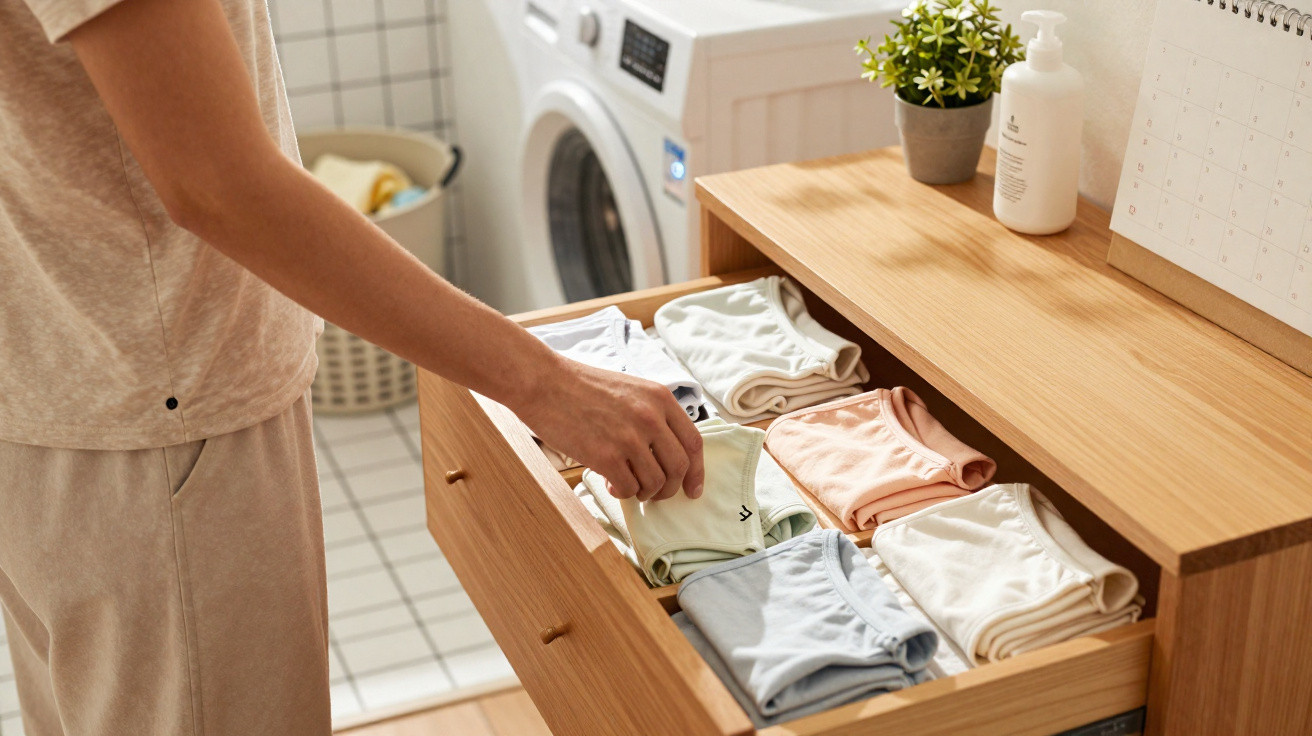
Underwear is the unseen garment that rarely gets discussed, yet it has a major impact on health. It sits directly against the most sensitive parts of the body, absorbs sweat and moisture, and therefore provides an ideal place for bacteria to accumulate. For that reason, the question of how often you should change your underwear is far from trivial.
Why underwear is so sensitive
Underpants remain close to the skin throughout the day and collect:
- sweat and moisture
- dead skin cells
- germs and fungal spores
- traces of urine, faeces or discharge
This creates a warm, damp environment - precisely the conditions in which bacteria and fungi thrive. Wearing the same pair of underpants against the skin for too long increases the risk of:
- itching and redness
- red, softened skin folds
- fungal infections in the intimate area
- unpleasant odours
Medical information portals on intimate hygiene clearly recommend changing underwear once a day in everyday life as the standard rule for healthy people.
Changing daily keeps the microbial load low and helps protect the delicate skin barrier in the intimate area. People with sensitive skin in particular often notice that clean underwear considerably reduces irritation.
How often should you really change your underwear?
For most people, the rule of thumb is straightforward: one pair of underpants per day. Put on a fresh pair in the morning and place them in the laundry basket in the evening. It is hygienically sensible and easy to incorporate into daily life.
When once a day is not enough
In certain circumstances, experts advise changing underwear more frequently:
- Heavy sweating: for example, on very hot days or during physically demanding work.
- Sport: sweaty underwear should go straight into the wash after exercise.
- A tendency towards infections: anyone who frequently experiences fungal infections or cystitis benefits from particularly consistent hygiene.
- Acute infections: with fungal infections, urinary tract infections or sexually transmitted infections, doctors often recommend changing underwear more often and washing it at a high temperature.
- Parasites: in cases of threadworms, for instance, health insurers advise changing underpants daily and washing them regularly at 60°C.
Anyone going straight from work to exercise will therefore usually need two pairs of underpants a day: one before and one afterwards.
Does wearing them for one extra day make you ill straight away?
If you wear underwear for longer once because it is more convenient or while travelling, it will not automatically make you ill. The body can generally cope with brief exceptions. The advice to change daily is aimed at normal routine: people who rarely put on fresh underwear over weeks and months substantially increase their risk of problems in the intimate area.
The rule “wear for one day, then wash” is not a dogma, but a straightforward hygiene standard intended to protect against irritation and infections over time.
How often do men and women actually change underwear?
What does everyday practice look like when medical advice is compared with people’s habits? A representative survey of people in Germany presents a mixed picture:
| Group | Changes at least once daily |
|---|---|
| General population | 84 % |
| Men | 73,9 % |
| Women | 86,9 % |
Almost one in four men say that they do not change their underpants every day. The proportion is markedly lower among women. Reasons range from convenience and a lack of clean laundry to the belief that the underwear is “still clean”.
Odour alone, however, is a poor measure of hygiene. Bacteria and fungi cannot be seen, and the skin and mucous membranes may already be irritated before there is any smell.
Material, fit and washing temperature: keeping underwear genuinely hygienic
How healthy a pair of underpants is depends not only on how often it is changed, but also on its style and how it is cared for.
The best materials for the intimate area
- Cotton: regarded as the classic choice. It is breathable, absorbs moisture well and can be washed at high temperatures.
- Blended fabrics: can be comfortable, but should contain a high proportion of cotton in the crotch area.
- Pure synthetic fabrics: performance materials move sweat away quickly, but are often less breathable. They are best used sparingly for everyday wear.
People prone to fungal infections usually fare better in cotton briefs than in tight styles made entirely from synthetic fabric.
How hot should underwear be washed?
For healthy people, a 40°C wash with standard or colour detergent is often sufficient in everyday life. Higher temperatures are advisable in some situations:
- during gastrointestinal infections
- with fungal infections in the intimate area
- in the event of a parasitic infestation
- when young children live in the household and there is frequent close physical contact
Many health insurers recommend 60°C in these cases to reduce the number of germs significantly. Those who wear delicate fabrics can use laundry sanitiser, although some dermatologists advise caution for very sensitive skin because additives may cause irritation.
When underwear can make you ill
Common effects of infrequently changed or poorly fitting underwear include:
- chafing in the groin and on the inner thighs
- small spots and minor inflammation around hair follicles
- odour in the intimate area
- fungal infections with itching and discharge
Anyone already experiencing symptoms should:
- change underwear daily, or more often if needed
- wear styles that are as breathable as possible and not too tight
- avoid harsh intimate washes
- seek medical advice when in doubt
Clean, well-fitting underwear does not replace medical treatment, but it can support it and help prevent recurrences.
Everyday tips: making the daily underwear change work
Anyone who discovers an empty drawer in the evening is more likely to think, “it will do for another day”. A few simple strategies can prevent this:
- Keep enough in stock: having slightly more pairs of underpants than days in the week reduces pressure when planning laundry.
- Create a fixed routine: change your underwear while brushing your teeth in the morning, so it becomes a habit.
- Prepare a travel set: small bags or laundry sacks help keep worn underwear separate from clean items while away.
- Plan for sport: always allow for a fresh pair of underpants for training, perhaps placing one in your gym bag in advance.
If children or teenagers live in the household, the subject can be approached playfully - for example, with a regular “fresh laundry moment” in the morning. This allows underwear hygiene to become a natural habit as they grow up.
Why changing underwear daily pays off over time
Putting on fresh underwear every day takes only a few seconds, but can often prevent the inconvenience of irritated skin, odour and infections. Intimate hygiene does not need to be complicated: gentle cleansing, breathable clothing, suitable materials - and the rule of putting underpants in the wash after one day.
On days when you sweat, are unwell or exercise, you need more than one pair a day. For others, one fresh pair of briefs in the morning is enough. In both cases, the body notices how carefully it is treated - particularly in places people otherwise prefer not to discuss.






Comments
No comments yet. Be the first to comment!
Leave a Comment