
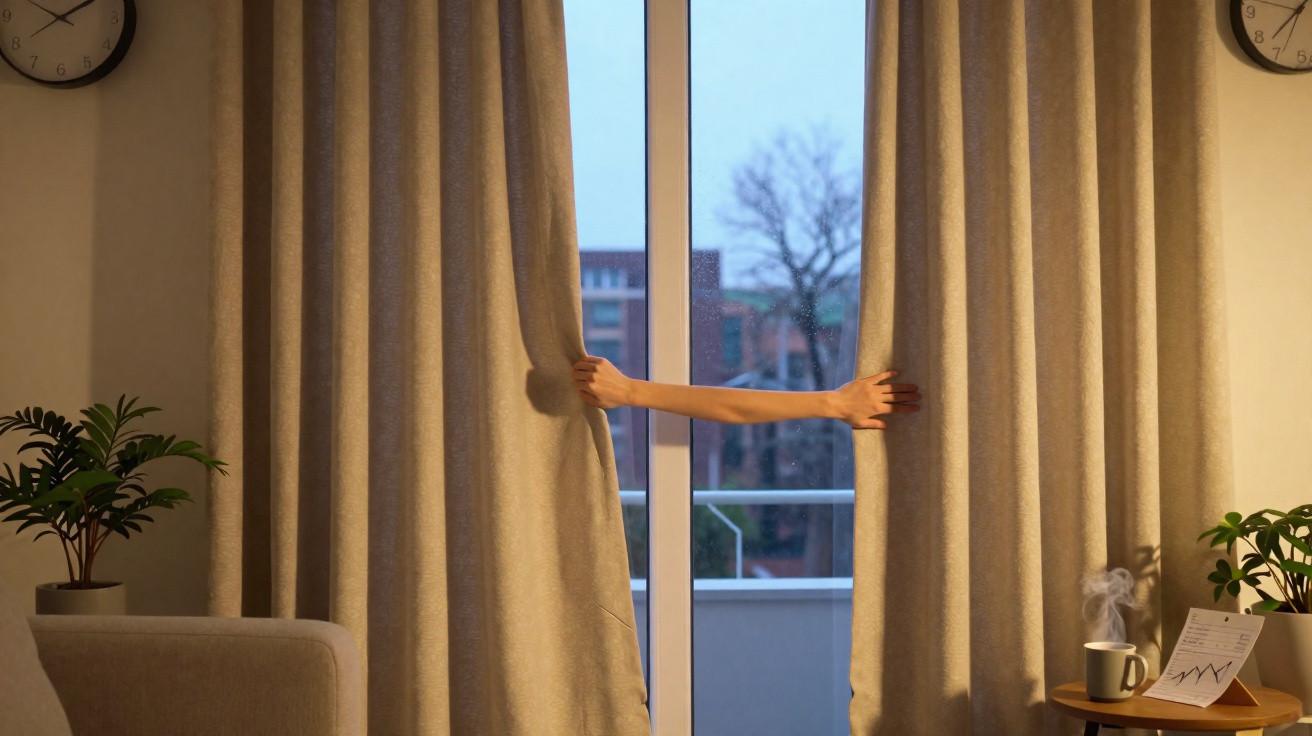
As the seasons change, temperatures can vary widely, heating bills remain high, and many households are looking for ways to cut costs without sacrificing much comfort. One straightforward but frequently overlooked measure can make a noticeable difference to the warmth of your home while helping to protect your budget.
Why checking the time becomes important from mid-March
By the middle of March, daylight hours have increased considerably. The afternoon sun sits higher in the sky, warming window areas more effectively and supplying free energy to your home. You can make smart use of this effect, provided you act at the right time.
British money-saving expert Martin Lewis has highlighted this for years: the time of sunset matters. At around 7.45pm, when daylight begins to fade noticeably outside, curtains should be closed in many areas. Around the middle of the month, sunset across Central Europe does in fact fall roughly within this time frame.
“If you consistently draw the curtains at sunset, the warmth gained during the day remains in the home for longer – without any extra heating output.”
The principle is straightforward. During the day, sunshine passes through the glass and heats furniture, floors and walls, all of which retain some of that energy. Once outdoor temperatures drop, however, that warmth can escape again more quickly than many people expect, particularly through windows.
Curtains as simple insulation: household-level physics
Even with double or triple glazing, windows remain a weak point in a building’s thermal envelope. Glass transfers heat far more readily than a well-insulated wall. This is immediately noticeable on cold evenings: window panes feel chilly, there can be a slight draught close to the window, and the air in that area feels distinctly cooler.
This is where curtains help. They create an additional layer of air in front of the glass. That trapped, still air provides insulation and slows the heat transfer between the room’s air and the cold window surface.
- Open curtains: Warm air from the room flows directly past the cold glass, cools down and drops towards the floor, creating a draught.
- Closed curtains: The air immediately next to the window is largely “trapped”, so the cooling is less able to spread through the room.
- Thermal curtains: Extra coatings or linings can substantially strengthen this effect.
Measurements from various studies indicate that, during the evening, rooms with close-fitting heavy curtains can be up to one or two degrees warmer on average than comparable rooms without this “textile barrier”. That may not sound like much, but at the thermostat it can mean the difference between “heating on” and “heating stays off”.
Why 7.45pm is a useful guide for closing curtains
The precise time depends on where you live and the date. Mid-March is often associated with around 7.45pm because this is when the sun sets in many places. Until then, it makes sense to let the sun do its work.
“During the day: open the curtains fully and make the most of every ray of sunshine. At sunset: close the curtains – keep the warmth in.”
A typical spring evening works like this:
- During the afternoon, sunshine enters through the window and gently warms the room.
- Towards evening, the sun disappears behind buildings or below the horizon.
- Outdoor temperatures fall and the window surfaces become colder.
- Without action at this point, stored warmth is lost more rapidly than necessary.
Setting a fixed time, such as 7.45pm from mid-March, therefore creates a small but effective habit. In practical terms, the rule is simple: close the curtains as soon as it is visibly getting dark outside or the sun has just disappeared.
Which curtains provide the best insulation
Not every piece of fabric hung at a window delivers the same result. Both the material and the way it is fitted make a major difference.
| Curtain type | Thermal effect | Note |
|---|---|---|
| Thin net curtain | Low | Provides privacy but offers barely noticeable insulation |
| Medium-weight decorative fabric | Medium | Noticeably reduces draughts around the window |
| Heavy, dense curtain | High | Creates a good barrier against heat loss |
| Thermal curtain / lining | Very high | Special coating or lining for maximum effect |
Curtains are particularly effective when they:
- are made from as tightly woven a fabric as possible;
- cover the entire window area, including the frame;
- reach to just above the floor or rest slightly on it;
- do not stand too far away from the wall at the top, so that little air can circulate behind them.
How much can realistically be saved in everyday life
Naturally, curtains are no substitute for professional insulation. Anyone heating a home with draughty single-glazed windows will still lose energy. Yet even in modern flats with good windows, fabric in front of the glass can modestly reduce the demand for heating.
According to energy experts, reducing the target temperature by one degree saves around six per cent on heating costs. If consistently closing the curtains in the evening keeps a room one degree warmer, the heating system needs to run for less time or may not need to top up the temperature at all. This is especially relevant during the hours when many people are watching television or are already in bed.
At a time of high energy prices, households notice every saving. Many user reports from the UK and other countries show that people who consistently follow a curtain routine have been able to keep evening temperatures stable without continually turning up the thermostat.
How to make the “curtain rule” part of your routine
A small ritual can turn this recommendation into a genuine habit. Here are some ways to make it work:
- Set a phone reminder for 7.45pm – after a few days, it will usually become automatic.
- Close the curtains when you finish clearing up in the kitchen after dinner.
- Link the routine to children: make “curtain time” just before the bedtime story.
- Use smart home technology: timer plugs or electric curtain rails can be programmed.
“The more windows a home has, the greater the effect of curtains – especially with large glazed areas and patio doors.”
Common mistakes that reduce the effect
Without realising it, many people make small errors that significantly reduce the benefit. These include:
- Completely concealing radiators behind thick curtains, causing heat to build up only by the window.
- Leaving curtains half closed during the day, which wastes free solar energy.
- Buying curtains that are too short, allowing warm air to rise quickly along the window from below.
- Leaving windows draughty – gaps and cracks should first be improved with sealing tape.
The ideal approach combines dense, long curtains with windows that are as well sealed as possible, along with a sensibly adjusted thermostat. This often means that a medium heating setting is enough to maintain comfortable temperatures.
What this trick means for indoor air and mould
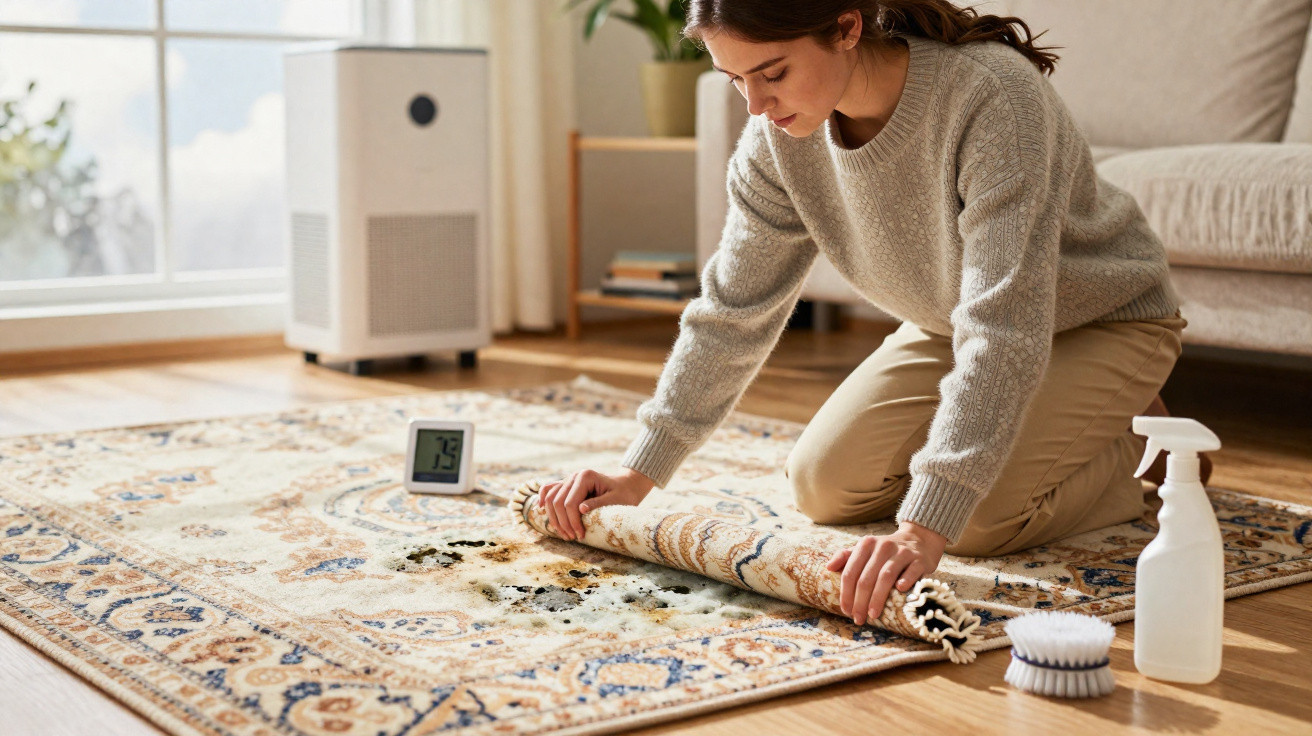
Closing everything tightly in the evening naturally raises concerns about moisture and the risk of mould. That concern is not unfounded, but proper ventilation prevents this from becoming a disadvantage.
The rule is to ventilate briefly and thoroughly before drawing the curtains. Airing rooms fully for five to ten minutes once or twice allows humid air from the kitchen, bathroom and living areas to escape. Only then should the curtains be closed completely. Leaving windows permanently on the tilt setting behind dense curtains, by contrast, is a poor idea, as it cools the window reveal dramatically.
For extra reassurance, use a hygrometer. It shows the humidity level in the room. Readings between 40 and 60 per cent are generally considered comfortable and unproblematic in terms of mould growth.
When thermal curtains are particularly worthwhile
Thermal curtains cost more than standard fabrics, but they can pay for themselves quickly in certain living situations. Examples include:
- period flats with old or only moderately insulated windows;
- top-floor flats with large glazed areas;
- ground-floor flats with patio doors and cold air coming from outside;
- bedrooms that are rarely heated strongly.
Anyone who does not want to invest in new curtains immediately can improvise: sew a second layer of fabric onto the back of existing curtains, hang fleece blankets, or use special thermal linings. The appearance may not be perfect, but the thermal protection will still improve.
At its core, it is a simple principle: let daylight in, keep the evening cold out. Anyone who consistently closes their curtains at around 7.45pm from mid-March makes the best use of this principle and, as a useful side effect, saves on heating costs without giving up comfort.




Comments
No comments yet. Be the first to comment!
Leave a Comment