
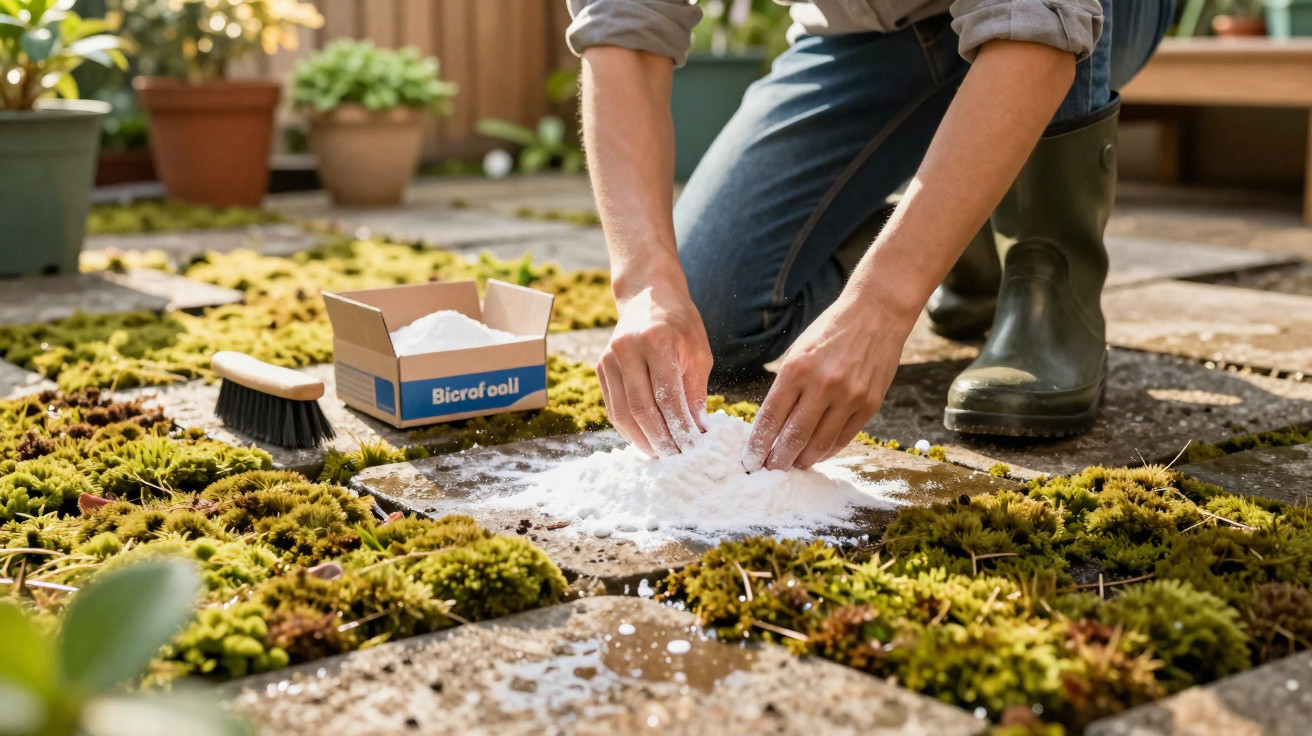
Many people instinctively reach for a pan of boiling water, hoping it will provide a quick fix. At first, the result seems impressive, but the growth returns within only a few weeks. An experienced gardener showed me a different, surprisingly gentle approach that needs no heat, no harsh chemicals and no hours of scrubbing – while keeping patio slabs noticeably cleaner for longer.
Why boiling water is not the answer in the long term
Pouring boiling water over moss can feel effective: it hisses, steams and the green growth appears to disappear almost instantly. However, its action is generally limited to the surface. The fine structures where spores and residue take hold remain unaffected.
Moss thrives in particular conditions:
- permanently damp joints and edges
- shaded spots with little air movement
- rough or porous stone that retains moisture
These are precisely the areas where the growth soon reappears, even when the surface looked clean immediately after treatment. Simply dealing with the top layer means cleaning the same patches again and again.
There is another issue, too: boiling water cannot distinguish between moss, stone and joints. Older patios, or those already showing wear, can be particularly vulnerable. Jointing material may come loose, natural stone can become discoloured and concrete slabs may develop fine cracks. The surface then becomes more uneven and, in the worst case, more slippery.
“After years of heat treatments, many patios do not look well maintained; they look worn out – both visually and structurally.”
Trying to force a thorough spring clean can therefore make surfaces more sensitive, allowing moss to establish itself again even more easily.
The gardener’s bicarbonate of soda trick for damp patio slabs
The gardener who taught me this technique takes a completely different approach: no hot water, no high-pressure cleaning frenzy and no aggressive products. Instead, he uses a straightforward combination of slightly damp slabs and ordinary bicarbonate of soda.
How the method works
The essential first step is dampening the surface. Rain, morning dew or a quick spray with a garden hose will do the job. The slabs should be visibly moist, but not sitting in water.
He then scatters bicarbonate of soda over the damp surface – not across the entire patio, but specifically where moss and deposits are already visible or usually develop: in joints, around edges and in shaded corners.
“Damp slab plus bicarbonate of soda: the powder sticks exactly where the moss is growing and remains in contact for many hours.”
The result does not appear within minutes; it takes around two days. During that period, the moss loses its grip, dries out and changes colour slightly, making it remarkably easy to brush away afterwards.
Step-by-step: a moss-free patio
- Inspect the area: Sweep or use a leaf blower to clear away loose leaves, soil and larger debris.
- Dampen the slabs: Moisten them lightly until they appear deeply darkened, without leaving puddles.
- Apply bicarbonate of soda: Scatter the powder directly over moss patches, joints, edges and shaded sections.
- Wait 48 hours: Leave the area alone if possible; do not scrub it or rinse it heavily.
- Brush it off: After two days, remove the loosened material with a stiff brush or yard brush.
- Rinse gently: Clean the section using a watering can or a soft stream of water.
Very little hands-on work is needed. Time does the real work rather than physical effort.
Use the right amount: target patches rather than covering everything
When using bicarbonate of soda for the first time, it is easy to want to coat the whole patio in white powder. That is unnecessary. Its effect is aimed at the areas where moss is already present or most likely to settle next.
The most vulnerable locations include:
- narrow joints where water collects
- slab edges beside beds or hedges
- shaded areas behind the house or next to walls
- porous natural stone with a rough finish
With very pale or delicate stone, it is worth carrying out a small test in an inconspicuous corner. This allows you to check that brushing produces the intended result without leaving unwanted marks.
“The method remains gentle when it is used precisely: apply it selectively rather than overdoing it across a large area.”
Weather and timing to consider
The best time is during a dry spell when no heavy rain is forecast for one or two days. A brief shower will not necessarily cause a problem, but heavy downpours may wash the powder away too soon.
Ideal conditions are:
- light cloud cover or gentle sunshine
- temperatures above freezing, ideally with spring-like weather
- no persistent rain during the next 48 hours
If you are unsure, begin with a small test patch. This removes the pressure to treat the entire patio immediately and reveals how your own surface material responds.
Common mistakes that reduce the effect
Gardeners repeatedly encounter a few familiar errors that can make this method seem disappointing:
- More is not better: Thick layers of bicarbonate of soda offer no added benefit and merely waste product.
- Brushing too early: Starting with the brush after only a few hours interrupts the process.
- Using a powerful water jet: A pressure washer immediately after treatment does not just remove residue; it can also damage joints and stone.
Success depends less on strength than on patience. Those who genuinely allow the full 48 hours usually find the second stage much easier.
How to slow down moss returning to the patio
Once the patio is clean again, the often-overlooked part begins: changing the conditions so that the green growth does not return straight away. Moss will never disappear entirely from a garden, but it can be made less comfortable for surface deposits to develop.
Useful adjustments include:
- Reduce shade: Prune overhanging branches and thin low-growing ones so more light and air can reach the surface.
- Channel away moisture: Check whether puddles are forming. If necessary, improve a slight gradient or clear drainage routes.
- Protect the joints: Repair loose jointing so water and soil cannot collect there permanently.
- Deal with small patches early: Treat the first green film or small cushions straight away rather than waiting for the “big spring clean”.
“If you remove moss but leave its favourite places unchanged, you are effectively giving it a polite invitation to return.”
Why bicarbonate of soda works against moss
Bicarbonate of soda changes conditions locally at the surface. Many mosses and algae do not tolerate this environment and, combined with periods of drying, lose their hold. At the same time, its crystals are considerably less harsh on stone than aggressive specialist cleaners or concentrated acids.
Every patio is different, of course: old clay slabs respond differently from dense concrete paving or polished granite. A small trial on a few slabs is therefore especially worthwhile with sensitive surfaces. It helps identify the appropriate amount for your own material.
Anyone who has seen a deposit lift away with just a few strokes of a brush after two patiently waited days is unlikely to miss pouring boiling water over it. The approach may seem unremarkable, but it suits everyday garden care where you do not want to start again every season, but instead maintain surfaces that should remain attractive for years.





Comments
No comments yet. Be the first to comment!
Leave a Comment