
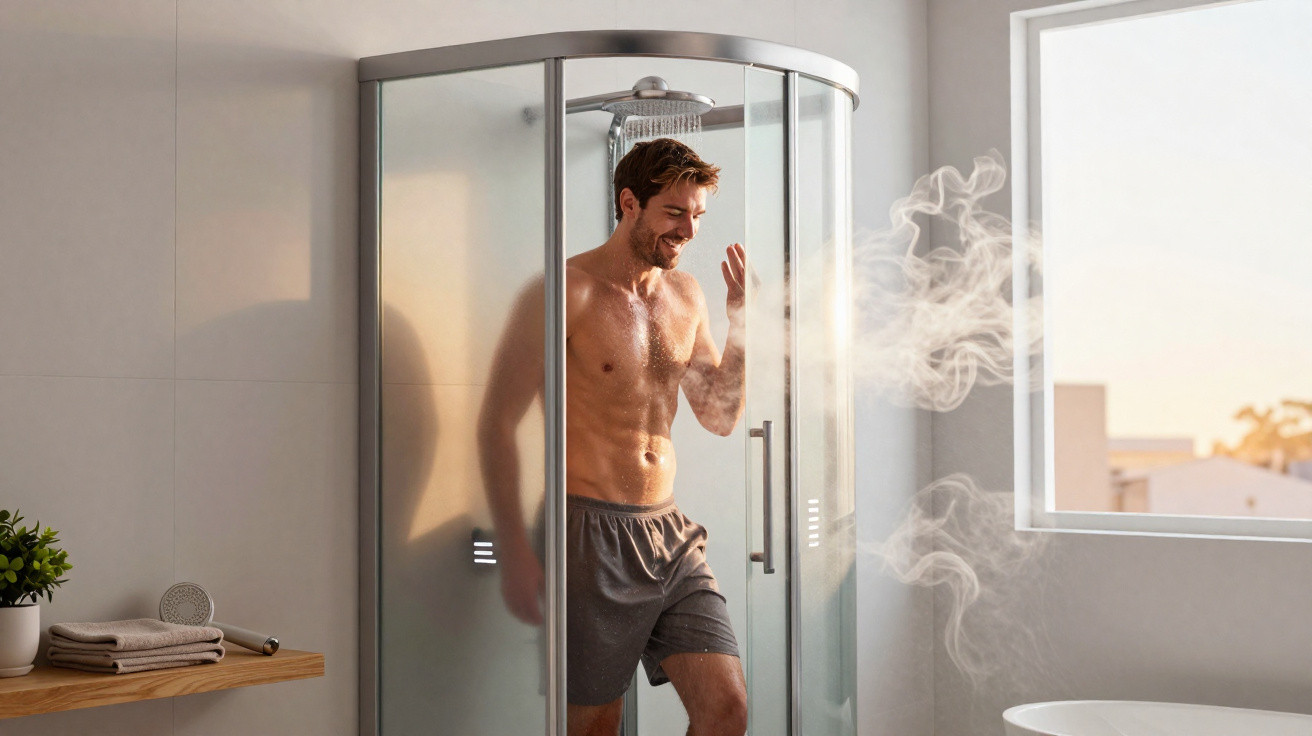
Rather than stepping into a shower, you sit inside an enclosed capsule, press start and let a machine take care of the rest. What sounds like a scene from a sci-fi film is gradually becoming reality in Osaka. A Japanese company is developing a so-called “human washing machine” designed to automatically wash and dry the body within minutes while also collecting health data.
The human washing machine: the idea behind it
The device is called the “Mirai Ningen Sentakuki”, roughly meaning a “washing machine for the people of tomorrow”. At its heart is a sealed cabin where users sit back, recline and allow a fully automated care programme to begin.
The underlying concept is not entirely new. A similar idea was already presented at the Osaka Expo in the 1970s, although it remained a futuristic prototype at the time. Today, sensors, microbubble technology and artificial intelligence provide the components that bring that vision remarkably close.
The capsule is intended to combine body cleansing, relaxation and health monitoring in one automated process.
How the body capsule works in detail
Entry, water and microbubbles
The capsule has been designed to allow the user to sit comfortably inside. Once the door is shut, the interior fills with water. This is when the core technology starts: a system of tiny microbubbles.
These exceptionally fine air bubbles are already used in spas and wellness facilities. They move gently across the skin, cling closely to its surface and are intended to release dirt particles and sebum from pores and skin creases - without scrubbing, flannels or a conventional shower.
- No hand scrubbing required
- Ultra-fine bubbles act as the “cleaning tool”
- Water is distributed evenly across the entire body
A full washing cycle, including drying, is planned to take around 15 minutes.
Sensors track physical readings in real time
Biometric sensors are integrated into the capsule walls. Among other things, they record heart rate and further physical parameters that can indicate strain, tension and general wellbeing.
The information is then fed into an AI system that can dynamically adjust the session as it runs. The machine is not intended merely to clean; it is meant to respond actively to the user’s condition.
AI turns washing into a mini spa
Based on the readings it takes, the system automatically changes:
- Water temperature
- The intensity and pressure of water and air jets
- Interior lighting, including colours and brightness
- Background sounds or music
Someone who appears stressed would receive warmer water, gentler jets, warm lighting and calming sounds. Someone who seems tired or lacking energy could experience cooler water, fresher light colours and more stimulating audio. This transforms a basic hygiene routine into a personalised wellness programme.
What distinguishes the capsule from a conventional shower
Most bathrooms follow much the same everyday formula: shower or bath, shampoo, shower gel, towel - done. The Japanese capsule rethinks the bathroom as a space from the ground up.
Instead of tiles, a shower head and a shower curtain, it creates a kind of washing machine for people that brings together cleansing, relaxation and monitoring.
The drying stage takes place in the same cabin after washing. Warm air streams and directed air circulation are intended to ensure users do not step out soaking wet. According to the development team, people leave the machine dry and ready to get dressed.
| Aspect | Conventional shower | Human washing machine |
|---|---|---|
| Cleansing | Manual washing with shower gel and a flannel | Microbubbles and automated programmes |
| Duration | 5–15 minutes, depending on the person | Approx. 15 minutes including drying |
| Relaxation | Hot water, perhaps music | Individually controlled lighting, sound and water settings |
| Health data | No systematic measurement | Sensors record physical readings during the wash cycle |
| Drying | Towel, hairdryer | Integrated drying system inside the cabin |
Possible uses for this technology
For now, the project is primarily attracting attention. Even so, several potential applications are obvious.
Care homes and hospitals
People with limited mobility often need assistance when showering or bathing. A capsule that users can sit in and that cleans the body largely without physical contact could reduce the burden on care staff.
- Gentle washing without substantial lifting or turning of patients
- Important vital signs checked at the same time
- Greater privacy than conventional assisted washing
This could have enormous potential, particularly in an ageing society.
Wellness, hotels and airports
Such a “washing capsule” could also have a role in upmarket hotels, premium spa areas or even lounges at major airports. It could be offered to frequent flyers who want to wash, unwind and refresh themselves quickly after long-haul flights - without booking a full spa treatment, but with considerably more than a quick shower.
Future private homes
Whether a machine of this kind will eventually replace a conventional shower in ordinary homes remains entirely uncertain. Costs, maintenance, space requirements and safety issues have yet to be clarified. Even so, the idea of a bathroom resembling a technical room with a comfort capsule appeals to many technology enthusiasts.
Benefits, risks and unanswered questions
At first glance, the benefits are appealing: time savings, convenience and a cleaning experience that feels like a blend of a shower and a spa visit. There is also the health-monitoring element, which could potentially provide medical indications in the longer term - for example, changes in pulse rate or stress levels.
At the same time, a number of questions arise:
- Who can access the collected health data?
- How will the hygiene and cleaning of the capsule itself be ensured?
- How much energy and water does the system use compared with a normal shower?
- How will people respond psychologically to such a heavily technologised private space?
Bathrooms have traditionally been considered among the most private rooms in a home. If sensors and AI are operating around the body there, clear rules will be needed for data use and privacy protection.
What terms such as microbubbles and AI control mean
Microbubbles are minute air bubbles, often smaller than a human hair. Their large combined surface area allows them to bind effectively to dirt particles. They have long been used in water treatment and luxury whirlpools. When applied to the human body, they are intended to reach deeper areas of the skin than conventional air-water mixtures.
AI control is based on algorithms that identify patterns in sensor data. For instance, if the system detects a rising pulse and signs of tension, it can respond with more relaxing settings. Similar feedback loops are familiar from smartwatches and fitness trackers - but here they are applied to an entire washing cycle.
How realistic is a move away from the traditional shower cubicle?
Whether high-tech capsules will soon replace shower cubicles on a larger scale depends on several factors: price, public acceptance, energy consumption, maintenance and design. Many people want freedom of movement in the bathroom rather than a confined capsule. Others may find the prospect of feeling as though they are in a private mini sauna reassuring.
What is clear is that the Japanese development demonstrates how far technology can extend into an everyday activity such as washing. At the same time, smart shower systems are emerging in Europe that save water, regulate temperature automatically and analyse usage data. The “human washing machine” simply takes this trend to its furthest point.
For the moment, the capsule remains an intriguing glimpse of how hygiene, wellness and health monitoring could become more closely intertwined in the future - and of how dramatically the traditional image of the bathroom could still change.

Comments
No comments yet. Be the first to comment!
Leave a Comment