
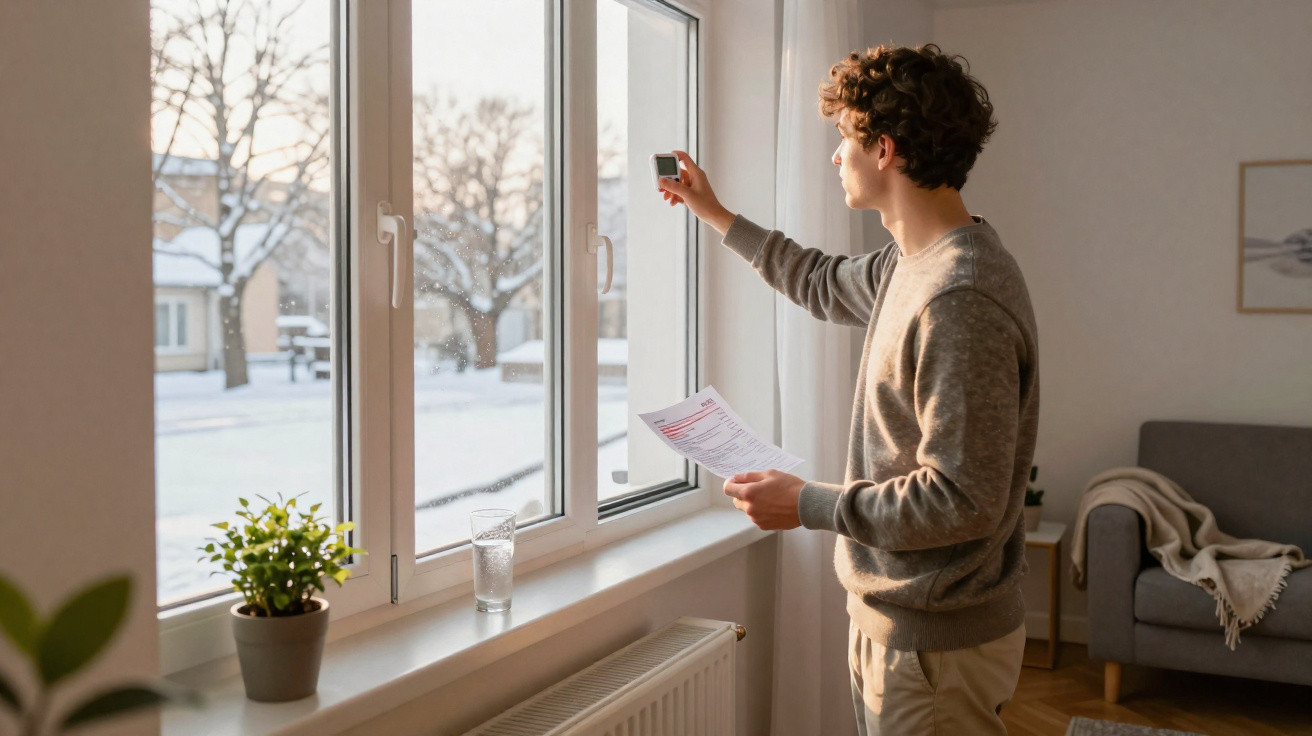
In many homes, opening a window is almost automatic: throw it wide open, let fresh air in and “air the place out”. You see a neighbour standing on the balcony in a dressing gown, cigarette in hand, with the window wide open and the radiator turned right up. Inside, the energy meter climbs; outside, warmth disappears into the cold air. We all know that moment when we would rather ventilate “properly” than pause to consider what it does to the heating bill. And to the climate. Perhaps we are not ventilating too little at all – perhaps we are doing far too much of it.
Why ventilation wastes so much energy
The same scene plays out in thousands of homes: windows are left on tilt in the morning before work, the heating stays on and nobody is at home. It feels sensible, even responsible. We have been taught to equate fresh air with good health. Yet our instincts conveniently overlook the fact that several kilowatt-hours of heat can literally escape through the window every hour. Ventilation is seen as “clean”, while heating is regarded as “expensive” – so many people simply overdo the airing.
For many households, airing rooms has become as habitual as walking to the coffee machine. Figures from energy advisers show that older buildings can lose up to 20 percent of their heating energy through poor ventilation habits. One tenant told me that she leaves her bedroom window on tilt “all night, otherwise I feel stuffy”. Her heating bill was 30 percent higher than the previous year. She thought she was saving money because she “doesn’t turn the heating up that high anyway”. In reality, the heat was simply escaping faster than it could be replaced.
The problem is a misunderstanding: fresh air is confused with cold walls. Ventilating for too long cools not only the air but also the walls, furniture and floors. Reheating them later takes far more energy than a brief exchange of indoor air would have required. Physics is relentlessly matter-of-fact: warm air leaves quickly, while heat stored in the building fabric is slow to recover. That is where the hidden drain on heating costs begins – one we barely notice in daily life.
How to ventilate wisely without overheating your home
The simplest rule of thumb sounds almost too easy: ventilate briefly, intensely and several times a day. This is the familiar practice of airing a room fully, but done properly. In practical terms, open the windows fully two to four times daily, ideally opening windows on opposite sides to create a through-draught. When it is cold outside, five to ten minutes is enough. Turn down the radiators while doing so. Then close the windows and return the heating to its chosen setting. This keeps the heat stored in walls and furniture indoors while replacing only the stale air.
Many people think tilted windows are the gentler choice. They may look harmless, but they quietly consume heating energy over long periods. This is particularly true when they remain open for hours in an office, child’s bedroom or bathroom. The narrow gap causes the fabric around the window to cool continuously and gradually. You tend not to notice until the heating feels “somehow too weak”. Let us be honest: nobody uses a stopwatch every time they air a room. That is exactly why ventilation can so easily shift from “healthy” to “expensive”.
An energy adviser once put it bluntly:
“Anyone who leaves windows tilted throughout winter is not heating their home, but their front garden.”
A few clear guidelines can prevent this:
- Avoid leaving windows on tilt where possible; open them fully for a short time instead.
- Turn radiators down before airing a room.
- Pay more attention to humidity than to a “feeling of freshness”.
- Air the room fully straight after showering or cooking, rather than leaving a window half-open for hours.
- Do not allow rooms to become completely cold, even when you are out during the day.
This turns ventilation into a deliberate action rather than unnoticed background airing that continues all day.
Between the desire for fresh air and a heating-cost shock
When people talk about how they ventilate their homes, one recurring theme emerges: control. They want to feel that they have a grip on air quality and can decide for themselves when a room has been “aired properly”. Many are frustrated by rising heating costs yet also feel powerless in the face of energy prices, landlords or an ageing boiler in the basement. Ventilation can seem like the last lever they can operate themselves. But it is a deceptive one, because it feels beneficial while quietly driving up the bill.
The sober reality is that we often overestimate how “bad” our indoor air actually is and underestimate how strongly the building envelope responds to lengthy ventilation. A £10 hygrometer can make more difference than any warning on a service-charge statement. Anyone who sees for the first time how quickly humidity falls when windows are opened fully – and how little it changes with a tilted window – suddenly understands why short, targeted actions achieve more. It also makes clear why open windows while the heating is running are simply an expensive reflex.
Ultimately, this is not only about money. It is about feeling differently about everyday life in your own home. It is the quiet satisfaction when the heating bill arrives and hurts less than before. It is recognising that saving energy does not mean shivering by candlelight, but adjusting a few settings that do not inconvenience anyone. Perhaps at your next coffee in the kitchen, you will tell your housemates that excessive ventilation is a hidden energy thief. Perhaps you will look at the windows this evening – and open them fully. For five minutes. Then close them again.
| Key point | Detail | Benefit for the reader |
|---|---|---|
| Full airing instead of permanently tilted windows | Open windows fully 2–4 times a day for 5–10 minutes, turning radiators down first | Less heat loss, the same air quality and noticeably lower heating costs |
| Buildings cool down when ventilation lasts too long | Walls, floors and furniture store heat and take a long time to warm up again | A clearer understanding of why “too much ventilation” increases the bill |
| Keep an eye on humidity | A simple hygrometer shows when airing is genuinely needed (40–60 % is optimal) | Less guesswork and greater control over the indoor climate and energy use |
FAQ:
- How often should you really air your home in winter? In most homes, airing rooms fully two to four times a day for around five to ten minutes is sufficient, depending on the outside temperature and how the rooms are used.
- Is leaving a bedroom window on tilt overnight really that bad? From an energy perspective, yes, especially on freezing nights. A better approach is to air the room thoroughly before bed, close the window again, set the radiator moderately and air the room fully again in the morning.
- Should I turn off the heating when airing a room? At least turn the thermostats down considerably so they do not “fight” the cold air. Once the windows are closed, return them to the desired setting.
- Does a hygrometer really help with proper ventilation? Yes, it shows when humidity is too high. The optimum range is between 40 and 60 percent; consistently higher values can lead to mould, so targeted ventilation is worthwhile.
- Do I need to ventilate a new-build home differently from an older property? New-build homes are often more airtight, so shorter but regular ventilation is usually enough. Older properties “breathe” a little more, but they also lose heat faster if they are aired for too long.




Comments
No comments yet. Be the first to comment!
Leave a Comment