
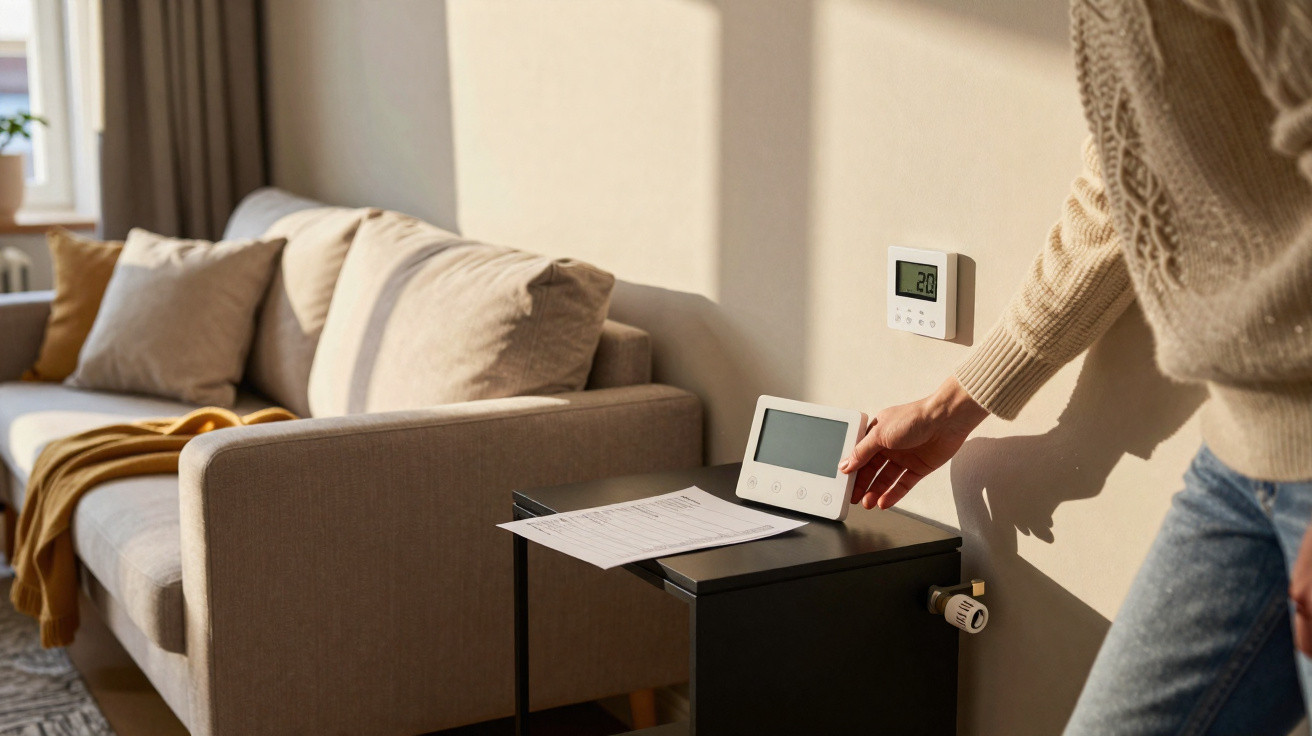
Across the UK, households are weighing up the same question: does it cost less to leave the heating at a low constant level, or turn it up only for the hours you are at home? Martin Lewis has addressed this issue for years, and his guidance carries added significance as typical annual bills approach £1,755 this autumn.
What Martin Lewis really says about the ‘always on’ debate
Through MoneySavingExpert, Martin Lewis has repeatedly made the same point: heat your home when it needs heating, rather than following an arbitrary date such as 1 November. In other words, use the timer and thermostat effectively instead of allowing the boiler to run continuously from morning until night.
Heat when you are there and cold, not when the house is empty. Let the thermostat and timer call the shots, not habit.
Put simply, set a temperature that feels comfortable and programme the system for the periods when people are normally awake and at home. Where the household is at work or school for the day, there is usually no benefit in heating rooms containing only empty chairs and quiet sofas.
In the majority of reasonably insulated properties, this approach of having heating on when required and off when it is not will generally consume less gas or electricity than keeping radiators mildly warm all day.
Finding the comfort ‘sweet spot’ on your thermostat
Timers and room thermostats are intended to maintain a steady indoor temperature without unnecessarily overheating the property. They turn the boiler on and off to hold the temperature you have selected. More frequent boiler cycles do not automatically cost more; what you pay for is the total amount of heat supplied over the day.
Many homes settle on roughly 18°C to 20°C in occupied living areas. Hallways and bedrooms can often be cooler. Setting a modestly lower temperature of around 14°C to 16°C while the home is empty prevents the fabric of the building becoming freezing cold, potentially reducing the energy needed to bring it back up to temperature in the evening.
Thermostatic radiator valves (TRVs) provide an additional level of control. They enable you to keep unused rooms cooler while directing warmth towards the spaces you use. This avoids a common error: heating the entire house too much simply to warm up one chilly room.
When leaving the heating on low all day can make sense
The case for maintaining low-level heating often comes from those living in older or damp homes. In such properties, switching the heating off for long stretches may leave walls and furniture cold and damp-feeling, making condensation more likely.
Homes with single glazing, solid walls or obvious damp can lose heat so quickly that they feel perma-chilled after every off period.
Under these conditions, maintaining a mild background temperature throughout the day can keep surfaces above the temperature at which moisture becomes condensation. This may limit mould and reduce the “wet cold” sensation that can make 17°C feel more like 12°C.
This is not a blanket exception that somehow overrides physics. The outcome depends on your home’s draughtiness, its insulation levels and how effectively you ventilate it. By improving seals around windows and doors, insulating walls and lofts where feasible, and using extractor fans properly, many households can still use timed heating without experiencing the drawbacks of continuous heating.
Condensation, ventilation and your building’s ‘fabric’
Condensation forms when warm, humid air meets a cold surface. Cooking, showering, indoor clothes drying and even breathing all release water vapour into the home. When this vapour reaches a cold wall or window, it turns into droplets.
Breaking the pattern requires a combination of measured heating and fresh air. Brief but effective ventilation, such as opening windows fully for several minutes, running extractor fans at high speed and leaving trickle vents open, removes humid air without losing all the stored warmth.
For homes where mould appears every winter, many experts recommend a reasonably low but consistent background temperature, supplemented by scheduled boosts in occupied rooms. This keeps surfaces somewhat warmer, making it less likely that moisture will settle and support black mould growth.
What this debate means for bills nudging £1,755
Under the current energy price cap, a typical dual-fuel household paying by direct debit has an annual bill of about £1,720, increasing to approximately £1,755 between October and December. These figures assume average consumption. Your own bill will still depend heavily on both the duration of heating use and the temperature you choose.
Even at a low setting, leaving the heating running all day consumes kilowatt-hours where heat is continually escaping outdoors. Those small amounts mount up on the meter. For most households, cutting costs does not mean wearing three jumpers; it means managing where and when warmth is delivered.
Timed bursts vs low all day: side-by-side look
| Approach | Best suited to | Main drawback | Key controls |
|---|---|---|---|
| Timed heating at a set temperature | Most homes with average or good insulation | House can feel slow to warm if setback is too low | Programmer, room thermostat, TRVs |
| Low-level heat all day | Homes with condensation, damp or very cold walls | Risk of higher overall gas use if set too warm | Low thermostat set-point, ventilation, humidity monitor |
Seven tips from the Martin Lewis playbook to cut waste
- Set a timer so heating follows your daily routine rather than operating for a full 24 hours.
- Keep the main thermostat at about 18–20°C while you are at home, using a small setback when you leave.
- For condensing boilers, consider reducing the flow temperature to around 55–60°C to improve efficiency.
- Bleed and balance your radiators so rooms warm evenly, rather than raising the thermostat to compensate for a single cold area.
- Do not block radiators with large sofas, lengthy curtains or clothes airers that hold heat in.
- Deal with clear draughts around keyholes, letterboxes, windows and skirting boards.
- Ventilate with purpose: run kitchen and bathroom extractors and open windows briefly, rather than keeping them slightly open all day.
Why turning the thermostat up does not speed things up
A persistent misconception is that setting the thermostat to 25°C will make a house heat up more quickly. It will not. The thermostat only sets the target temperature. The boiler heats at its normal pace until that temperature is reached, at which point it turns off.
If your desired temperature is 19°C, set it to 19°C. Choosing a higher figure simply keeps the heating operating longer and can cause overheating, wasting energy. Rooms that take an uncomfortably long time to warm may indicate problems with radiator sizing, boiler configuration, balancing or insulation, rather than too low a setting on the thermostat.
Small setting changes that can shave pounds off
Boiler flow temperature is an important control that many households never adjust. Conventional systems are often supplied with a flow temperature of 70°C or higher. At these temperatures, modern condensing boilers cannot condense as efficiently, so potential savings are lost.
Lowering the flow temperature to approximately 55–60°C helps recover more heat from exhaust gases. In homes with adequately sized radiators, this can reduce fuel consumption without compromising comfort. Test the adjustment on a milder day. If the property does not warm sufficiently, increase the flow temperature gradually until comfort and running costs are balanced.
TRVs are also often overlooked. Set rarely used rooms a few degrees cooler, close doors to retain warmth in the principal living spaces and adjust rooms individually. This modest zoning approach reduces total demand while ensuring the areas you occupy remain cosy.
If your home is damp, draughty or both
For residents of older terraces, basement flats and homes with visible mould, the choice is more complex. Holding a background temperature of roughly 16°C to 18°C, combined with short heating boosts when you are home, can improve comfort considerably and help protect the building fabric.
Combine this with effective moisture management. Use kitchen and bathroom extractor fans during use and afterwards. Do not dry washing in rooms without ventilation. An inexpensive digital humidity monitor can indicate whether these steps are helping; target around 40–60% relative humidity.
Dry walls feel warmer at the same temperature, so reducing moisture can let you live comfortably a degree or two lower.
Quick checks before the first real cold snap
A handful of routine checks before the weather turns sharply colder can avert costly problems. Arrange a boiler service if one is due, check and top up system pressure, and confirm that radiators heat evenly from top to bottom. Noisy pumps, stiff valves and radiators that are cold at the top all indicate that maintenance may be required.
You can also carry out a simple test using your own energy readings. Record gas and electricity use over a typical normal day. Next, tighten the heating schedule and introduce a modest setback, then take readings on a comparable day. Finding even a 5–10% reduction over the October–December period can help soften the effect of the typical bill approaching £1,755.
Scenarios to help you choose your strategy
Consider a couple in a modern, well-insulated semi-detached home who are away from 8am until 6pm on weekdays. Heating programmed for 6–8am and 5–10pm at 19°C, with a 15°C setback between those periods, will normally be cheaper than an all-day low setting while maintaining comfort.
Now consider a ground-floor flat with single-glazed windows and black mould around the corners. In this case, keeping a constant 17°C background temperature, with brief boosts in the early morning and evening, may raise gas use slightly but can substantially reduce condensation and related health risks, particularly alongside consistent ventilation. Here, the decision is not simply about saving pennies, but about safety and preventing long-term damage.





Comments
No comments yet. Be the first to comment!
Leave a Comment