
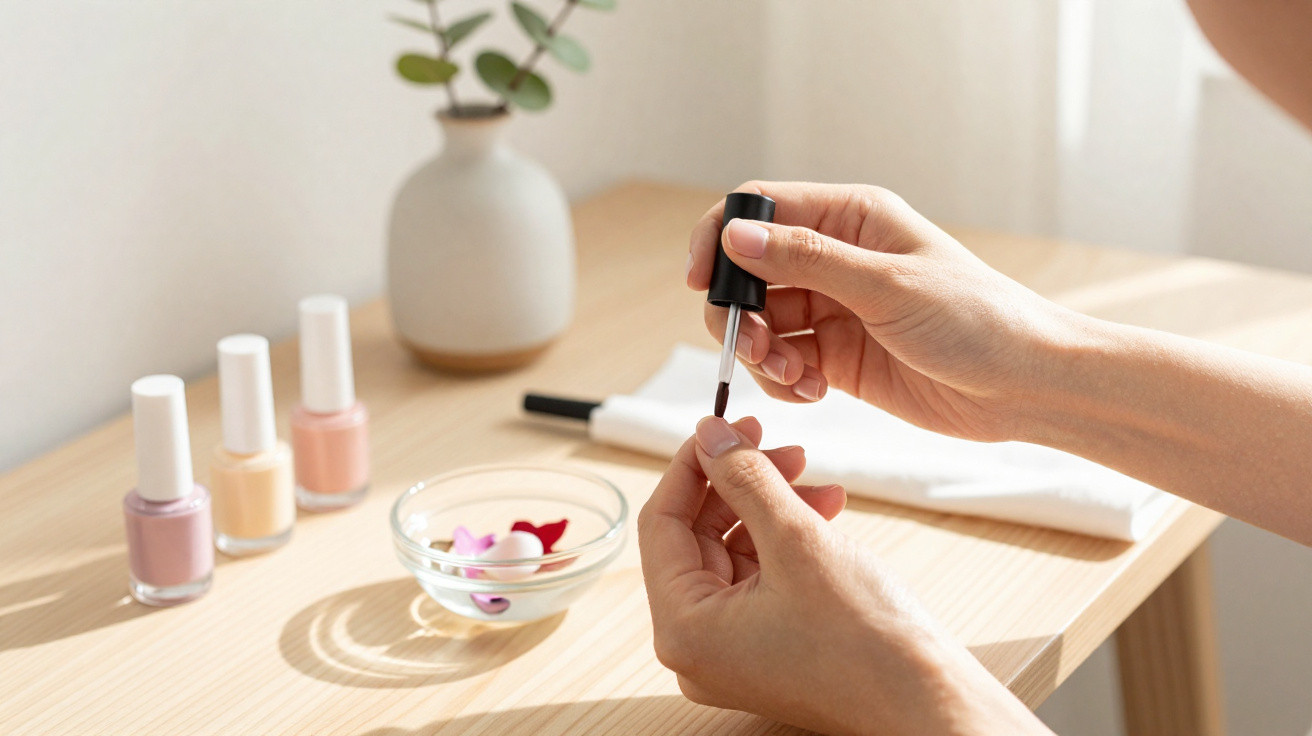
The Japanese technique for nail care is becoming increasingly popular among people seeking greater resistance from their nail polish during everyday tasks. Its approach centres on carefully sealing the nail tip, creating a barrier that helps prevent early chipping. This care is particularly useful for those who wash up, use cleaning products or follow a demanding household routine, in which the nail finish often wears away quickly.
How does the Japanese technique improve nail polish durability?
The Japanese technique stands out because it strengthens the nail structure and protects the nail polish immediately after the manicure is completed. Its main purpose is to stop water and friction from affecting adhesion at the nail tip, the area most prone to wear.
When the sealing is done properly, the product creates a type of “closure” along the free edge, making it harder for chipping to begin. This improves durability even in more demanding routines involving frequent cleaning and contact with detergents.
The main benefits seen when it is applied correctly include:
- Less chipping in the first layers of nail polish;
- Better nail polish adhesion across the nail surface;
- Protection for the nail tip against knocks and friction;
- More effective sealing during household routines.
What causes nail polish to chip in everyday life?
Nail polish does not chip without reason. It is associated with factors such as constant contact with hot water, the use of chemical products and insufficient protection at the nail tip. These elements weaken the top layer and speed up wear.
A lack of effective sealing can also cause the nail polish to lift around the edges. Without this reinforcement, small cracks develop and quickly worsen, affecting the finish.
Which habits strengthen nail sealing?
Keeping the sealing effective requires a few straightforward yet consistent measures. The Japanese technique reinforces this protective routine by focusing on maintaining the nail tip as a key area for preventing flaws in the nail polish.
Several habits can help extend the effect of the application:
- Avoid extended contact with water immediately after applying nail polish;
- Reinforce the sealing with each new layer of nail polish;
- Wear gloves when handling cleaning products;
- Keep the nail tip even and free from chips.
The link between nail tip protection and a professional finish
When the nail tip receives particular attention, the nail polish result generally looks more even and long-lasting. The Japanese technique focuses precisely on this area, creating a stronger base against daily wear.
Sealing is an essential step in keeping the finish intact for longer. It reduces chipping and helps nails retain a neater appearance, even after repetitive activities such as cooking or cleaning.
Why does the Japanese technique improve the care routine?
Applying the Japanese technique changes how nail polish performs over the following days. By reinforcing the sealing and protecting the nail tip, it produces a more stable surface that is less vulnerable to wear.
With less chipping, nail maintenance becomes more spaced out and predictable. This makes the routine easier for anyone who needs to keep their hands well cared for despite frequent household tasks.
The balance between protection and finish makes the Japanese technique an effective option for those looking for stronger nail polish without giving up a well-finished look. Correct sealing and ongoing care of the nail tip support this result over time.




Comments
No comments yet. Be the first to comment!
Leave a Comment