

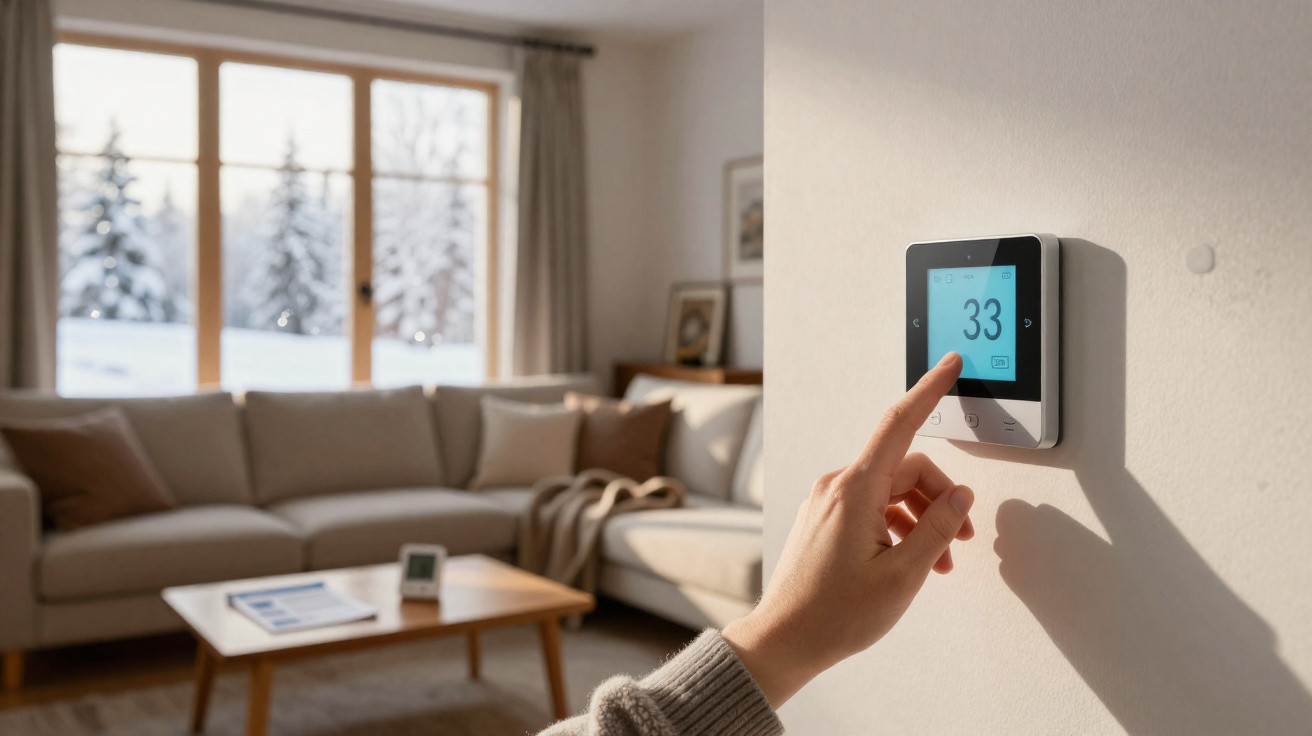
The thermostat reads 21°C. That should feel cosy, shouldn’t it? But you are on the sofa in thick socks, shoulders drawn in and hands around a mug that has cooled far too quickly. The radiators are quietly working, the small flame symbol is lit, yet an unmistakable chill still hangs in the room.
Walk from the hall into the living room and the warmth can suddenly fall away, as though you have stepped across an unseen boundary. Irritated, you turn the thermostat up another notch and stare at the screen as if it might reveal the real issue.
On some days, your home simply does not feel like the temperature it displays.
When 21°C doesn’t feel like 21°C
A thermostat is a reassuring little rectangle: it provides a figure, and we tend to believe it. However, a wall-mounted sensor measures temperature very differently from the way the human body experiences it.
You do not sense air temperature in isolation. You notice cold pouring off the windows, a draught slipping beneath the door and the freezing hall you cross on the way to the bathroom at night. Your skin is continually registering the difference between the warm and cold surfaces surrounding you.
That means the display can confidently say 21°C while your body, enclosed by chilly walls and floors, is effectively telling you it feels more like 18°C.
Consider an older flat with high ceilings and single-glazed windows. Its thermostat may sit comfortably in a central corridor, where there is no draught and no outside-facing wall. It reaches the set temperature without difficulty, so the heating switches off.
At the same time, the living room may be steadily losing heat through a large window and a north-facing wall. Sitting beside the glass, you feel the cold coming from its surface. This creates the familiar contradiction: the official temperature appears acceptable, but your feet are icy and you keep pulling a blanket over yourself.
It is not your imagination. Your thermostat is simply experiencing a different climate from the one you are in.
The technical name for this is “mean radiant temperature.” It may sound complicated, but the principle is straightforward. Comfort depends on a combination of air temperature and the temperature of nearby surfaces, including windows, walls, floors and even the sofa.
When these surfaces are cold, your body gives up heat to them and you feel chilly even if the air itself is reasonably warm. Add draughts, inadequate insulation or uneven heating, and you have the familiar winter problem: high energy bills, persistent cold spots and a thermostat insisting that nothing is wrong.
The issue, then, is seldom the number alone. It is where and how that number is being measured.
Small moves that change how warm your home feels
One of the fastest ways to improve matters is to reconsider the thermostat’s location. Plenty were fitted years ago with little attention paid to how people actually use their homes. If yours is positioned in a warm hallway, well away from doors and windows, it has an easier experience than you do.
Moving it to a more representative place - such as the main living space at human height, out of direct sunlight and not immediately above a radiator - can make a considerable difference to how evenly the heating works. It is a modest task for an electrician, yet it may prevent the system from turning off before the rooms you use are warm enough.
The aim is straightforward: the thermostat should experience the same cold that you experience.
There are also plenty of measures that require no wiring at all. Use heavy curtains and close them properly at night. Put a rug over the tiled or laminate floor that feels icy first thing in the morning. Fit draught excluders along the bottoms of doors opening onto stairwells or unheated spaces.
Most of us have had the realisation that we are paying to warm a guest room used only three times a year while the living room remains cold. Even basic zoning - lowering radiators in unused rooms and shutting doors to keep warmth where everyday life takes place - can matter more than increasing the thermostat setting.
The plain fact is that setting the dial to 24°C will not repair heat loss. It only makes that lost heat cost more.
The greatest mistake is to assume you are somehow “bad” at running a home because you still feel cold. You are not. Homes, particularly older ones, have their own peculiarities. They lose heat, form chilly corners and mislead thermostats slightly. You are dealing with the building itself, not failing an adulting test.
“Comfort isn’t just a number; it’s the way your body experiences that number in a specific room, at a specific moment,” explains a home energy auditor I spoke to. “Once people understand that, they stop blaming the thermostat and start observing their home differently.”
- Relocate your thermostat to a realistic position rather than a sheltered hallway.
- Build layers of comfort: rugs, curtains, throws and draught excluders work as quiet heaters.
- Warm the rooms where you spend time, rather than those you only pass through.
- Pay attention to cold surfaces: windows and external walls draw warmth from your body.
- Try any adjustment for several days, rather than a few hours, before deciding whether it works.
Rethinking what “warm” means at home
Once you understand that comfort has more to do with surfaces, draughts and everyday habits than one thermostat reading, you begin to see each room in a new way. You notice the cold area beside the window, the warmer patch near an internal wall and how the bedroom heats up quickly but loses that warmth just as rapidly.
This is often where meaningful changes begin quietly. You might move the sofa a little farther from the cold wall. You may recognise that layering textiles is not merely decorative but practical. Instead of pursuing the “perfect” figure, you start looking for a feeling: relaxed shoulders, warm feet and no urge to keep adjusting the dial.
Some people pass their small discoveries on to friends and neighbours - thermal curtains that transformed a room, an inexpensive door snake that removed the chill from the landing or the simple routine of closing internal doors at dusk. These practical tips travel from one home to another much like recipes.
Your home, with all its history, flaws and draughts, will not instantly turn into a perfectly sealed bubble. It can, however, become more truthful. The figure on the wall can start to reflect what your body actually feels. Then, on a winter evening, you may realise something slightly surprising: the thermostat has not changed, yet the room finally feels as warm as the life you live in it.
| Key point | Detail | Value for the reader |
|---|---|---|
| Air temperature isn’t the whole story | Cold walls, floors and windows reduce perceived comfort even at 21°C | Explains why you may feel cold despite a “normal” thermostat setting |
| Thermostat placement matters | Devices in warm hallways can switch heating off before living areas are genuinely warm | Provides a practical way to improve comfort without major renovation |
| Small habits beat big numbers | Curtains, rugs, draught excluders and room zoning alter how warmth is experienced | Gives low-cost, practical measures that may cut bills and increase comfort |
FAQ:
- Why does my house feel colder at night with the same thermostat setting? Once the sun has gone down, surfaces such as windows and walls become colder. Your body therefore loses more heat to them, making 21°C at midnight feel colder than 21°C at noon.
- Is it worth moving my thermostat? Yes, particularly if it is currently in an unusually warm or protected location. Moving it to the main living area can often make heating more even and reduce complaints about cold rooms.
- Do smart thermostats solve this cold feeling problem? They may help by learning routines and providing zoned control, but draughts and poor insulation still need to be addressed as physical problems within the home.
- Why are my feet always cold even when the room is warm? Cold floors, especially tiled floors or uninsulated concrete slabs, draw heat from your body. Rugs, slippers or underfloor rugs with foam backing can dramatically improve comfort.
- Is it better to turn the thermostat up or improve insulation? Raising the setting provides quick but costly comfort. Improving insulation and sealing draughts take longer, but deliver lasting warmth and lower bills over time.



Comments
No comments yet. Be the first to comment!
Leave a Comment