
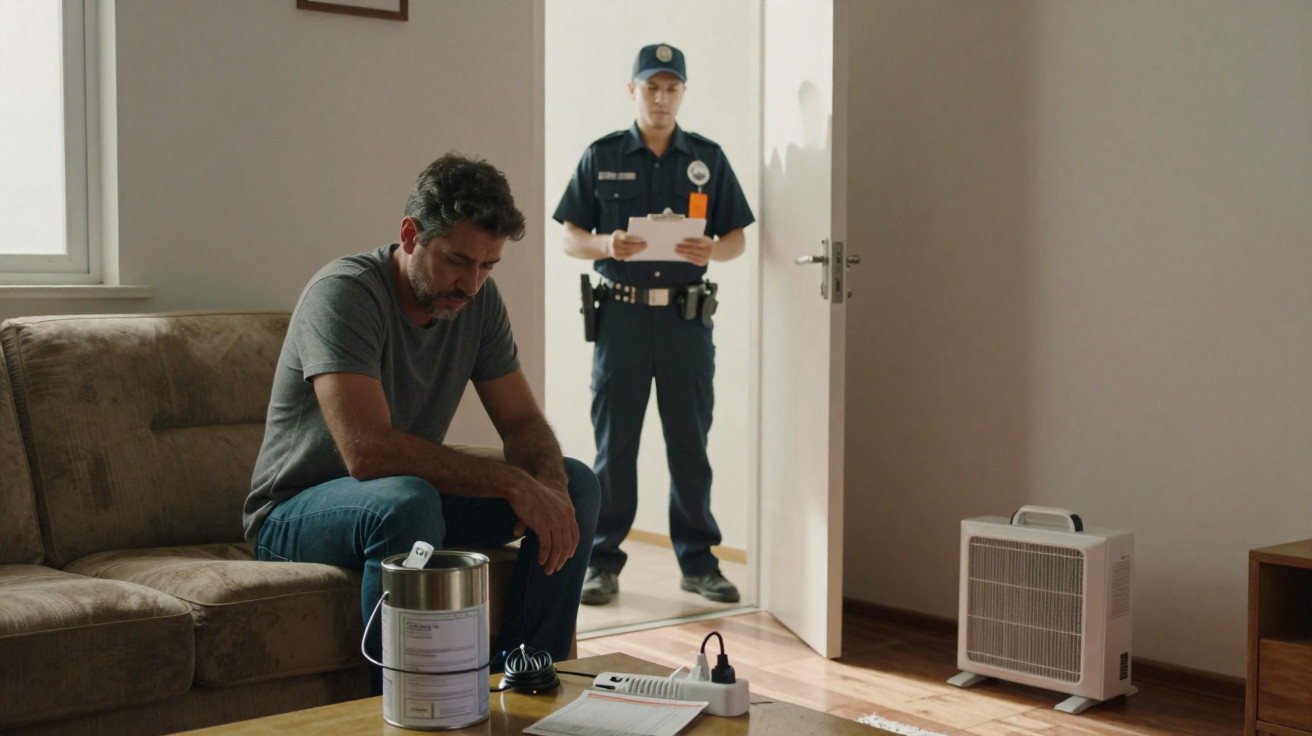
With energy bills high and rented homes plagued by draughts, some people are resorting to improvised solutions. But those makeshift measures are attracting a different sort of attention: unannounced visits from fire services, housing officers and insurers, followed by fines or compulsory removal where installations breach the rules. The choice feels stark: keep warm within the regulations or face an early-morning knock and an unexpected penalty.
That morning, frost clung to the window in a faint silver layer. A father in woollen socks held a cup of tea as his teenage son knelt beside a homemade heater: a metal tin, several tealights and a small fan whirring on the floor. The room felt warmer than it had the day before, enough to ease the chill. Then the bell sounded twice, and the recognisable voices of officials filled the hallway. The house went silent, apart from the continuing hum of the fan.
Why DIY heaters are prompting doorstep inspections
Firefighters and council officers do not make these calls for amusement. They respond to genuine dangers, including overloaded plug sockets and improvised heaters that can fall over, overheat or produce fumes. A visit may follow reports of burning odours, multiple smoke alarms sounding, or a landlord raising concerns about unauthorised appliances. The written guidance is unglamorous: use certified equipment, maintain safe gaps and ensure adequate ventilation. Yet in a cramped flat where a single socket powers everything, those rules can collide with everyday reality.
One Leeds tenant says an unexpected inspection began after paraffin fumes travelled into the communal stairwell. A neighbour feared there was a gas leak and reported it. Fire crews discovered a converted camping stove beneath a table, with curtains dangerously close to its flame. Officers confiscated the stove, issued a caution and sent the landlord a formal notice. Nobody had set out to act carelessly; they simply wanted warmth while their wages remained flat and prices kept rising.
Housing regulations rest on a straightforward principle: heating equipment must be safe, certified and fitted for its intended purpose. Even ingenious homemade arrangements bypass those safeguards. Insurance policies often contain comparable terms, so a claim following a smouldering incident may be rejected when an unapproved device is responsible. This is why authorities intervene when they find exposed heating elements, indoor naked flames or equipment assembled from discarded electronics. The aim is not to punish ingenuity, but to limit hazards that can spread from one flat throughout an entire building.
Safer ways to stay warm without penalties
When your home is bitterly cold, begin with a swift, systematic heat-safety check that takes around ten minutes. Go through each room and check the space around every heater, allowing a one-metre gap from bedding, curtains and washing. Feel plugs and extension leads for heat; a warm plug indicates excessive demand. Test smoke alarms, then press the test button on your carbon monoxide alarm. Take photographs of the current arrangement and write down product brands, as this can help if an inspector asks about them. No one wants a knock at 7 a.m.
Choose only certified portable heaters fitted with thermostats and tip-over cut-outs. Lay cables flat rather than coiling them beneath rugs, and connect heaters straight to a wall socket instead of linking extension leads together. Do not use fuel-burning equipment inside unless it has been made for indoor use and is properly vented. Seal draughty gaps with temporary removable draught seals and use thick curtains, rather than placing towels over radiators. Tenants should report heating faults to their landlord in writing and include the date. Let’s be honest: nobody really does that every day. Even so, a written record can offer protection.
“We don’t want to write tickets; we want people alive next winter,” says a London fire officer. “If money’s tight, ask us about safe equipment and advice. We’ll help you find a legal, low‑risk way to stay warm.”
The difficult part is not recognising danger; it is avoiding the tempting low-cost solution that reduced last month’s energy bill. We have all experienced the point where our breath is visible indoors and thought there must be a workaround. Here is a useful reality check that is often overlooked:
- Surprise inspections commonly result from complaints, unusual odours or hazards visible from outside.
- Landlord duties differ, although most are required to provide code-compliant heat at a minimum temperature.
- Insurers may reject claims involving unsafe DIY rigs, even where the damage is limited.
- Local grants, hardship funds and energy credits are available; ask your council or a charity hub.
- Keep records of every repair, receipt and photograph to demonstrate that you intended to act safely.
The wider picture this winter
The boundary between resourcefulness and danger is narrow, and many households are crossing it in their socks. When people must solve the problem of warmth using candles and fans, something in the system has failed. Penalties and confiscations may seem harsh in an unheated room, but officials are right to fear a spark reaching a neighbour’s cot. High energy costs, inadequate insulation and inconsistent maintenance all intensify the strain. So does online material that makes unsafe hacks appear appealing despite failing even basic safety standards. The answer is not greater fear, but franker discussions and usable support: rapid grants for certified heaters, clearer landlord responsibilities, faster repairs and drop-in advice sessions at libraries and community centres. A winter based on trust and straightforward rules is better than one defined by knocks at the door.
| Key point | Detail | Why it matters to readers |
|---|---|---|
| What triggers inspections | Complaints, odours, visible hazards or evidence of unapproved heating devices | Understand what attracts attention and deal with it before it leads to a visit |
| Legal versus DIY heating | Certified appliances with safety features are permitted; improvised or altered setups are not | Stay warm without risking fines, confiscation or insurance problems |
| Safe, practical measures | Clearance, correct connections, alarms, landlord records and local grants | Specific steps you can take tonight to lower risks while retaining warmth |
FAQ:
- Can authorities really enter my home for a heater check? They normally require consent or a legal justification, although urgent safety concerns - such as a suspected fire or gas leak - may permit swift entry. Most visits start with a knock, a discussion and a request to inspect the area causing concern.
- What counts as an “unapproved” heater? This means anything that has not been made to a recognised safety standard or is being used beyond its intended design. It includes modified appliances, indoor open-flame arrangements and electrical equipment put together from spare parts.
- Will insurance refuse a claim if I use a DIY heater? Policies commonly exclude damage caused by unapproved or unsafe equipment. Where a homemade device causes a fire, an insurer may reduce or refuse payment, and you may also be liable for neighbours’ losses.
- How can renters push landlords to fix cold homes? Put reports in writing, retain dated evidence and refer to the minimum heating standards in your tenancy agreement or local regulations. If there is no progress, contact the council’s private renting or housing enforcement team.
- What are safer low-cost ways to feel warmer? Choose certified oil-filled radiators with thermostats, add layers of textiles, seal draughts temporarily and heat the room used most often. Look for grants or hardship schemes offered by councils, energy suppliers and charities.



Comments
No comments yet. Be the first to comment!
Leave a Comment