
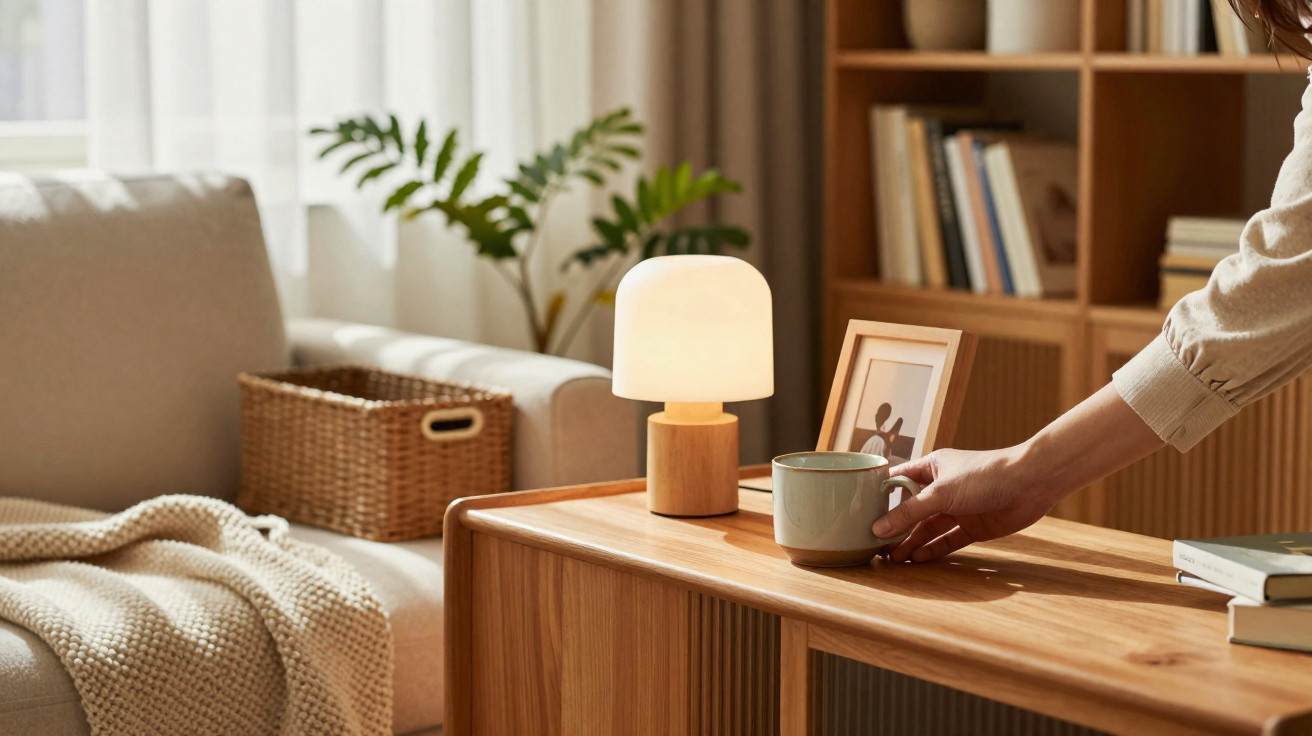
In a nutshell
- 🔍 Hidden mechanism: perceptual coherence and predictive processing help spaces feel understandable and internally consistent, reducing cognitive load and allowing the nervous system to settle more quickly.
- 💡 Calming design signals: coordinated, layered lighting, easy-to-follow circulation routes, recurring materials/colours, soft acoustics, and biophilic elements bring the senses into alignment and lower vigilance.
- 🚫 Why minimalism isn’t always better: empty rooms may feel unclear; pursue meaningful organisation and selected richness that provides “soft fascination” without chaotic clutter.
- 🧪 Real-world proof: modest changes to layout, light and sound made behaviour calmer in UK offices and clinics, reflecting Attention Restoration and Stress Recovery research without requiring large budgets.
- 🧭 Try a one-hour test: trace routes, unify light, repeat a material and reduce echoes; watch your breathing and fidgeting for rapid signs of better coherence.
Entering a room and immediately feeling your shoulders loosen is an almost instant sign that the setting is supporting you rather than working against you. Environmental psychology points to an underlying reason for this response: perceptual coherence-the brain’s effortless capacity to anticipate where things are, how they function and what they imply for safety and activity. Environments that fit our mental models lessen cognitive load and reduce threat surveillance. When the brain can predict a space, it relaxes the body. During months of reporting visits to UK homes, clinics and co-working lounges, I found that the most reassuring rooms were not invariably the most beautiful; they were the easiest to understand. This is how that quiet psychology operates, and how you can apply it without making your home resemble a showroom.
The Hidden Mechanism: Perceptual Coherence
At its heart is a constant but unobtrusive process: the brain’s predictive processing system anticipates what will occur, then compares the result with those expectations. In coherent rooms, where the arrangement, light, materials and intended use all “agree”, there are fewer prediction errors, enabling the nervous system to ease down. Environmental psychologists refer to legibility-whether you can rapidly make sense of a place-and coherence-whether its components connect logically. Combined, these qualities make somewhere “low-friction.” If a room tells one clear story, your body stops scanning for the plot.
Consider this the opposite of design noise. Recurring shapes, reliable sightlines and purposeful groupings cut down the tiny choices that exhaust attention. It also accords with Attention Restoration Theory: when an environment is visually gentle but contains mild, engaging signals-such as edges that lead the eye, gradients of daylight and restrained shifts in texture-the brain can give directed attention a break. The issue is not flawlessness or fashion, but signal clarity. Even much-loved clutter can soothe when it is sorted into categories and arranged predictably. Objects themselves are not the problem; contradiction is: furniture may suggest one activity, lighting another and sound something entirely different.
I have watched this happen in British terraced houses, where narrow corridors were repainted and relit to create a visual “runway” between the front door and staircase. The homeowners retained their personal style, yet the route through the house became clearer. The atmosphere changed with it.
Design Signals That Calm the Predictive Brain
Rooms communicate through signals. Raising perceptual coherence does not require an extensive refurbishment, only cues that work together. Begin with lighting: choose layered, warm-to-neutral colour temperatures suited to the activity. Next comes layout: position principal furniture around clear axes, such as a fireplace or window, and make routes through the room easy to read. Then consider materials: reuse a limited range of textures so that what you touch confirms what your eyes expect. Lastly, attend to sound and scent: soften reverberation, reduce appliance noise at night and keep fragrances appropriate to the room’s purpose. When sensory channels agree, your physiology stops bracing for surprises.
| Design Lever | Brain Signal | Likely Effect |
|---|---|---|
| Layered, consistent lighting | Temporal predictability | More even circadian cues; lower vigilance |
| Clear circulation paths | Low navigation cost | Reduced cognitive load; a calmer pace |
| Repeated materials/colours | Pattern recognition | Faster legibility; reassurance through familiarity |
| Soft acoustics | Threat damping | Fewer startle responses; better focus |
| Biophilic cues (plants, daylight) | Evolutionary fit | Gentle stress recovery; visual rest |
In conversations with designers refurbishing UK clinics, they explained that they now address acoustics and circulation before selecting colour swatches. Patients describe rooms as “calmer” when the arrival, waiting and departure routes are self-evident, without uncomfortable uncertainty. At home, this could involve setting the sofa towards a window’s extended view, using bulbs of matching temperature in every lamp and carrying timber tones from the floor through to shelving. These are small interventions with substantial effects on coherence.
Why Minimalism Isn’t Always Better
It is easy to assume that “less” automatically means “calm”. Environmental psychology, however, cautions that bare does not equal benign. A space deprived of signals can feel uncertain, making the brain work harder to establish its purpose and whether it is comfortable. We relax not in emptiness, but in places where meaning is easy to read. This helps explain why a stripped-back sitting room may seem chilly while an orderly study lined with books feels secure and absorbing.
Pros vs. Cons:
- Pros of restraint: fewer competing visual signals, quicker legibility and simpler upkeep.
- Cons of over-minimalism: reverberant acoustics, glare, uncertainty about how the space is used and too little “soft fascination.”
- Pros of curated richness: layered textures, personal character and varied small places for the eyes to pause.
- Cons of excess: when categories become confused, prediction errors rise-and stress follows.
The answer is not maximalism, but meaningful organisation. Keep meaningful possessions, while arranging them around themes or activities. Pick up colours from artwork in your textiles. Introduce a rhythm through closed storage-solid, open, solid-so the brain can scan the room with ease. In kitchens, place everyday utensils where your hands instinctively reach; in bedrooms, use dimmable lighting and tactile bedding to create a gentle shift from activity to rest. Coherence rather than austerity is what truly creates calm.
Small-Scale Proof: Stories, Pilots, and a Household Test
At a north London co-working lounge I visited, a straightforward rearrangement-placing desks perpendicular to windows, using rugs to define zones and fitting uniform 3000K bulbs-altered the atmosphere within days. Staff no longer had to pursue quiet; the space itself conveyed it. In a Manchester GP waiting room, volunteers installed felt panels, positioned seating to provide direct sightlines to reception and placed plants by the brightest glazing. Afterwards, interviewed patients used terms including “settled” and “easier to wait”, mirroring established Attention Restoration and Stress Recovery findings without the need for a major budget.
Try this one-hour experiment at home:
- Map the path: follow the route you use most often through a room; take away one obstruction and make one threshold wider.
- Unify light: use bulbs with matching temperatures, then introduce a low, indirect lamp for the evening.
- Repeat a material: carry a timber or metal finish into two further locations to maintain pattern continuity.
- Quiet the box: place soft materials wherever sound bounces back-such as curtains, a rug or a fabric panel.
Afterwards, sit down for five minutes and observe your breathing rate, any impulse to fidget and how swiftly you can find what you need. If tasks feel smoother and your gaze settles, you’ve increased perceptual coherence. This is not mysticism; it is the brain deciding: “I know this place. I can rest now.”
The concealed reason certain rooms comfort us is not a particular paint colour or an expensive chair, but the quiet match between what we anticipate and what a space reliably provides. Adjusting lighting, layout, materials and sound so that they communicate one message reduces prediction errors and releases attention for everyday life. This is environmental psychology at home: less friction, more grace. What one adjustment might you make this week to help your rooms communicate more clearly-and how will you tell that your body has received the message?





Comments
No comments yet. Be the first to comment!
Leave a Comment