
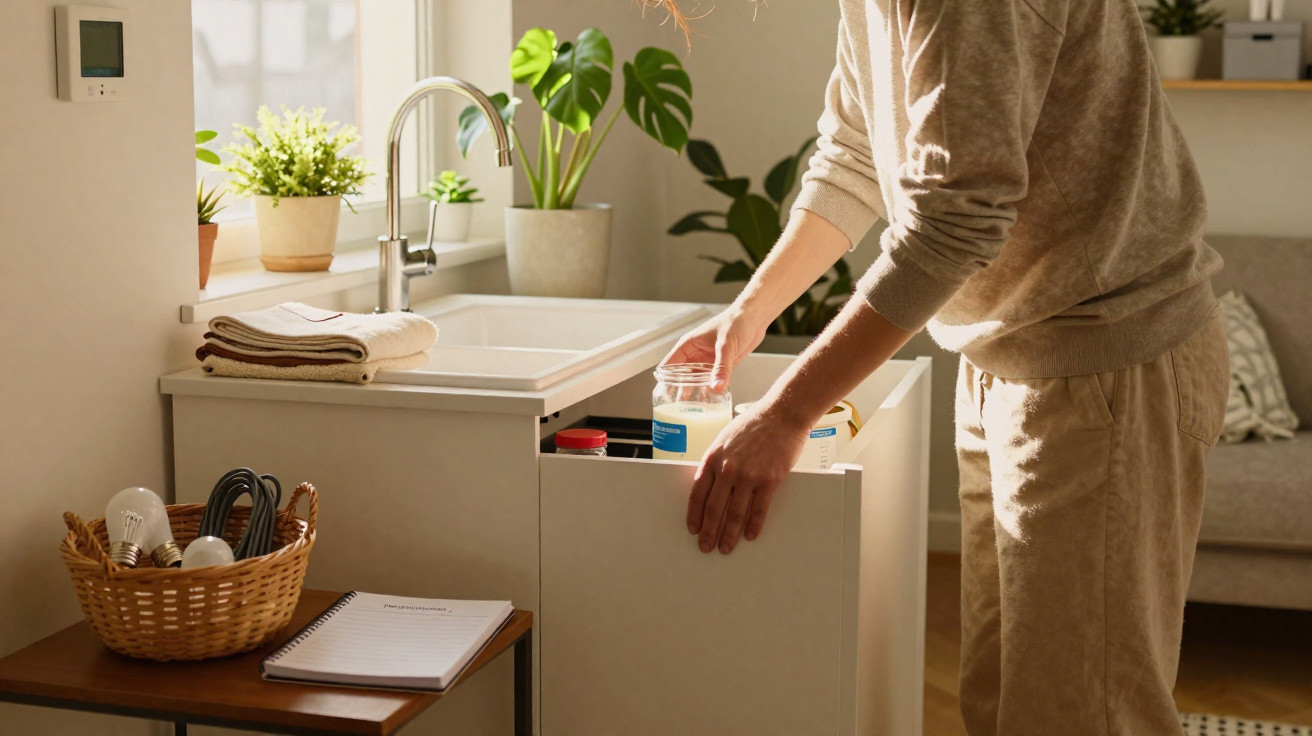
You rarely notice a home has begun to age badly because of flaking paint or a worn-out sofa.
Instead, it is the sense that the room is somehow… weary of having you in it. It is the heap on the chair that never gets moved. The kitchen drawer that sticks, so you have learned not to open it. The plant in the corner that died three months ago but remains there, silently reproaching you every morning.
Your décor can look perfect on Instagram and still leave you feeling strangely uneasy in your own sitting room.
Then you go to a friend's home: smaller, older and less “perfect” - yet you feel calmer the moment you enter. The air seems fresher. The table may be scratched, but it welcomes you. The hallway carries a slight scent of coffee rather than stale dust.
Something is quietly doing its job there, year after year.
And it is not the furniture.
The quiet systems that keep a home from overwhelming you
Step into a genuinely liveable home - not a styled set, not a rental advert, but a real home - and a subtle pattern becomes clear.
Everything appears to have its own place. There is an almost audible rhythm: keys go into the same bowl, shoes travel along the same route, and bags have a hook ready for them.
That rhythm separates a home that makes life easier from one that continually demands your energy.
A liveable home over the long term is not about possessing less or purchasing more. It relies on a handful of straightforward systems working quietly in the background, so you are not forced to consider every small task, every day.
One reader described a two-year experiment in a cramped flat shared with two children and a dog.
The layout stayed exactly as it was: the same narrow corridor and the same very small kitchen. Their only change was choosing “default spots” for five repeated trouble spots: shoes, post, school things, dirty dishes and washing.
They turned the top of a shoe cabinet into a tray for dropped items. Each child got a low hook for a school bag. A basket beside the washing machine became the place for clothes that were “not dirty yet”.
After three weeks, the chaos had eased. It had not disappeared - socks still turned up in odd places - but the flat had become “livable on a Tuesday night”.
The unexpected result? They needed to declutter less frequently.
Gradually, belongings started making their way back to their places by themselves, as though they were following unseen tracks through the air.
Our minds are not designed to make hundreds of repeated, tiny choices before breakfast.
Each “Where does this go?” takes a small toll on your attention, while a home with no simple systems becomes, in effect, a full-time factory for decisions.
What makes a home sustainable and liveable over time is therefore seldom about appearance.
It comes down to balancing friction and ease: putting a little effort into the right places so everyday life meets less resistance.
Hooks are simpler to use than hangers. Open shelving is more accessible than deep cupboards. Keeping a laundry basket in the bedroom is easier than saying, “I’ll bring this to the machine later”.
Over time, these small decisions prevent clutter from gathering at all. That is far more effective than tackling it annually with a bin bag and a guilty conscience.
The small rituals that do the real heavy lifting
If systems form the bones of a liveable home, rituals provide its pulse.
They are not grand, transformative routines that demand a new personality. They are small gestures you can repeat even when you are exhausted and mildly irritated with everyone around you.
A particularly useful practice in many long-term “calm homes” is a daily reset spot.
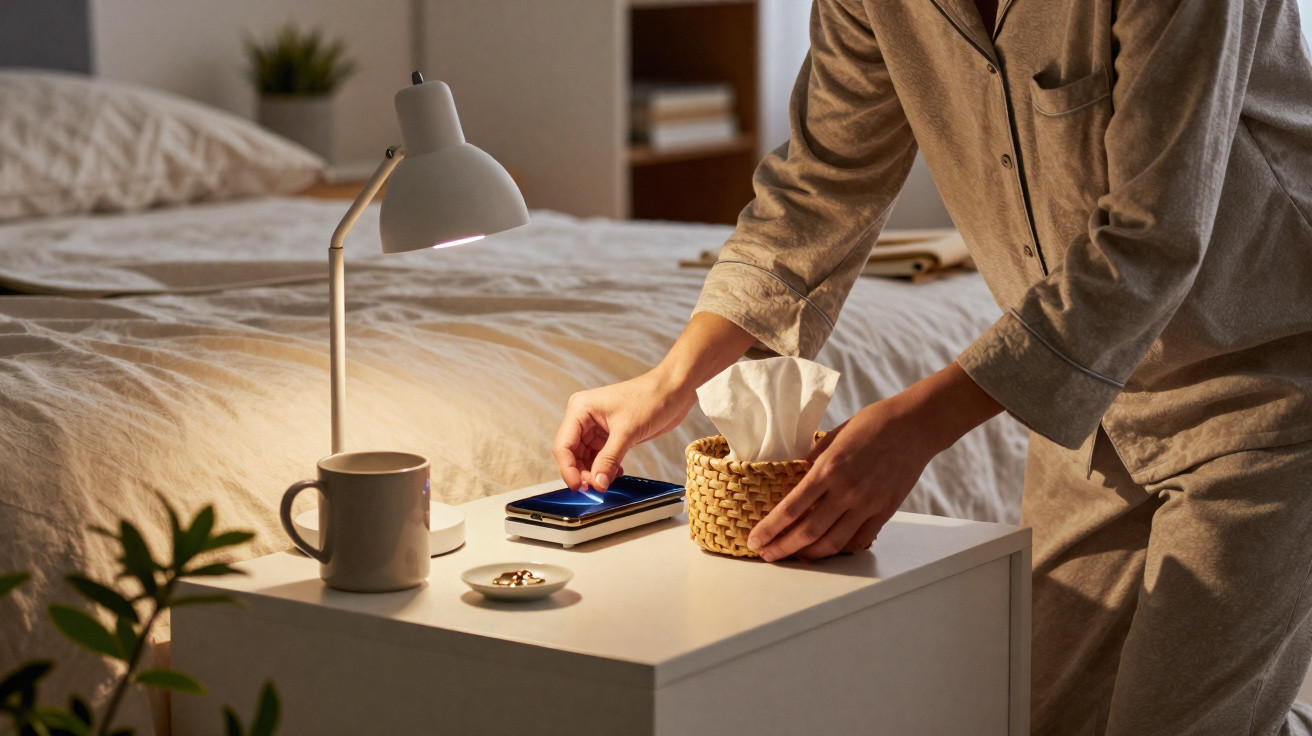
This does not mean cleaning an entire room. It means selecting one surface that is always returned to zero: perhaps the kitchen worktop, coffee table or bedside table.
At some point during the day - after dinner or before going to bed, for example - clear that one area.
It delivers a straightforward physical signal: the chaos ends here. The mess may take over elsewhere temporarily, but this island remains peaceful.
Many people assume relaxed homes belong to those who are always cleaning or genuinely enjoy folding washing.
The truth is much less glamorous. People whose homes remain liveable in the long run usually rely on quiet, repeatable habits with very little drama.
They load the dishwasher even if there is only one fork in the sink.
They hang up a coat straight away because they know that, if it reaches the chair, it will stay there for three days.
Once a day, they do a “10-minute roam”, picking up anything that clearly does not belong in the room and taking it in the direction of its proper place.
Honestly, no one manages this every single day.
Yet doing it on three days out of seven can already alter the feeling of an entire space.
The error is deciding that missing one day means you have failed, then abandoning the routine altogether - when in truth, the magic comes from returning to the habit, not from never breaking it.
“People always ask me how I keep my house so tidy with three kids,” a mother of twins told me. “I don’t. I just never let the same mess win twice in a row.”
Choose one “reset zone”
Select one surface to clear every day. Do not aim too high. A small, reliable island of order is better than an ambitious whole-house clean that leaves you exhausted.Create a 5-minute exit ritual
Before you leave the house, make a quick circuit: put dishes in the sink, rubbish in the bin and dirty clothes in the basket. Keep it fast and forgiving; perfection is unnecessary. Your future self will quietly appreciate it.Keep a “later” basket
Put a neutral basket on the stairs or in the hallway. Items that belong elsewhere can go in it first, then be taken along when you next head that way. This prevents stray piles from spreading across every flat surface.
The invisible layer that makes a house feel like home
There is one final aspect of long-term liveability that never appears in before-and-after photographs.
It is unrelated to minimalist shelving or matching jars, and entirely concerned with the way your home responds to you.
Some homes look neat but feel emotionally chilly, as if nobody truly lives in them.
Others contain toys on the floor, books piled beside the bed and a half-finished puzzle on the table - but still feel deeply restful.
The understated answer is alignment: the space genuinely reflects the life unfolding within it.
A home remains liveable in the long term when it can change as you change, rather than holding on to a version of you from five years ago.
| Key point | Detail | Value for the reader |
|---|---|---|
| Systems over stuff | Set clear homes for repeated items (keys, post, shoes, bags, washing) | Cuts daily decision fatigue and slows clutter before it begins |
| Small, repeatable rituals | Daily reset zone, 10-minute roam, straightforward exit/entry routines | Helps the home feel manageable without continual cleaning |
| Emotional alignment | Allow the space to change with real life stages rather than an idealised image | Builds a home that feels comforting and sustainable year after year |
FAQ:
- Question 1 What is the first thing I should change if my home feels overwhelming?
- Answer 1 Choose one high-traffic trouble spot - usually the entrance, kitchen worktop or sofa area - and give each item there a clear “home”. Protect that small area for two weeks before changing anything else.
- Question 2 How can I keep my home liveable with children or housemates?
- Answer 2 Choose visible, effortless systems: open baskets, low hooks and clear labels. Do not rely on lids, high shelves or complex storage. If putting something away is difficult, it will end up on the floor.
- Question 3 Do I need a strict cleaning timetable?
- Answer 3 Only if you enjoy using one. Many people respond better to “anchors”: five-minute tasks connected to daily habits (after coffee, after dinner, before bed) rather than a rigid weekly chart.
- Question 4 How often should I declutter to stay comfortable long term?
- Answer 4 Small, regular passes are more effective than dramatic clear-outs. A monthly 30-minute walk-through with one bag for rubbish and another for donations keeps things moving without emotional overload.
- Question 5 What should I do if my home is small and always feels cramped?
- Answer 5 Prioritise flow rather than size. Keep walkways clear, restrict furniture to what you genuinely use, and preserve at least one “empty” surface in every room so the eye has somewhere to rest.
Comments
No comments yet. Be the first to comment!
Leave a Comment