
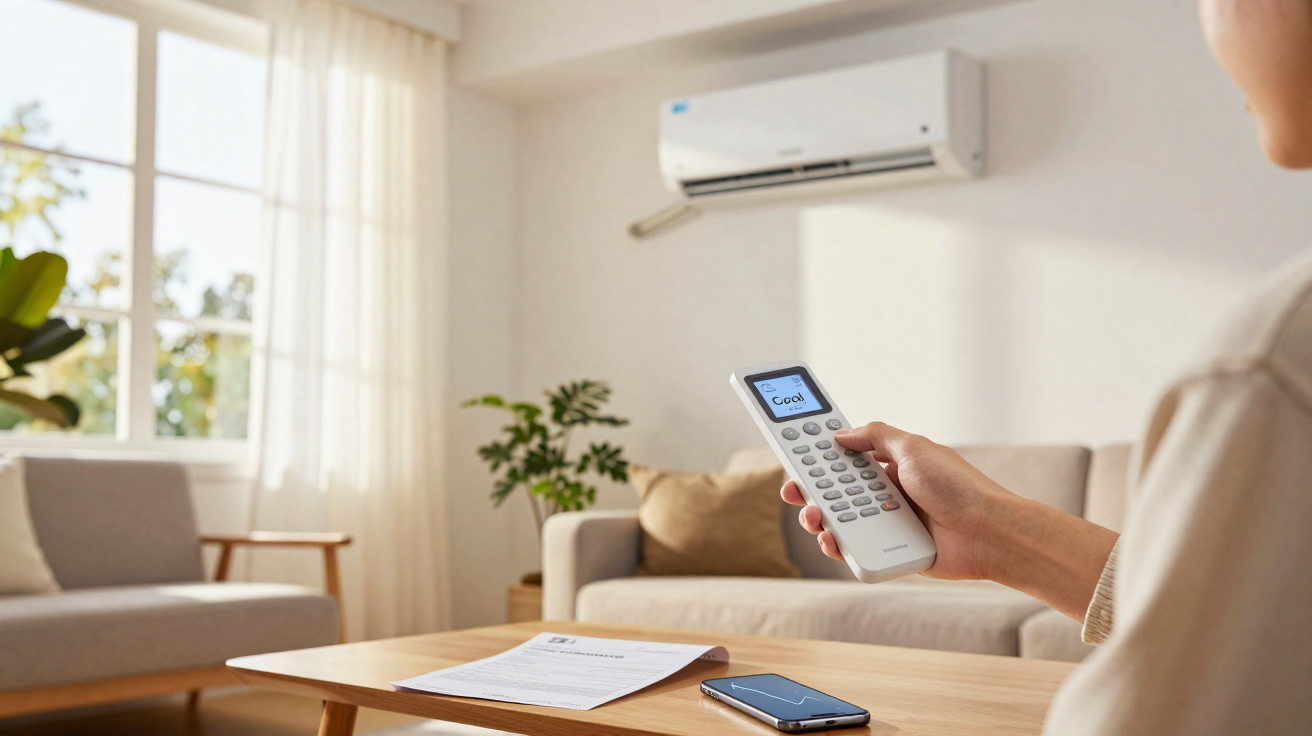
Summer temperatures keep climbing, but your electricity bill does not have to rise with them - not if you adjust one easy-to-miss setting.
Plenty of people press the same button on the remote day after day, then wonder why the room never feels properly cool. However, most modern air conditioners include several modes which, used in the right combination, can cool a space far more quickly without driving up energy use.
How a simple mode change can cool a room faster
Air conditioning has become noticeably more capable over the past ten years, yet the way many of us use it has hardly shifted. In lots of homes, “Auto” remains the default choice because it sounds as though the system will always select the most efficient blend of fan and compressor behaviour.
Energy auditors argue that this routine can burn through unnecessary electricity, particularly in heatwaves when units run for long stretches. What tends to help most, they say, is switching to a dedicated cooling setting - usually called “Cool” or shown as a snowflake.
The “Cool” mode keeps the compressor working steadily at the start, pushing out a constant stream of cold air instead of cycling between fan and cooling.
When set to Auto, many units flip-flop between circulating room-temperature air and brief periods of active cooling. That back-and-forth slows the overall temperature drop: the space cools, then warms a touch, then cools again. People often feel less comfortable and respond by turning the temperature down further, which increases energy consumption.
In Cool mode, the system concentrates on a single objective: pulling heat out of the room as effectively as it can. Because it sends out continuous cold air early on, the target temperature is reached sooner. Once there, the compressor can take more frequent breaks, lowering total energy use across the day.
Why starting with high fan speed actually saves power
A surprisingly common (and counterintuitive) error is beginning with the fan set to low. The thinking seems sensible: less airflow should mean less electricity. In reality, it often works the other way round.
With a slow fan, the cold air tends to linger near the indoor unit while the far side of the room stays warm. The thermostat - often positioned close to the evaporator coil - registers those mixed conditions and keeps the compressor running longer than necessary.
High fan speed at the beginning spreads cold air quickly, cutting the time the compressor needs to stay on – and the compressor is what really drives your energy bill.
A more efficient routine looks like this:
- Switch to Cool mode and set the fan to high.
- Keep it running for 10 to 20 minutes, depending on the size of the room and how warm it was to begin with.
- When the temperature feels even across the room, reduce the fan to medium or low.
At that stage, the most demanding work has already been done. The compressor can cycle to hold a steady level of comfort rather than battling a large temperature gap. This shorter “heavy lifting” period often lowers total energy use for the session, particularly in the late afternoon when outdoor heat is at its highest.
The quiet power of the recirculation function
Air recirculation is another feature that is widely overlooked. On many handsets it is shown as a circular arrow, or a house icon with arrows looping inside. Selecting it tells the unit to reuse indoor air instead of continually drawing in hot air from outside.
That difference is bigger than it appears. Cooling air from 35°C down to 24°C demands far more energy than cooling air that is already at 27°C down to 24°C. Every extra degree of difference adds to the compressor’s workload.
Recirculation lets the system repeatedly cool air that is already colder than the air outdoors, which means less effort for the compressor and faster comfort.
In rooms that are fairly well sealed, recirculation makes it easier for the system to settle. With each pass the air becomes cooler, and draughts from doors or windows have less impact. In day-to-day use, people often find the temperature stops “bouncing”, and the set point on the remote starts to match how the room actually feels.
One caution: in busy rooms, running recirculation continuously for hours can reduce air quality. For long meetings or overnight use with several people sleeping in the same room, brief ventilation breaks - opening a window for a few minutes before switching the AC back on - can help maintain a balance between comfort and fresh air.
Combining modes: the recipe for faster chilling and lower bills
When you combine these three elements, an air conditioner behaves very differently. Rather than struggling against the heat for hours, it completes a short, intensive cooling burst and then transitions to a lighter workload.
| Step | Setting | Effect on comfort and energy |
|---|---|---|
| 1 | Cool mode + high fan + recirculation | Room temperature drops quickly, air mixes evenly. |
| 2 | Same temperature, fan reduced to medium or low | Comfort maintained with less noise and lower airflow. |
| 3 | Compressor cycles on and off | Energy use falls as heavy cooling phase ends. |
Engineers also highlight a further upside: reducing long periods of high-load running can help protect internal components. If a compressor operates flat out for too long, internal temperatures increase. Over time, that heat stress can wear down insulation, seals, and electronic parts.
The three-step approach - direct cooling, rapid air movement at the start, and recirculation - reduces those extended, punishing sessions. More of the unit’s life is spent in lower-intensity, maintenance-style operation, which can delay breakdowns and cut the likelihood of costly repairs.
Picking the right temperature instead of going to extremes
Beyond mode selection, the temperature you choose plays a major role in both comfort and running costs. Many people immediately drop the setting to 18°C when they feel hot, assuming it will cool the room faster. Digital thermostats do not work like that: the system cools at the same rate, and the lower set point simply means it runs for longer.
Energy agencies in several countries now advise keeping the difference between indoor and outdoor temperatures smaller in summer, often around 23°C to 26°C. For every degree you increase the target temperature, the unit has to work less to maintain it - particularly during extended overnight operation.
For most healthy adults, 24°C or 25°C with good air movement feels comfortable after the first 10 to 15 minutes. A ceiling fan or an oscillating fan can complement the AC, allowing a slightly higher temperature without the room feeling stuffy. That pairing often reduces electricity demand compared with chilling the space down to “hotel lobby” levels.
Maintenance habits that strengthen these gains
Even the best settings lose much of their benefit if the air conditioner is dirty. A blocked filter restricts airflow, so even a high fan setting can feel like a weak breeze. The compressor then has to run for longer to deliver the same cooling.
For heavy summer use, basic monthly upkeep typically includes:
- Cleaning or washing the indoor filter as the manual instructs.
- Making sure vents and louvres stay fully open and unobstructed.
- Checking that furniture is not stopping cold air from travelling across the room.
With older units, a technician can inspect refrigerant levels, clean the outdoor coil, and confirm sensors and thermostats are working properly. When those components misread room temperature, even perfect mode choices may fail to deliver comfort or savings.
How much could a household realistically save?
The precise figures vary with climate, insulation, and tariff structure, but energy specialists often use straightforward simulations. Take a small flat where the air conditioner runs for five hours each evening.
If Auto mode plus a low fan keeps the compressor operating for, say, 70% of that time, the heavy cooling phase lasts three and a half hours. If Cool mode, a high initial fan, and recirculation help the room hit its target more quickly, the compressor might only need to run for 50% of the overall time.
Moving from three and a half hours of hard work to two and a half hours is already a meaningful reduction in consumption. Over a three-month summer, that difference can add up to the equivalent of several days of AC use - money kept in your account while comfort stays about the same, or even improves.
Regular users can increase these gains further by choosing when and where to cool. Slightly pre-cooling a bedroom before bed, with doors shut and curtains drawn, helps the system start from a lower peak temperature. The unit then has less heat to remove when the night is at its warmest.
Looking ahead: smarter controls and everyday habits
Newer air conditioners often include timers, sleep modes, and presence sensors that automatically adjust fan speed and temperature. Many people still overlook these features, preferring to press the same two buttons year after year. Learning a simple schedule - for instance, switching the system off 30 minutes before you leave home - can reduce energy use without undermining comfort.
For now, three straightforward manual steps provide a clear route: choose Cool mode rather than Auto during the hottest hours, begin with a high fan speed, and leave recirculation on so you keep cooling the same indoor air. Alongside sensible temperature targets and periodic maintenance, these habits can make a standard air conditioner a much more efficient cooling tool, instead of an expensive source of background noise.




Comments
No comments yet. Be the first to comment!
Leave a Comment