
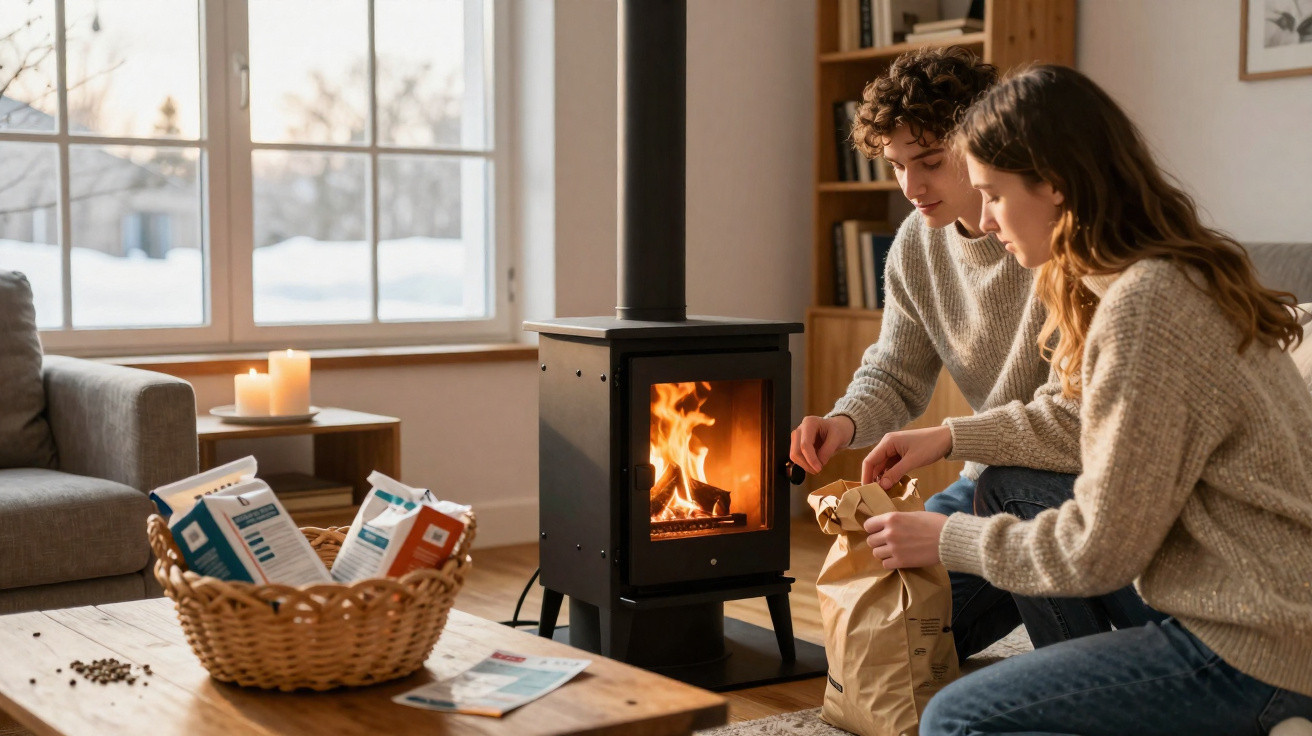
In isolated villages, on the outskirts of medium-sized towns and even in outer-city neighbourhoods, a quiet flame is finding its way into more French homes.
Amid rising energy costs, fears of power cuts and the search for greater self-sufficiency, pellet stoves that operate without any electrical connection have become highly desirable. They have no digital display or smartphone app, yet they offer something increasingly rare: reliable warmth, even when the lights go out.
How an electricity-free pellet stove works
Most familiar pellet stove models rely on a mains socket: electricity powers the auger that feeds fuel into the fire, the automatic ignition system and forced ventilation. The unplugged version works on an entirely different principle.
Gravity instead of a motor
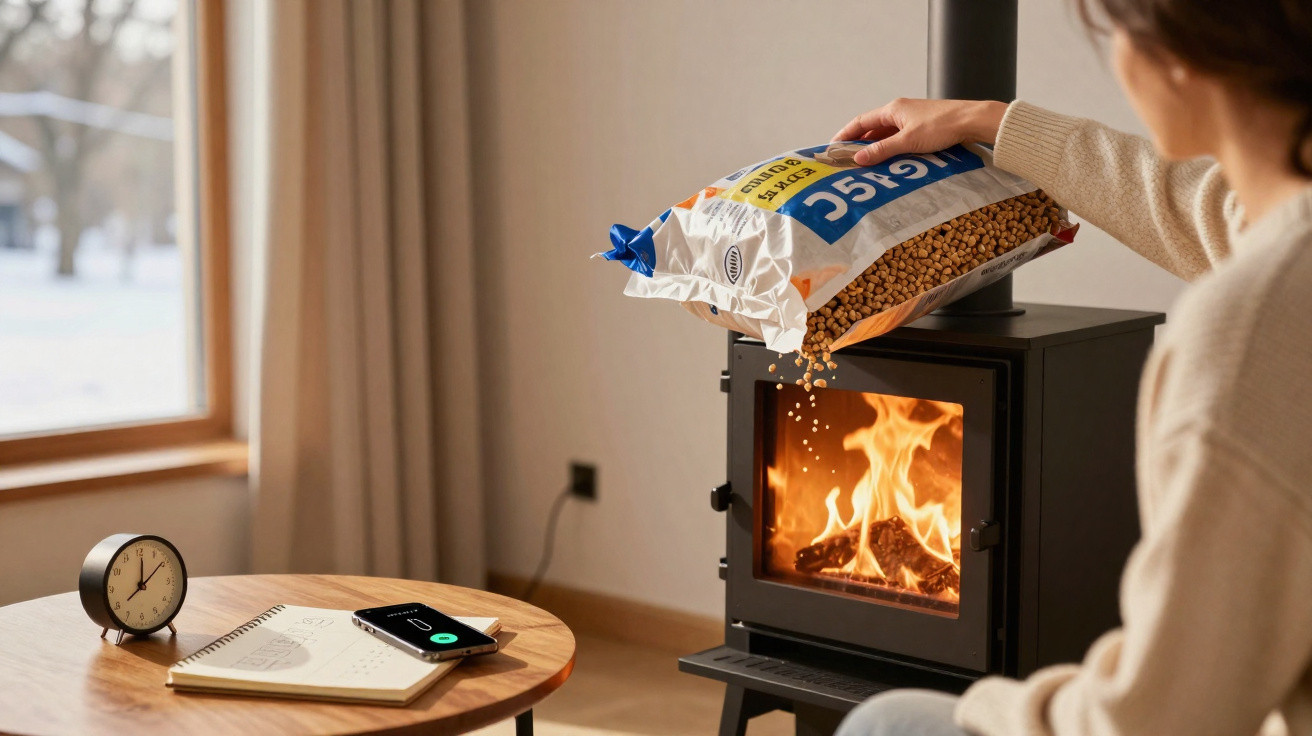
In this type of appliance, the pellet hopper sits above the combustion chamber. Fuel is supplied by gravity, with the wood pellets dropping down naturally as the fire consumes what is in the brazier.
Electricity-free pellet stoves replace electronic components with a simple mechanical design based on gravity and natural air circulation.
With no motors, sensors or electronic circuit boards, there is far less chance of a breakdown. For many people living in rural parts of France, that matters just as much as the price of pellets.
Manual lighting, hands-on control
The stove is lit manually, using a solid firelighter or gel and a little experience. Once the flame has taken hold, combustion settles down and generally burns slowly, designed to provide steady heat for several hours.
Rather than using a digital thermostat, control is managed through air vents. By opening or closing the air intake, the householder adjusts the flame’s intensity and, in practical terms, the appliance’s heat output.
Fan-free heat and a quieter room
Without a fan, warmth is not blown around the home. Instead, it spreads through natural convection and radiant heat: warmed air rises, cooler air falls, and the cycle repeats in a gentle but continuous flow.
This changes how the warmth feels. Temperatures generally rise more slowly, but the room is enveloped in more even heat, with no mechanical noise. That silence is a major attraction in small living rooms or bedrooms.
Why these stoves appeal to French households
Energy independence in uncertain times
Recent winters in France have brought warnings of pressure on the electricity grid alongside continuing increases in electricity and gas bills. Against that backdrop, a heating system that does not depend on a plug has acquired an almost strategic appeal.
For families worried about power cuts in the depths of winter, an electricity-free pellet stove acts as a kind of “heat insurance”.
During an energy crisis, the only requirement is a supply of dry pellets stored at home. For those in mountainous areas, remote villages or homes poorly served by the grid, this independence has become a decisive selling point.
Fewer components, greater durability
Without electronic boards, cables, temperature sensors or fans, the likelihood of technical faults is considerably lower. Maintenance is usually limited to cleaning and occasional chimney inspections.
- Fewer parts that can burn out or fail;
- Less need for specialist repair services;
- An average service life that is longer than that of more complex models.
For many French consumers who have already faced expensive repair estimates for boilers and heat pumps, this mechanical simplicity comes as something of a relief.
Savings on energy bills
There is another immediate advantage: these appliances use no electricity. The householder only pays for the pellets themselves, a fuel generally made from waste produced by sawmills and the timber industry.
Even when pellet prices rise, they remain competitive with electricity or gas in several parts of France. The key point is that spending becomes predictable: a tonne stored at home represents, in very concrete terms, guaranteed hours of heating.
Thermal comfort without machine noise
Many users complain about the noise made by fans in conventional pellet models. With electricity-free stoves, the flame is almost the only feature in the room. Sound is limited to the gentle crackle of combustion.
This has appealed to couples who have made the stove the focal point of their living room, as well as retirees who spend their days at home and value a calmer setting.
Limitations, maintenance and suitable use
Slightly lower, but predictable, efficiency
Figures from manufacturers and installers indicate typical efficiency of between 80% and 85% for these mechanical models. In high-end electric appliances, the figure is generally somewhat higher.
| Type of pellet stove | Electricity use | Typical efficiency |
|---|---|---|
| With fan and electronics | Yes | 85% to 92% |
| Electricity-free (mechanical) | No | 80% to 85% |
The trade-off made by French families is clear: they accept a small loss in efficiency in return for complete grid independence and a lower risk of faults.
Regular cleaning and manual management
As there is no forced ventilation or sophisticated combustion system, everyday maintenance plays a slightly bigger part in the routine. Ash builds up in the brazier, residue must be removed from the combustion chamber, and the chimney needs periodic inspection.
Even so, the greatest change for the user is in managing the heating. With no automatic scheduling or app-based controls, operation is more hands-on: someone must anticipate cold weather, fill the hopper, light the stove and adjust the air intake.
When an electricity-free pellet stove makes most sense
In France, these stoves are mainly being adopted in three settings. First are country houses and mountain chalets, where access to a reliable electricity supply is less certain and the cold is more severe.
The second group consists of families looking for supplementary heating. They combine a central gas system or heat pump with an electricity-free pellet stove, ensuring a “Plan B” if the main system fails or heating only the room most frequently used in the home.
The third profile is driven by principle: people concerned about environmental impact and reliance on major energy suppliers. For this audience, locally sourced pellets and a mechanical appliance fit with a more controlled, decentralised approach to consumption.
Risks and precautions consumers should not overlook
The absence of electronics does not mean the absence of risk. An incorrectly sized chimney installation can cause smoke to flow back into the room or provide insufficient draught. In areas with older homes and limited insulation, the stove may not meet all heating needs on its own.
Pellet supply is another sensitive issue. During periods of high demand, as happened in some recent winters, prices rose and there were occasional shortages. Anyone choosing this system needs to plan their stock carefully before cold weather arrives.
Practical examples and possible combinations in French homes
A common situation today is a family in a small provincial town that keeps gas central heating for the whole property but installs an electricity-free pellet stove in the living room, where it spends most of its time. On very cold days, gas provides additional support; at other times, the stove covers much of the demand.
Another example is a retiree living alone in a large house. Rather than heating every room, they concentrate energy use in the kitchen and living room, using the mechanical stove as their main source of heat. Overall consumption falls, and the electricity bill becomes less exposed to tariff changes.
For anyone researching the subject, several terms matter: “draught” refers to the chimney’s ability to draw away smoke; “efficiency” measures how much of the heat produced is genuinely available to the home; and “pellet calorific value” indicates how many kilowatt-hours a given quantity of fuel can provide.
The combination of factors - lower bills, reduced noise, less dependence on the grid and a certain appeal of self-sufficiency - helps explain why electricity-free pellet stoves are becoming increasingly prominent in conversations and winter renovation projects across France.


Comments
No comments yet. Be the first to comment!
Leave a Comment