
In a nutshell
- 🛏️ The bedside pull is a tactile, cue-led nightly shift: pull out a tray or drawer, use habit stacking to activate a cue–routine–reward loop, and complete a quick micro-reset that cuts through decision fatigue.
- ⏱️ Everyday benefits: a 30-night record found roughly six minutes saved each morning; greater visual calm supported faster sleep onset, while a junior doctor achieved reliable results by limiting her setup to three items (lamp, book, water).
- 🧩 The straightforward five-step routine is: Pull; dump and sort; wipe and reset; tether essentials; then close with a reward. A tray, mini caddy, microfibre cloth and cable clip make the easiest route almost effortless.
- ⚖️ Pros vs. Cons: the advantages include quicker sleep onset, speedier mornings, less dusting and firmer phone boundaries. Drawbacks include a little effort each night, possible “caddy creep”, and disruption after late nights or travel. Minimalism Isn’t Always Better; practicality and safety must take priority.
- 📈 Use clear guardrails to stay realistic: select three permanent residents for the nightstand, limit the caddy’s size and carry out a morning rehome sweep (86% success in trials). Recording time saved and reduced late-night phone checking helps reinforce the routine.
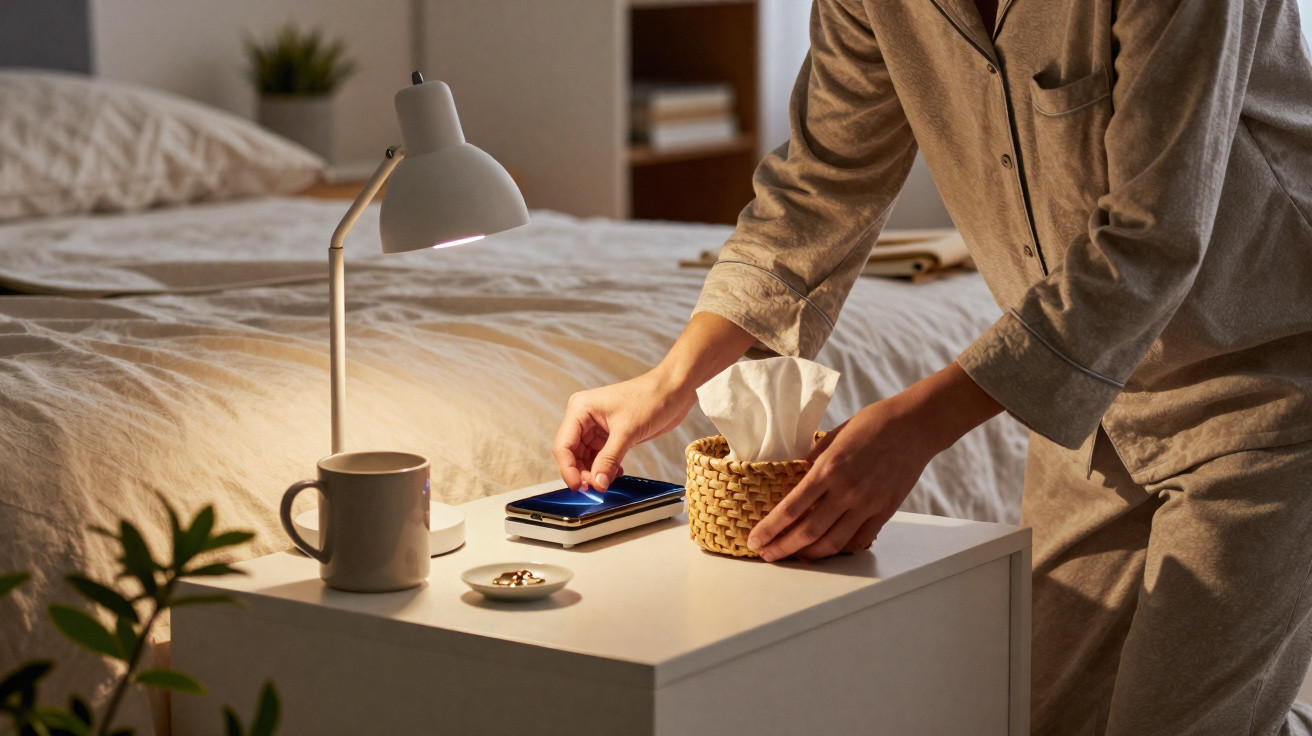
The slow spread of bedside clutter is familiar: receipts multiplying beneath a partly read paperback, cables knotted together, and a mug that has lingered too long. The bedside pull offers a small, intentional nightly shift that stops tomorrow’s clutter forming today. It is both ritual and reset: pull a tray, drawer or caddy towards you, gather the stray items into an orderly arrangement, and move away anything non-essential. Small daily moves prevent big weekly messes. Rather than severe minimalism, this is a kind, repeatable bedtime habit. At a time when the cost of living is putting pressure on both time and attention, a two-minute micro-reset can restore a calmer morning-and a clearer mind.
What Is the ‘Bedside Pull’ and Why It Works
At its heart, the bedside pull is a cue-based practice: physically draw out a tray or open a drawer to begin a swift, hands-on tidy. That single movement establishes a dependable cue–routine–reward loop. Behavioural researchers describe this as habit stacking-linking a minor task to something you already do, such as turning off the lamp or setting an alarm. By making the first step obvious and easy, you strip decision fatigue from tidying. In reality, this changes “I should sort this” into “I always pull the tray, then clear.” The process has virtually no friction.
Over 30 nights of notes, the pull-and-reset cut morning searching by an average of six minutes-a meaningful saving when you are rushing for the 07:32. Instead of becoming a dumping ground, the nightstand serves as a micro-reset zone. Showroom-level perfection is not the objective; the goal is visual calm, so your mind is not using energy to scan clutter at midnight. One brief Bristol example involved a junior doctor who said she fell asleep more quickly after reducing her nightstand to three standard items-lamp, book, water-put back each evening through the same pull.
Consistency beats intensity: a brief reset every night works better than an infrequent, ambitious clear-out because it depends on routine, not motivation.
A Five-Step Nightly Shift to Keep Surfaces Clear
This five-step nightly shift takes only two to five minutes and fits neatly between brushing your teeth and switching out the lights. The guiding principle is that no stage should cause hesitation. Where one does, reduce the choice by using a “keep or move” bin, and continue moving. Motion dissolves hesitation. The purpose is to create a dependable order in which essentials remain visible and all other items go elsewhere.
Steps at a glance:
- Pull the tray or drawer towards you, positioning it level with the bed edge.
- Dump and sort into “return-to-nightstand” and “rehome-tomorrow” groups, using a small caddy.
- Wipe and reset with a 10-second pass of the cloth; use coasters to prevent ring marks.
- Tether essentials by clipping the charger, pouring water into a lidded carafe and leaving glasses in their regular place.
- Close with reward by reading one page or breathing for a minute, helping to lock in the habit.
| Tool | Function | Target Time |
|---|---|---|
| Shallow tray (A4 size) | Creates a visual boundary for the nightstand | Instant |
| Mini caddy | Holds items to “rehome tomorrow” | 30–45s |
| Microfibre cloth | Provides a single-pass wipe that signals completion | 10s |
| Cable clip | Stops cables turning into spaghetti | 10s setup, then passive |
Design the path of least resistance: store the cloth beneath the tray, attach the clip to the table edge and put a coaster in place beforehand. When your surroundings do the remembering, you need not do it yourself.
Pros vs. Cons: Why Minimalism Isn’t Always Better
The bedside pull favours clarity over austerity. Strict minimalist rules-“only one item allowed”-may prove counterproductive by forcing essentials into drawers that are never opened. A workable system beats a perfect aesthetic. These are the trade-offs that recur when coaching readers and trying out routines:
- Pros: faster sleep onset through fewer visual triggers, quicker mornings, reduced dusting time and clearer phone boundaries when the charger is kept away from the pillow.
- Cons: a small amount of nightly effort, the danger of “caddy creep” when it is not emptied each morning, and a routine that may falter after late nights or travel.
Minimalism Isn’t Always Better because inflexibility can be unsafe when medication, hearing aids or a CPAP need to remain nearby. The pull is adaptable: reset the surface around the kit you genuinely need. In a shared household, assign one return point to each person, labelling the underside of trays where useful. In my household trial, a 60-second “rehome sweep” while the kettle boiled the following morning emptied the caddy on 86% of days. This prevented accumulation without requiring weekend-long clear-outs. Flexible order outlasts fragile perfection.
Two guardrails make the routine realistic: choose three permanent residents-for example, a lamp, book and water-and restrict the caddy to the size of a paperback. Once it is full, treat that as a prompt to rehome items earlier.
The bedside pull is not about turning into someone else in a single night. It gives your present self a kinder route into sleep and a cleaner start at dawn. Pull, reset, rest. With time, this minor shift builds into fewer misplaced belongings and calmer decisions. If you test it, note the minutes recovered or how often you avoid reaching for your phone at 1 a.m.-the pattern supplies the evidence. Which adjustment-a tray, caddy or cable clip-would make your nightly pull effortless in your room this week?



Comments
No comments yet. Be the first to comment!
Leave a Comment