
The odour came first: a faint, sour smell drifting up from the sink whenever the tap was running, like stale washing-up water that had never fully drained away. Technically, the drain still functioned, but water sat there just long enough to irritate, circling slowly over the plughole before finally slipping away. After one evening spent watching a cloudy pool remain for a whole minute, I did what most people would do: picked up my phone and searched for powerful chemical drain unblockers.
Then I noticed the cost, the hazard warnings and review after review saying, “Worked… for a while.”
One forum comment made me pause.
“Try this first. Costs a dollar. No chemicals. I cleared my drain in 10 minutes.”
It seemed almost ridiculously straightforward.
That was precisely why I gave it a go.
The £1 kitchen staple that can rescue your drain
Baking soda is one of those cupboard basics that tends to sit quietly at the back. Perhaps it is in a battered carton bought once for baking biscuits or freshening the fridge, then left untouched. But this powdery white staple can achieve what plenty of shiny bottled products claim to do, and regularly do not: tackle a slow, unpleasant-smelling drain without using harsh chemicals.
There is a particular satisfaction in reaching for a pantry item instead of a supposedly “proper” product. There are no gloves to pull on, no fumes that sting your eyes and no anxious moment of wondering what happens if it gets on your skin. All you need is a spoon, hot water and that modest cardboard box.
Sara, a reader I spoke with, had encountered the familiar nightmare of a rented flat. Every time she washed her face, her bathroom basin filled up, leaving a greasy grey mark around it. She used a plunger until her arms hurt. She tried pouring in boiling water. She even removed the U-bend once, and immediately wished she had not seen what was inside.
As a final attempt before ringing a plumber, she tipped half a cup of baking soda down the drain, added hot water and covered the opening with a towel. Ten minutes later, she removed the towel, turned on the tap and saw the water disappear as if by magic. “I actually laughed,” she told me. “I’d been fighting this for weeks. The answer was a dollar box next to my salt.”
Why can such an inexpensive white powder be so effective? Baking soda is, fundamentally, a mild alkali. When it comes into contact with the greasy residue created by soap scum, skin oils and tiny food scraps, it begins to loosen the sticky coating attached to the pipework.
Combined with hot water and a little patience, it weakens the hold of that grime, allowing a stubborn clog to start moving again. Rather than attacking your pipes with corrosive chemicals, you soften the blockage before flushing it out. That gentle, gradual process is why something also used in banana bread can work far better than you might expect.
How to use baking soda to clear a clogged drain fast
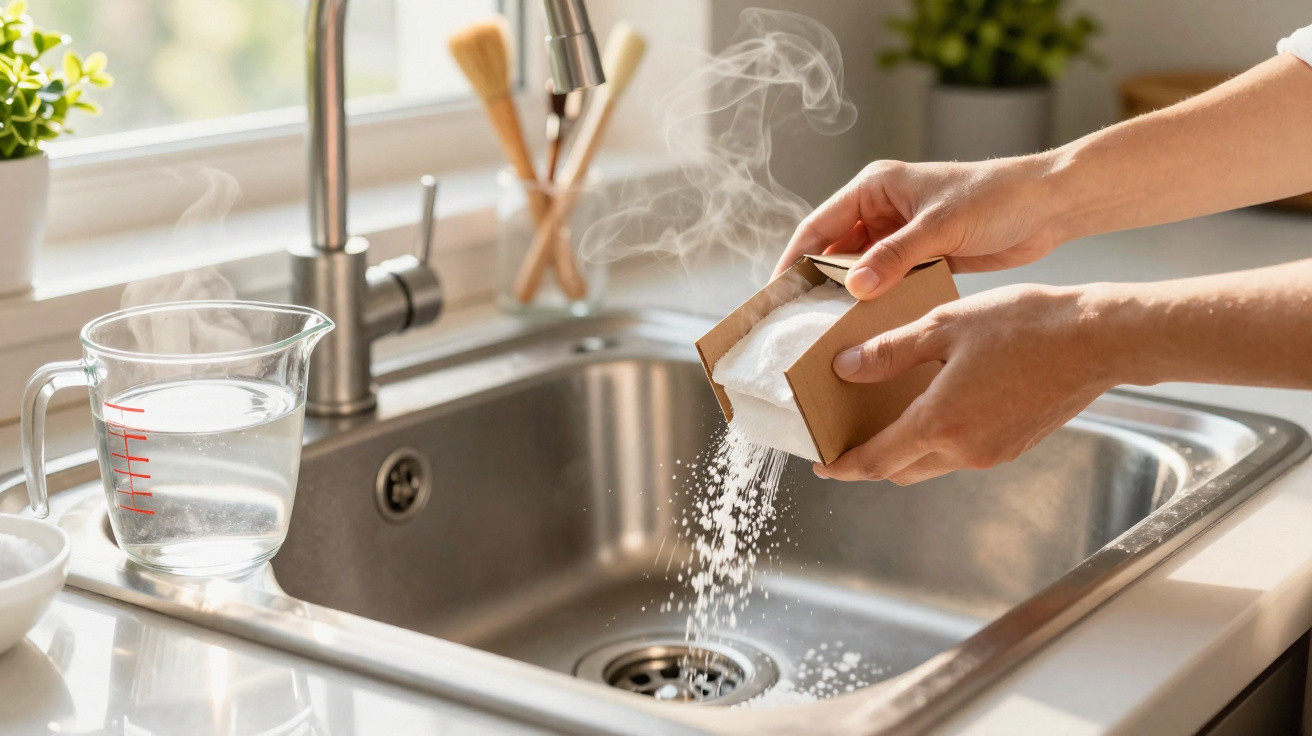
The method itself sounds almost too simple. First, heat a kettle or pan of water. While it is warming up, measure roughly half a cup of baking soda and pour it directly into the drain. Give the side of the sink a light tap to help the powder travel as far down as it can.
Then pour hot - but not fiercely boiling - water slowly over the baking soda in a steady flow. At times, you may hear a quiet fizzing or crackling sound. Leave it alone afterwards. Wait at least 10–15 minutes before running the tap again. For a more persistent blockage, repeat the process once or twice. There is no specialist equipment, no gloves and no chemical mixture involved.
This is the stage people often hurry, which is when the method can seem disappointing. They add a small spoonful, pour in lukewarm water and hope that months of hair, grease and coffee grounds will disappear within 30 seconds. It does not work that way.
Think of it as soaking a burnt pan. The waiting time is where the real difference happens. Add enough baking soda for it to reach the blockage, then allow the hot water time to travel through the pipes, soften the build-up and move it along. If the drain is entirely blocked and full of standing water that will not move at all, you may still need to use a plunger first or quickly clear the visible trap by hand.
“Baking soda won’t fix a broken pipe or a hairball the size of a hamster,” laughs Tom, a plumber who’s been called out to more than one ‘drain emergency’. “But for slow drains and nasty smells, I always tell people: try the cheap box first. Nine times out of ten, it saves them a visit from me.”
- Use enough product: Around half a cup for each drain is a sensible starting amount. For kitchen sinks with years of accumulated residue, you can use up to a full cup.
- Combine it with very hot water: Hot water helps dissolve fats and soap scum that the baking soda has started to loosen. Cold water simply does not work as effectively.
- Allow it time to act: The 10–15 minute pause gives the mixture time to travel down the pipe and work beyond the area you can see.
- Repeat the treatment for older pipes: One application may not reverse years of neglect. A second or third round can turn a possible improvement into a freely running drain.
- Make it part of gentle maintenance: A quick monthly baking soda flush can stop minor clogs from developing into a major blockage.
Fewer fumes, simpler household fixes
There is a deeper kind of reassurance in this small household win. You are standing at the sink not with a neon-coloured bottle of something mildly alarming, but with a kitchen ingredient your grandmother may well have used. The water starts draining, the smell disappears and the home suddenly feels a little easier to manage.
We often discuss “sustainable living” as though it is something huge and abstract. In reality, the change can begin in small moments such as replacing a harsh product with one that is kinder, less expensive and equally useful.
Most of us only notice our drains when they start causing trouble. We treat them as endless holes rather than narrow pipes that slowly collect hairs, soap residue and grains of rice. And, honestly, nobody keeps on top of this every single day.
That is what makes this £1 trick so surprisingly useful. It does not require a complete lifestyle change or a colour-coded cleaning plan. You remember it when there is a problem, spend ten minutes doing it, then forget about it again until water starts lingering in the sink next time.
You may try it once out of curiosity and then mention it to a friend moaning about their own swamp-like basin. Perhaps you will keep a box of baking soda specifically for drains beside the washing-up liquid as a quiet standby. You may find yourself using chemical drain unblockers less often, reserving them for genuine last-resort situations rather than reaching for them first.
Small habits like this pass quietly from one kitchen to another and from one bathroom to the next. If you have cleared a blockage this way, you will know the small burst of satisfaction when the water finally rushes away. If you have not, you may only be one slow drain away from your own £1 “how did I not know this sooner?” moment.
| Key point | Detail | Value for the reader |
|---|---|---|
| Baking soda as a drain fixer | An everyday cupboard staple that loosens grease, soap scum and mild clogs when used with hot water | Provides an inexpensive, accessible alternative to chemical drain cleaners |
| Simple step-by-step method | Put ½ cup of baking soda into the drain, add hot water, wait 10–15 minutes and repeat if necessary | Gives readers a straightforward, low-effort routine to try straight away |
| Gentle, ongoing maintenance | Monthly baking soda flushes can help stop slow drains and unpleasant odours from returning | Helps reduce later plumbing problems and the need for costly professional work |
FAQ: Baking soda and drains
- Can baking soda unclog a completely blocked drain? If the drain is fully blocked and standing water is not moving at all, baking soda on its own may not be sufficient. You will often need to remove visible debris, use a plunger or snake the pipe first, then follow up with baking soda and hot water.
- Is this safe for all types of pipes? Baking soda and hot water are usually safe for most domestic plumbing, including older pipes. They are considerably gentler than commercial chemical cleaners, which may become corrosive over time.
- Can I mix baking soda with store-bought drain cleaner? This is not advisable. Combining different cleaners can create unpredictable chemical reactions. Use baking soda by itself and, if you have already used another product, flush the drain thoroughly with plenty of water before trying anything else.
- How often should I do this for maintenance? Once a month is a sensible routine for a regularly used sink. Kitchens used for frequent cooking and greasy washing-up may benefit from a quick baking soda flush every couple of weeks.
- What if the smell comes back after a few days? Ongoing odours may indicate deeper build-up or an issue farther along the pipework. Repeat the baking soda treatment a few times and, if the smell continues to return quickly, it may be time to inspect the trap or ask a professional to check for a larger problem.



Comments
No comments yet. Be the first to comment!
Leave a Comment