
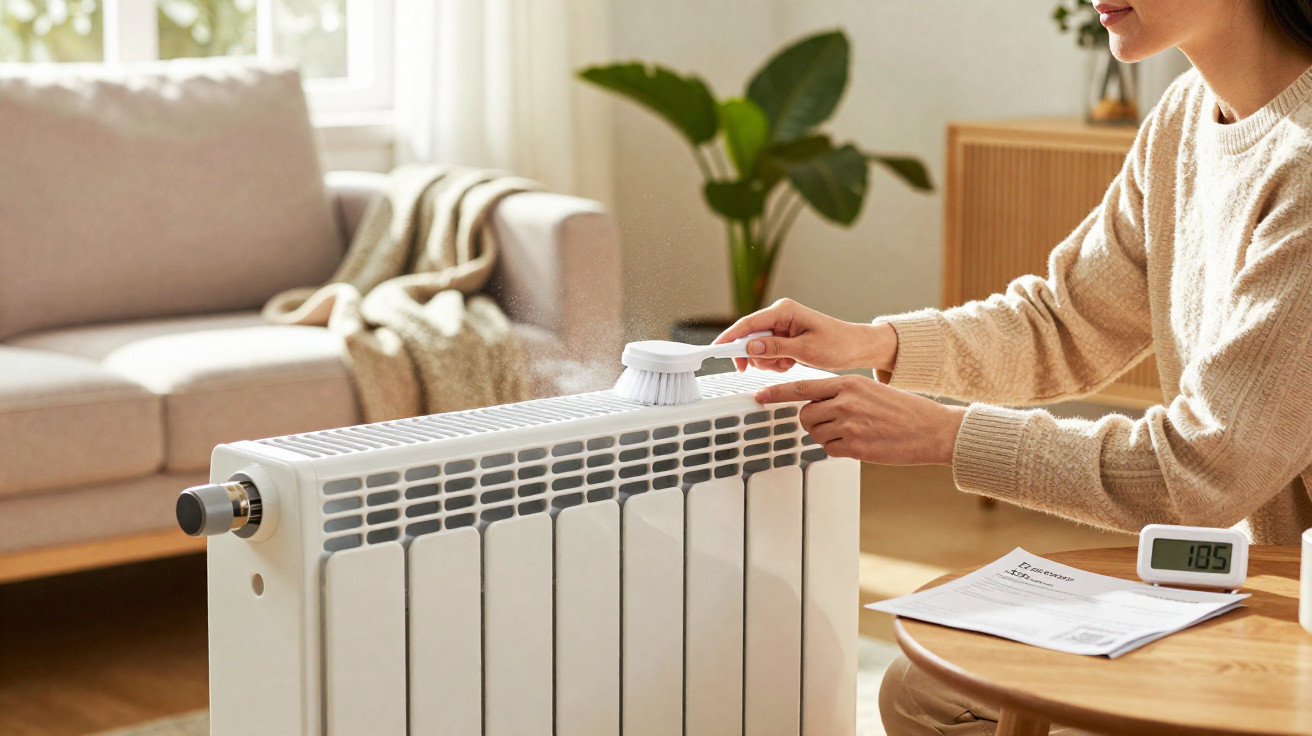
Across Europe, the cost of heating is climbing, and electric radiators in millions of homes are being pushed to their limits. Consumer groups are warning that if you don’t change a few everyday habits, winter bills can jump by hundreds of euros. At the same time, many people overlook a straightforward trick that needs no gadgets, no tools and not even any new accessories - just a cloth and one minute of attention.
Why your electricity bill shoots up even when the dial is already maxed out
Electric heaters feel effortless: plug in, set the temperature, job done. But that convenience can be expensive. In poorly insulated flats, convectors, panel heaters and storage-core units often run for hours on end. In Spain, consumer organisations already estimate annual heating costs for households relying on electric heating at around 700 euros. Similar patterns are being seen in Germany and Austria.
When the numbers start rising, many people fall back on the usual instincts: crank up the thermostat, pull the roller shutters down, throw another blanket over your legs, and hope for a “miracle device” that fixes everything. Comfort barely improves, the meter spins faster - and frustration builds.
"The quickest step towards more warmth with lower consumption costs nothing and takes about as long as brushing your teeth."
The 1‑minute trick: how to get your electric radiator performing properly again
Consumer advisers in Spain highlight something that sounds almost too simple, yet can make a real difference: looking after your heaters. In practice, it comes down to three small actions - one of which genuinely takes only a minute.
Step 1: switch it off - then remove dust properly
Before you do anything, turn the radiator off and, ideally, unplug it. Safety comes first, even with appliances that seem harmless. Then comes the key part: a damp cloth. No specialist cleaner and no pricey sprays - a lightly moistened microfibre cloth is enough.
- Wipe the casing from top to bottom
- Clean grilles, fins and air vents thoroughly to remove dust
- Use a narrow corner of the cloth to “sweep out” awkward, hard-to-reach areas
With convectors and radiant heaters in particular, a fine grey film can build up here over months without you noticing. That layer acts like a tiny form of insulation: heat stays on the unit instead of moving into the room.
Step 2: don’t place anything in front of it - and don’t put anything on top
In day-to-day life, it’s easy for a clothes airer, an armchair or boxes to end up right in front of the heater. On top, people often park scent lamps, houseplants or decorations. All of this disrupts air circulation. Warm air pools, the room heats unevenly, the thermostat barely “realises”, and the heater runs for longer.
A quick check you can do straight away:
- Keep at least 20 to 30 centimetres of clear space in front of the unit
- Don’t drape towels, clothes or blankets over it to dry
- Move decorative items to a nearby shelf instead of the radiator itself
Step 3: release trapped air from water-based radiators
In many homes, electric heating sits alongside traditional hot-water radiators. In those systems, air often collects near the top. The result: the upper section stays cool while the lower part gets very hot, and the system has to run longer to reach the temperature you want.
With a radiator key, a cup and an old cloth, this can usually be sorted in a few minutes. A faint hiss indicates air escaping. As soon as water flows out steadily, close the valve again. After that, heat spreads more evenly - with the same heating curve.
How much difference a clean radiator can actually make
A radiator covered in dust doesn’t behave the same way as a clean one. Dirt reduces usable surface area and slows down airflow. The room warms up more slowly, the target temperature is reached later - or not at all, unless you turn the setting even higher.
Energy advisers say regular dusting and keeping radiators clear can prevent noticeable losses. Figures vary, but savings of up to ten percent for electric heating systems are often considered realistic when units were previously heavily dusty or obstructed.
"If you lower the thermostat by just 1 degree after cleaning, you can reduce your energy demand by around 7 percent on average."
That may not sound like much, but across a full winter it adds up - especially with electric heating. Using the 700-euro annual heating-cost example: cutting consumption by just 10 percent means a 70-euro saving, for a few minutes’ work each month.
More micro‑tips around the radiator that save real money
Keep an eye on the indoor climate
When heaters run hard, indoor conditions can easily tip the wrong way. Air becomes very dry, yet moisture collects on cold surfaces such as windows. Condensation on the glass is a sign the air is saturated and warm, humid air is meeting cold panes.
A simple household cleaning trick can help: put a tiny drop of washing-up liquid on a microfibre cloth, rub it onto the window, then buff dry. The invisible film slows down the formation of fine droplets and leaves the window looking clearer and “drier”.
Houseplants as natural helpers
Around radiators, the problem isn’t only cost - it’s also dry air and pollutants released from furniture, paints and cleaning products. Some houseplants quietly improve conditions. Particularly suitable options include:
- Spathiphyllum (peace lily): copes well with dry, heated air and can bind certain pollutants
- Ivy: a hardy climber that can absorb volatile compounds from the air
- Areca palm: often described as a natural humidifier, releasing moisture through its leaves
Don’t place these directly on the radiator, but nearby. That way they benefit from the warmth without blocking it. Together with clean, unobstructed heating surfaces, the room feels more comfortable without extra energy costs.
How often should radiators be cleaned?
Cleaning once a year before the heating season is often not enough. In many homes, dust builds up quickly in winter - due to carpets, textiles and windows kept shut. A sensible routine looks like this:
- Thoroughly clean all radiators before the start of the heating period
- Give vents a quick wipe every four to six weeks
- Check again after DIY work or rearranging furniture
If you have pets or live on a busy road, it’s worth reaching for the cloth more often. Any visible “dust coat” on a radiator is a clear sign that heat is not being used efficiently.
Common mistakes that quietly make your electric radiator expensive
A number of habits seem harmless but can push costs up noticeably, including:
- Running continuously on a high setting: it’s better to choose a moderate temperature and keep it steady than constantly going “full blast”
- Heating with a window on the latch: rapid ventilation for five to ten minutes saves far more energy
- Thermostats blocked or badly positioned: a thermostat directly above the heater or behind heavy curtains will read inaccurately
Many of these issues can be fixed in minutes. Combined with the 1‑minute cleaning trick, the benefits stack up: heating runs for less time, comfort stays the same, and the electricity bill becomes easier to live with.
Why December 2025 will be a stress test for electric heating
Energy prices remain uncertain, and expiring price caps could hit households again in winter 2025. Tenants with older electric heaters are particularly exposed, as they often cannot replace the equipment themselves. That makes small changes that cut consumption - without needing the landlord to act - even more valuable.
The 1‑minute wipe with a damp cloth is ideal for exactly that reason: it requires no prior knowledge, no tools and no owner’s permission. If you take the opportunity, you can effectively “unleash” your radiator - simply by paying attention to where everyday dust has quietly settled.





Comments
No comments yet. Be the first to comment!
Leave a Comment