
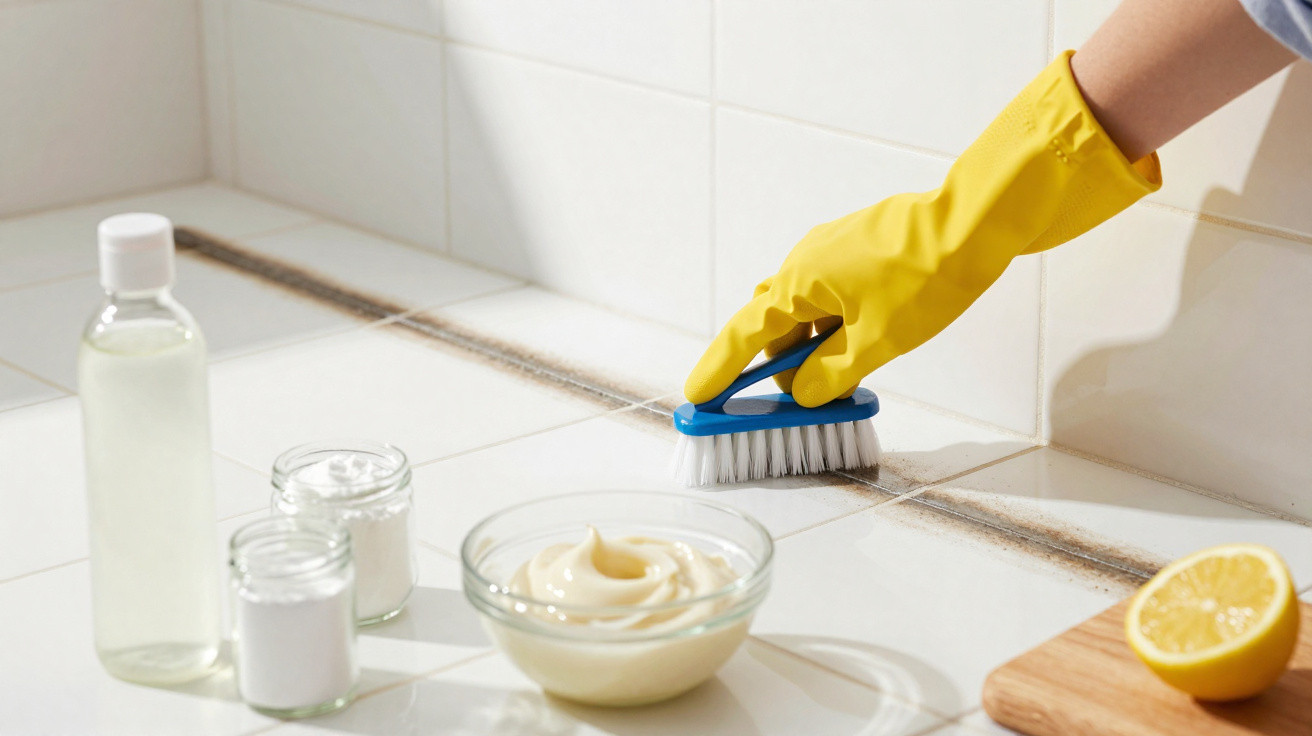
Reaching for a powerful chlorine cleaner can bring pungent fumes, damage surfaces and, in the worst cases, irritate the airways. Yet a straightforward blend of four everyday ingredients is said to deliver what sounds too good to be true: clean, noticeably brighter grout in about 15 minutes, without bleach or costly specialist cleaners.
Why bathroom grout turns black so quickly
Grout is a weak point in any bathroom. Its porous material absorbs water and holds onto soap residue, creating an ideal breeding ground for mould and bacteria. Warm, humid air after showering does the rest, making dark marks almost inevitable.
Common causes include:
- persistently high humidity in the bathroom
- infrequent or ineffective ventilation
- residue from shower gel, shampoo and limescale
- microscopic cracks in the grout, where dirt can become lodged
Conventional grout cleaners often rely on chlorine or harsh acids. Although they can work, prolonged use may affect tiles, metal trims and silicone sealant. This is where the four-ingredient method comes in.
The hidden secret weapon: a blend of four kitchen staples
“This simple combination of four household remedies removes black grout deposits in around 15 minutes – without chlorine or a sharp smell.”
The blend uses ingredients that are already available in most homes. It is intended to loosen mould, biofilm and grease without drying out or corroding the grout. The precise quantities can be adjusted easily according to how dirty the surface is.
Typical ingredients in an effective grout mixture
Household experts commonly use the following four categories of active ingredients in recipes of this kind:
- a mild alkali (for example, bicarbonate of soda or washing soda) to tackle grease and organic residue
- an acidic component (such as vinegar or citric acid) for limescale and soap deposits
- a gentle abrasive (for example, baking powder or a fine scouring powder) to provide mechanical cleaning
- a surfactant-based addition (such as a small squirt of washing-up liquid) to loosen and emulsify dirt
The key point is that none of these substances uses chlorine or conventional bleach. Their effect comes from the chemical and mechanical combination.
How to use the four-ingredient method correctly
Anyone trying this type of mixture for the first time should take a methodical approach. This makes it easier to monitor the results while protecting the materials.
- Prepare the bathroom: Dry the shower or bath, then remove loose dirt and hair.
- Mix the paste: Stir the four ingredients together in a small bowl until they form a thick paste that will not immediately run off the grout.
- Choose a test area: First try it on an inconspicuous spot to check that the tile and grout tolerate the treatment well.
- Apply it: Use an old toothbrush, a brush or a small spatula to place the paste directly onto the grout lines.
- Leave it to work: Wait for around 15 minutes. During this time, mould deposits and dark staining should loosen.
- Brush again: Work over the grout with the brush until the discolouration has faded noticeably.
- Rinse thoroughly: Flush with warm water and remove every trace of the mixture.
For heavily soiled grout, repeat the process a second time. In most cases, the difference is already clear after the first application.
How quickly results appear – and why
The major advantage of this approach is its speed. The mixture works in several ways at once: it loosens biofilm, acts on mould, removes limescale and supports mechanical scrubbing. As a result, a comparatively short contact time is sufficient.
“Many users report visibly lighter grout after a quarter of an hour – without prolonged scrubbing or headaches from cleaner fumes.”
The grout is not “artificially bleached”; instead, accumulated deposits are removed. Its original colour becomes visible again, creating the impression of a newly refurbished bathroom.
Why this method is so inexpensive
Household cleaners marketed specifically for grout often cost substantially more in shops than standard multi-purpose cleaners. By contrast, the four-ingredient blend is made from products that are usually already in the kitchen cupboard.
| Type of product | Cost per application | Key features |
|---|---|---|
| Specialist grout cleaner from a shop | medium to high | often contains fragrances and harsh chemicals |
| Four-ingredient household remedy | very low | ingredients are usually already at home and can be bought in refillable bulk packs |
As well as saving money, it avoids trips to the DIY shop or chemist. Once someone has refined the blend for their own needs, it can be mixed in minutes.
Gentler on surfaces and better for bathroom air
Many people are sensitive to strong cleaning products. Irritating vapours can affect mucous membranes, while children and pets breathe the same air. The four-ingredient method avoids chlorine-based bleach, reducing the burden on indoor air while being kinder to tiles, grout and fittings.
It also suits daily routines in which more people are trying to make sustainable choices. Using fewer aggressive chemicals in wastewater and reusable containers for the ingredients can considerably reduce environmental impact.
How often should grout be cleaned this way?
For heavily soiled grout, it is best to begin with a thorough “deep clean”. After that, cleaning it once a month is enough, or more frequently if the bathroom is used intensively, such as in households with several children.
A brief “grout check” during the weekly bathroom clean is useful:
- Are the first grey shadows appearing?
- Are there areas that remain stubbornly damp?
- Does the shower smell musty even though it has just been cleaned?
When these signs occur, the four-ingredient mixture usually works particularly quickly because the dirt has not yet penetrated deeply.
Mould in grout: when does it become serious?
Light staining and surface mould can generally be dealt with effectively using household remedies. However, if the grout is crumbling, blackened areas will no longer lighten, or the substrate seems damp, there is often a more significant issue behind it, such as a leaking shower enclosure or a structural defect.
Even the best mixture has only limited use in such circumstances. The cause should then be investigated and the grout replaced if necessary. A clean, dry substrate is essential if mould is not to keep returning.
Practical ways to keep grout lighter for longer
To make the cleaning result last as long as possible, a few simple everyday habits can help:
- After showering, remove water from tiles and glass with a squeegee.
- Open the door or window wide for a few minutes to let moisture escape.
- Dry mats and towels regularly instead of leaving them in the shower permanently.
- Once a week, go over the grout briefly with a softer grout brush, without using strong products.
Small measures like these greatly reduce moisture in the bathroom, and therefore the conditions in which mould spores thrive.
What terms such as “biofilm” and “pleśń” mean
A “biofilm” is a slimy layer of bacteria, fungi and dirt particles that forms on surfaces. In grout, this film combines with limescale and soap residue. This is exactly what the four-ingredient mixture targets: alkali, acid, surfactants and mild abrasion act on different components of the film and gradually release it.
The term “pleśń” in the Polish source simply means mould. Mould spores are present throughout the air, but in bathrooms they become active because of persistent moisture and nutrients. Regular, gentle cleaning can reduce the spore load in grout; mould growth can only be prevented completely when sources of moisture are permanently limited.
Risks and limits of household remedies in the bathroom
Useful as household grout mixtures can be, they still require care. Strong acids at excessive concentrations can damage natural stone, while very coarse abrasive particles can scratch delicate glazes. Anyone combining different products should also take care not to create irritating vapours, for example by mixing strongly acidic and strongly alkaline products.
It is helpful to make the mixture weaker initially and plan for two applications rather than expecting “maximum effect” immediately. A quick material test in an inconspicuous area will show in most bathrooms whether the tiles, grout and seals tolerate the method well.





Comments
No comments yet. Be the first to comment!
Leave a Comment