

Flexible marble attracts attention in refurbishment projects because it replicates natural stone, is lightweight and can be fitted to walls, columns and curved surfaces. Although it offers a refined appearance, this material has important drawbacks too. Before selecting it for a home improvement project, it is worth knowing where it performs well, where it may disappoint and what precautions can prevent costly problems.
What is flexible marble?
Flexible marble is a thin cladding, usually made from a mineral layer, resins and a pliable backing. It was developed to recreate the visual effect of marble or natural stone without the weight and rigidity of conventional slabs.
Its lower weight means it can be installed in places where natural stone would be difficult or excessively expensive. However, a similar appearance does not provide the same performance as solid stone, particularly in terms of strength, longevity and maintenance.
What are the main disadvantages of flexible marble?
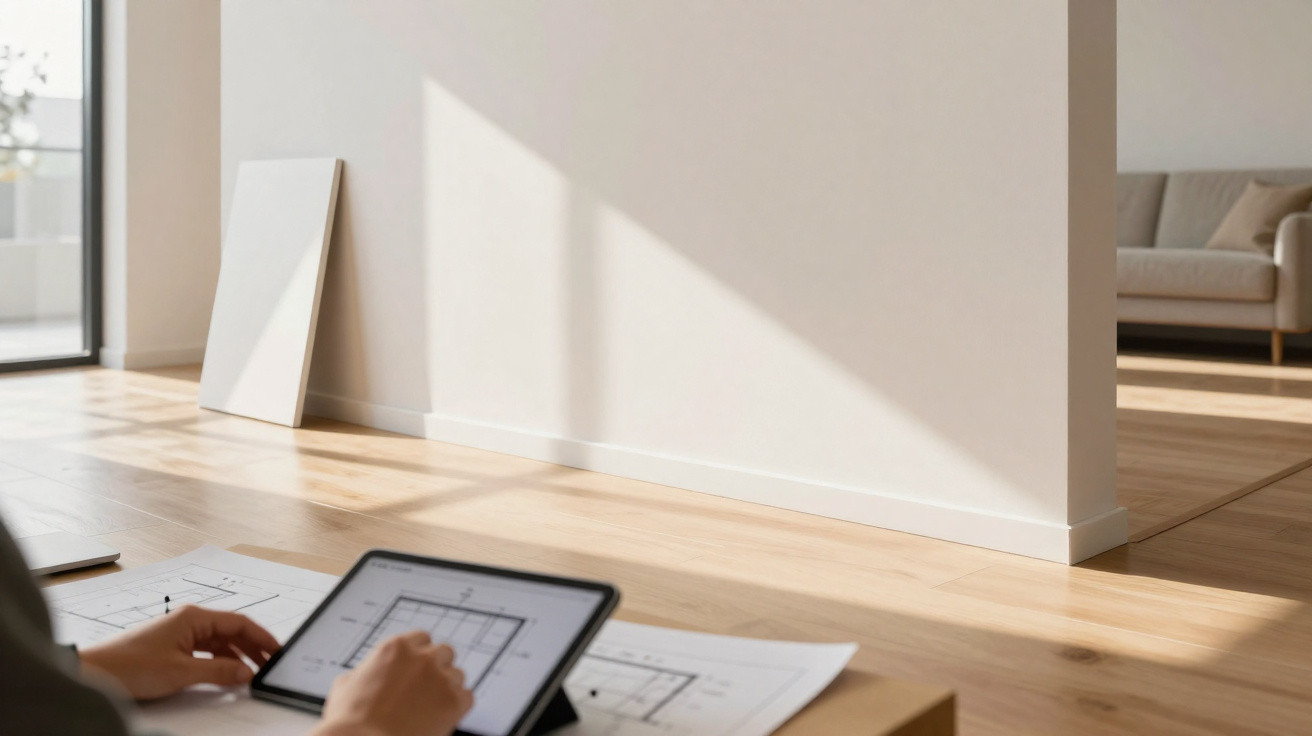
The first drawback is that the material relies heavily on the quality of the substrate and the installation. If the wall is uneven, damp, dusty or poorly levelled, the finish may reveal flaws, lift at the edges or develop bubbles.
- It requires a properly prepared surface: uneven walls will compromise the finished result.
- It can scratch or stain: resistance differs according to product quality.
- It is not a replacement for natural stone: its lifespan is generally shorter than that of genuine marble.
- Joints may be visible: especially across large, brightly lit areas.
- Moisture presents a risk: water ingress can damage the adhesive, backing and finish.
Where can flexible marble cause more problems?
Flexible marble is more likely to create issues in places exposed to steam, direct water, grease or continual abrasion. Poorly ventilated bathrooms, kitchens near the hob and highly exposed exterior walls need additional consideration.
- Avoid fitting it over a wall with active water ingress.
- Do not use it on high-traffic floors unless the product is specifically rated for that purpose.
- Take care with worktops, as cutting and hot pans may cause damage.
- For outdoor areas, check its resistance to sunlight, rain and temperature changes.
- In kitchens, protect it from grease and abrasive cleaning products.
Which mistakes make the finish look poor?
A common mistake is choosing solely on the pattern, without checking thickness, durability, the recommended adhesive and the intended application. Another is attempting to install it like ordinary wallpaper, while overlooking levelling, cleaning and the adhesive curing time.
Disappointment can also arise when people expect the same sheen, depth and feel as natural stone. Flexible marble is a practical decorative option, but the final result depends on the material quality, the installer and selecting the right setting.
Is flexible marble worthwhile for a refurbishment?
It can be worthwhile when the aim is to achieve a stone-look finish with less weight, easier installation and a lower cost than a natural slab. It can work well on feature walls, panels, columns, entrance halls and dry indoor spaces, provided the surface has been prepared correctly.
For damp areas, heavily used surfaces or locations requiring high durability, it is better to compare it with porcelain tiles, natural stone, granite, ceramic cladding or moisture-resistant panels. The best option is the one that balances appearance, easy maintenance and genuine durability for everyday use in the home.



Comments
No comments yet. Be the first to comment!
Leave a Comment