
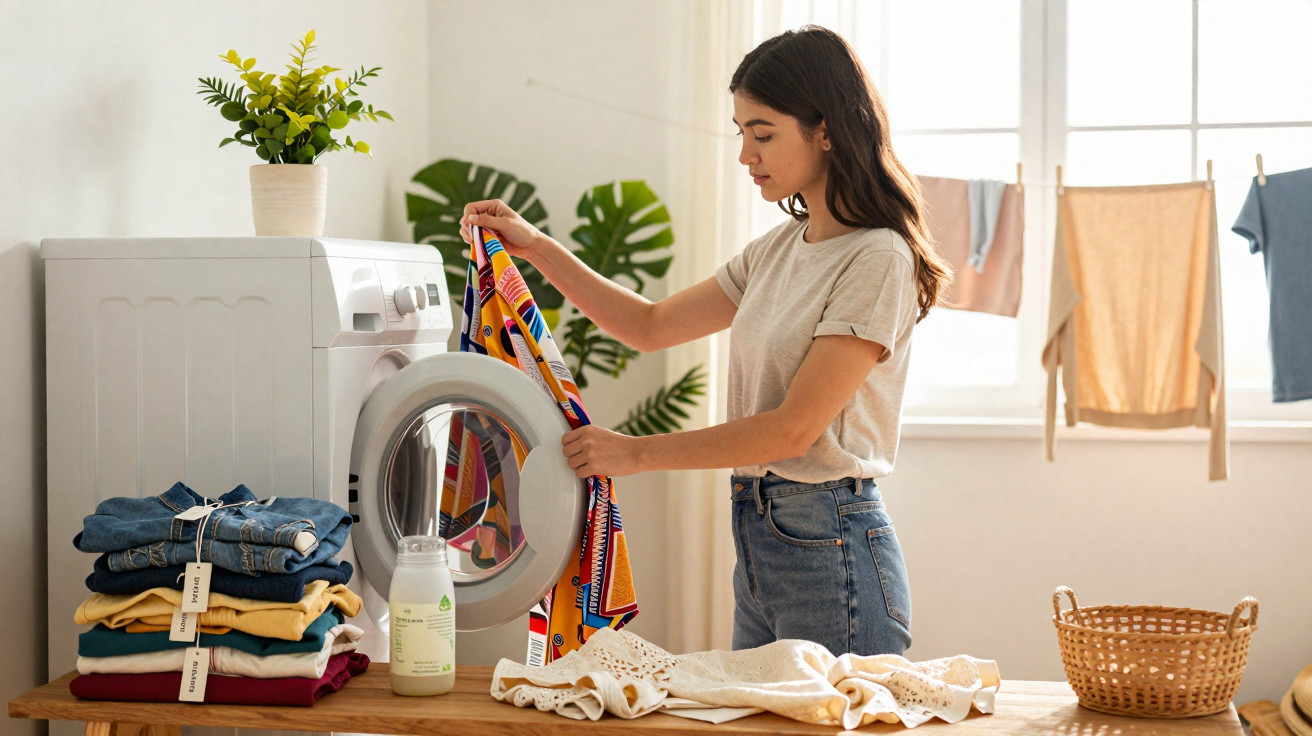
I held it up in front of the mirror, grinned, paid for it – and an hour later it was lying unwashed on my bed. For a moment, I thought: “Oh, it smells clean, so I can wear it straight away.”
We all know that feeling: you find something so good that you want to put it on immediately. You do not fancy sorting it, you do not fancy reading the care label; you simply want to go out, be seen and try on a new version of yourself. The reality, though, is often woven into the fibres – invisible and rather unpleasant.
Anyone who wears second-hand clothing also puts on a small piece of its history – and that is exactly where the problem starts.
What is really lurking in used clothing
At first glance, second-hand clothing often appears clean. Many items are folded, smell faintly of perfume or neutral, and sometimes even seem “new”. Our brains assume: shop = washed = safe. The catch is that most second-hand pieces are not freshly cleaned before they are sold; they are simply sorted, aired out and perhaps treated with textile spray.
What remains out of sight includes skin flakes, traces of sweat, skin oils and micro-organisms. These can settle deep in textile fibres and survive even after several days on a hanger. Synthetic materials in particular can retain odours and residues remarkably stubbornly. We often only notice that something has transferred to our own skin later on, through itching, redness or that strange “someone else’s smell” after wearing the item for a few hours.
A friend once told me that he bought a jacket in a fashionable vintage shop, wore it without washing it and had red patches on his neck and wrists that evening. At first, he blamed pollen, then stress. Later, it turned out to be a contact reaction to a combination of washing detergent residue from the previous owner and preservatives used in some storage facilities to protect textiles from mould. Let us be honest: nobody seriously asks in a shop when something was last washed.
Studies show that bacteria can remain alive on worn textiles for days, and sometimes weeks. There may also be dust mite droppings, fungal spores, traces of deodorant, perfume and nicotine. A T-shirt that clung to a smoker’s body may still carry a faint smoke smell after several washes. In close-fitting areas such as the underarms, waistband or collar, remnants of previous wearers build up like a small archive. And you are placing that archive directly against your skin.
From a logical perspective, clothing acts rather like a second, textile skin barrier. Millions of bacteria live on our actual skin and help to protect us. When an unfamiliar biome – meaning another person’s microflora – comes into contact with us, our system can sometimes react with irritation. It does not have to be serious, but it may show up as a rash, spots on the back or itchy patches. There is also the possibility of parasites such as body lice or bed bugs travelling through the second-hand clothing trade. Not from every shop and not in every town, but the risk is real enough to make it worth reaching for the washing detergent once.
How to properly “reset” second-hand clothing
The best routine starts as soon as you get home after buying it: open the bag and sort the items. Anything worn directly against the skin – underwear, T-shirts, tops, leggings and sleepwear – should go straight into the washing machine. Ideally, wash at 40°C or above, depending on the label. For sturdy cotton or bed linen, 60°C is often the safest option for getting rid of bacteria and mites.
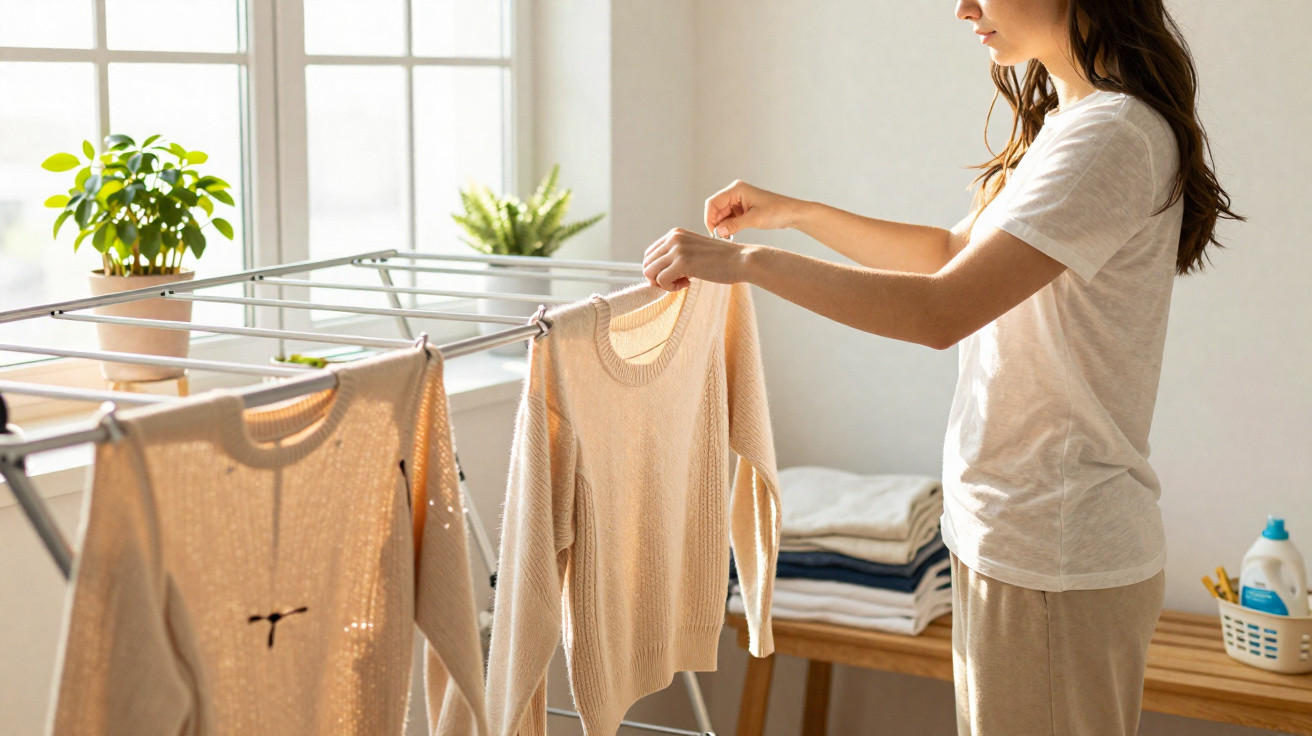
Delicate items such as wool, silk, viscose or blazers can be placed in a laundry bag and washed on a gentle cycle with mild detergent. Alternatively, a combination of hand-washing and airing can work: use lukewarm water, add a small amount of delicate-wash detergent, soak briefly, do not rub and only press the fabric gently. Then let it dry naturally, ideally outdoors or by an open window. That first wash is less of a luxury and more like a reset button for the garment.
Many people make the mistake of giving second-hand finds “just a quick airing” before wearing them straight away. It feels reasonable: if the fabric smells fairly neutral, the brain gives the green light. The issue is that smells disappear more quickly than pathogens or allergens. Another common mistake is using too much scented fabric conditioner in the first wash to cover up the “other person’s smell”. Combining old residues with new chemicals can irritate the skin even more.
It helps to remember that you do not need to set up a disinfection laboratory; you only need to take one clear first step. It is particularly worth looking closely at children’s clothing. Children’s skin is much more sensitive to old detergent residues, pet hair or household dust. Anyone prone to eczema, allergies or acne will recognise the issue: one poorly treated shirt and their back breaks out. In that situation, one extra wash is more like a gentle insurance policy.
“Clothing tells stories – but it does not need to leave every trace of the past on your skin.”
A short checklist can help you wear second-hand purchases with confidence:
- Wash anything worn directly against the skin before wearing it for the first time.
- Read the label and use the highest temperature the fabric can safely tolerate.
- Clean delicate items in a laundry bag or by hand; do not simply air them out.
- If an item has a strong smell, plan a second wash rather than masking it with perfume.
- Air jackets, coats and blazers thoroughly as well, and have them professionally cleaned if necessary.
Washing as a ritual rather than a chore
Second-hand is about more than shopping cheaply; it is also an attitude: buying less new and reusing more. It would be paradoxical to care about sustainability but cut corners on the simplest step – washing something once. A wash cycle takes a little time, but it turns an item that belonged to someone else into a piece of your own wardrobe. When you take your “new” vintage shirt out of the machine, you no longer smell the past; you smell your own home.
You can even turn it into a small ritual. Have a “new arrivals day” once a month: everything you have picked up from second-hand shops over the previous weeks goes into the drum together. Put some music on, check the labels, and separate items by colour and fabric. This turns a necessary hygiene measure into a brief, almost meditative break in everyday life. And, honestly, fresh laundry creates a different feeling about yourself, particularly with clothes you wear next to your skin.
Of course, there is no need to treat every individual item with paranoia. Some jackets from vintage shops look as though they have just come back from the dry cleaner’s; other pieces smell of neutral detergent, and you would swear they had barely been worn. The sober truth is that you cannot know for certain by looking at them. One wash quietly removes that uncertainty from your mind. It gives you freedom – when wearing it, moving, sweating and hugging. Perhaps that is the invisible luxury that makes second-hand even better.
| Key point | Detail | Benefit for the reader |
|---|---|---|
| Hygiene risk in used textiles | Residues of sweat, bacteria, mites, detergents and fragrances in the fibres | Understands why unwashed second-hand clothing can trigger skin problems or allergies |
| First wash as a “reset” | Wash according to material: 40–60°C for robust fabrics, a gentle cycle or hand-washing for delicate items | Gets a clear, practical routine for greater safety and wearing comfort |
| Washing ritual instead of a sense of duty | A conscious approach to new wardrobe arrivals, for example a monthly “new arrivals day” | Connects hygiene with self-care and sustainability rather than stress and effort |
FAQ:
- Do I really need to wash every second-hand item before wearing it for the first time? For anything worn directly against the skin, the honest answer is yes. With jackets or coats, thorough airing plus occasional cleaning is often enough, but even then, an initial wash or cleaning treatment is the safer option.
- Is it enough just to air out second-hand clothing? Airing reduces odours but does little to remove bacteria, fungi or allergens. Especially for T-shirts, trousers, bed linen or children’s clothing, airing is not a substitute for washing.
- How do I wash delicate vintage pieces without ruining them? Check the label and, if in doubt, hand-wash using delicate-wash detergent and lukewarm water. Do not wring the item out; gently press out the water and dry it flat or on a wide hanger. Professional cleaning may be sensible for very old or specialised pieces.
- Can parasites really be passed on through second-hand clothing? It is rare, but not impossible. Bed bugs or body lice can survive in crevices, seams and lining fabrics. A hot wash greatly reduces this risk, while dry cleaning can help with coats or suits.
- Which washing detergent is best for second-hand finds? A mild but effective detergent is usually sufficient. Those with sensitive skin should choose fragrance-free products. Laundry sanitiser can be useful for heavily worn items, but it does not need to be used with every wash.



Comments
No comments yet. Be the first to comment!
Leave a Comment