
Many households still have them tucked away in a drawer: old, slightly worn kitchen tea towels with traditional stripes. Rather than throwing them out or relegating them to cleaning duties, you can turn them into a useful accessory that saves money, cuts waste and looks genuinely stylish.
Why Grandma’s striped tea towels are valuable again
These understated retro tea towels often come from a time when quality came first. Behind the red or blue stripes, there is usually hard-wearing linen or so-called “Metis”, a blend of linen and cotton. This fabric can last for decades, grows softer with every wash and still remains exceptionally durable.
“These very old tea towels are perfect for sewing into a reusable bread bag.”
Anyone wanting to make their day-to-day life more sustainable often starts in the kitchen. Reusable textiles in place of disposable packaging are a key part of that. Giving old tea towels a new purpose fits perfectly: nothing new needs to be bought, existing material stays in use, and personal style is not overlooked.
The new kitchen favourite: a bread bag made from an old tea towel
Social media is increasingly full of clips showing people sewing bread bags from old kitchen tea towels. The appeal of the striped design remains, but its purpose changes: instead of hanging from a kitchen hook, the tea towels become reusable packaging for baguettes, loaves or bread rolls.
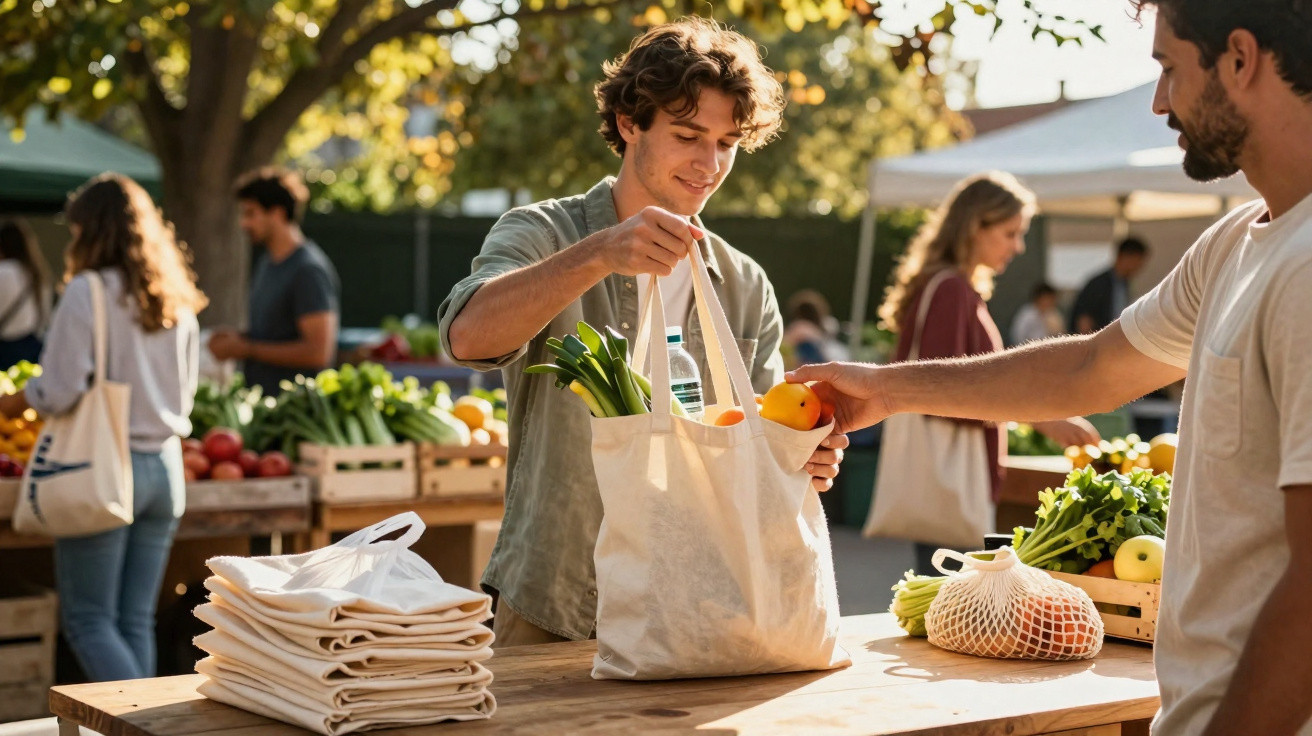
The practical benefit is obvious: a fabric bag replaces the single-use paper bags from the bakery and avoids plastic packaging from the supermarket. At the same time, it creates an accessory you can happily leave on the worktop or hang on a hook – decorative in a country-house or “country chic” style.
Anyone who normally buys handmade linen bread bags can easily pay €15 to €20 each. By using material already in the cupboard, the cost falls to virtually nothing – only a little thread and perhaps a cord are needed.
Beginner-friendly: turning a tea towel into a sturdy bread bag
All you need for the bag is a basic domestic sewing machine, some time and a little care. Professional-level skills are unnecessary. The process can be reduced to three straightforward stages:
- Remove damaged areas – Cut away frayed sections or patches that have become thin. Keep the strong, usually attractively striped edges wherever possible.
- Sew the side seams with a “French seam” – Fold the tea towel and sew it together first with the wrong sides facing, then turn it and sew again. This encloses every raw edge, making the seam durable and preventing it from fraying.
- Create a drawstring channel at the top – Form a narrow channel along the upper edge and thread through a cotton cord or ribbon. The bag can then be pulled closed easily.
The tea towel determines the size of the bag. A long, narrow kitchen tea towel is ideal for baguettes, while a wider one suits standard loaves or several bread rolls.
A short step-by-step guide
- Wash the tea towel, allow it to dry and press it lightly.
- Cut away any areas with holes or heavy stains.
- Fold the tea towel lengthways, with the attractive side facing inwards.
- Close the side seams with a straight stitch, shaping a base at the bottom.
- Turn the bag inside out and topstitch the side seams again close to the edge.
- Fold the upper edge inwards twice and stitch it down to create a channel.
- Use a safety pin to thread the cord or ribbon through, knot the ends – and it is ready.
Why linen keeps bread fresh for longer
Linen and old Metis fabric are close to ideal for bread bags. The material is tightly woven yet breathable. It absorbs a little moisture without feeling wet. This protects the crust while allowing the crumb to breathe.
“The bag works like a small climate system: less condensation, less risk of mould, slower drying out.”
Because linen regulates moisture, it prevents the damp film from forming around the bread, as commonly happens in plastic bags. The crust does not soften as quickly, and the crumb does not dry out within a day. Some users report that bread stays enjoyable for noticeably longer in a linen bag than in paper or plastic film.
There is another advantage: linen fibres are naturally more resistant to certain kitchen insects. This is no substitute for good hygiene, but it can be seen as a small bonus.
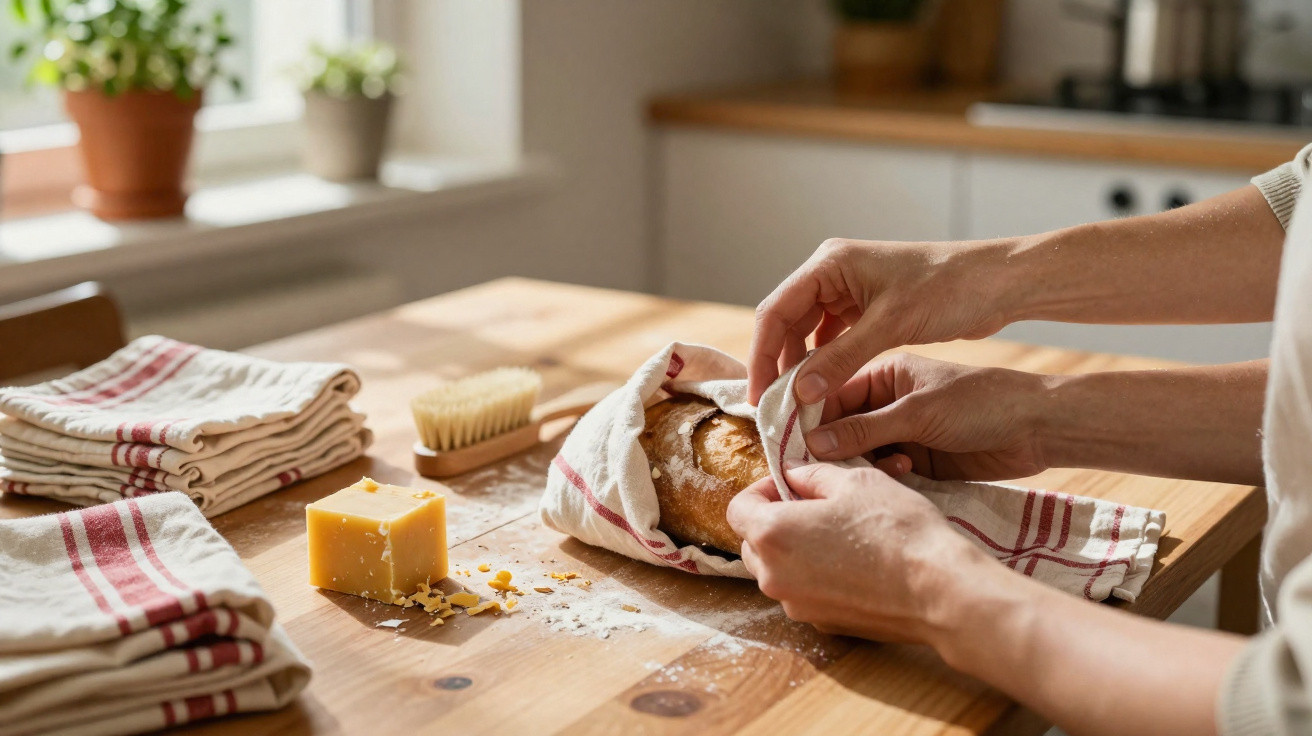
Extra tip: finish the bread bag with beeswax
If you want to extend freshness even further, coat the inside of the bag with a layer of pure beeswax. The method is similar to that used for familiar “bee wraps”:
- Lightly sprinkle the inside of the bag with crushed beeswax pellets or rub it with a piece of wax.
- Cover it with baking paper and iron carefully until the wax melts and spreads.
- Leave it to cool – the coating stays flexible and slightly tacky.
The wax makes the fabric a little denser while keeping it breathable. Many people report that a baguette stays fresh for easily twice as long as it would in an ordinary paper bag. For cleaning, lukewarm water with mild washing-up liquid is enough; hot water would dissolve the wax.
Care, hygiene and practical everyday use
Before using it for the first time, wash the tea towel thoroughly to remove dust, old detergent residue and kitchen odours. A light pressing smooths the fibres, making both sewing and later folding easier.
In daily use, only put bread into the bag once it has cooled. When it is still warm, condensation forms more quickly inside the bag. Ideally, hang the filled bag from a hook so air can circulate around it.
Depending on how often it is used, washing it every few days is sufficient. If you store bread that sheds lots of crumbs, shake the bag out well after every use. Bags without wax can be machine-washed at 40 to 60°C; waxed bags should only be cleaned with lukewarm water.
Use offcuts cleverly: more zero-waste ideas for old tea towels
Strips and smaller pieces of fabric will usually remain after cutting. These leftovers do not have to go in the bin either:
- Scented sachets for the wardrobe: Sew small pouches, fill them with dried lavender flowers, tie them closed and place them among clothes.
- Bowl covers: Turn larger pieces into round or oval covers, add elastic and use them over bowls – a reusable alternative to cling film.
- Bags for loose foods: A reduced pattern makes practical little bags for rice, pasta or pulses.
“One old tea towel can therefore become a complete set of reusable kitchen helpers.”
Benefits for everyday life, the environment and your wallet
The trend for bread bags made from old tea towels meets several needs at once: less kitchen waste, lower spending on accessories and a touch of individuality. Rather than buying plain standard bags, the sewn versions carry a story – many bring back memories of grandparents’ kitchens or earlier family celebrations.
If you have children, you can involve them in sewing or decorating: add a small patch, an embroidered initial or a coloured ribbon. This helps everyone recognise their own bread bag and makes it easier to move away from disposable packaging.
For sewing beginners, the project is well suited to gaining first experience: straight seams, manageable stages and a visible benefit. More experienced sewers can experiment with lining fabrics, patch pockets or combinations of several tea towels. The result is one-of-a-kind pieces that also make welcome gifts – perhaps together with a loaf from a favourite bakery.

Comments
No comments yet. Be the first to comment!
Leave a Comment