
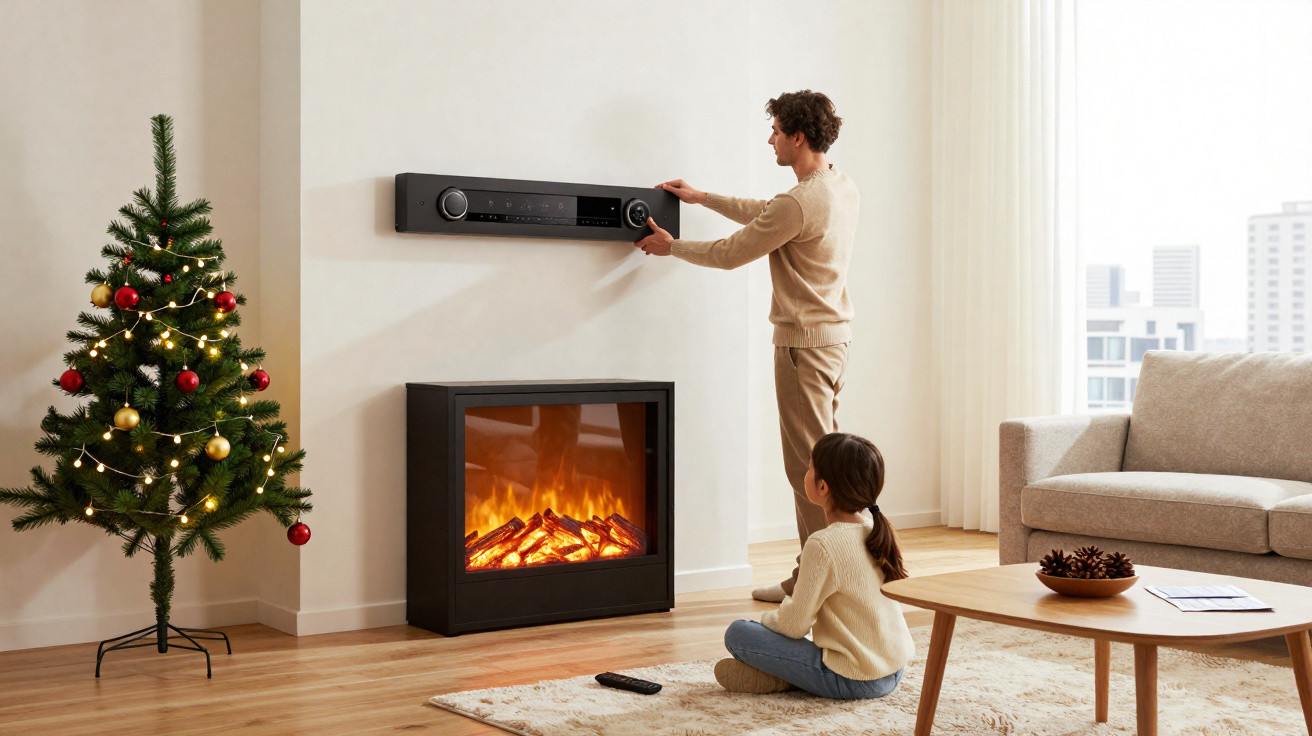
Across Europe and the UK, a growing number of households view the traditional wood-burning fireplace with conflicting emotions: it evokes nostalgia, yet raises concerns about smoke, safety and expense. This winter, a fresh generation of electric fireplaces is offering similar visual comfort with considerably less inconvenience and a far faster installation process.
A new Christmas staple for homes without a chimney
For many urban residents, the idea of singing carols beside a crackling fire has never suited the reality of a compact flat without a chimney, restrictive building regulations and neighbours unwilling to tolerate smoke. Electric fireplaces address this need. They provide the appearance of flames, the warmth of a heater and a living-room focal point, without requiring a flue or any structural alterations.
Among the products contributing to this change is the Kesser Prio, a freestanding electric fireplace that has drawn interest following substantial reductions in early festive sales on major marketplaces such as Amazon. It is aimed at buyers seeking a traditional appearance combined with the operation of a modern appliance.
The new generation of electric fireplaces aims to replace gas and wood units with safer, plug‑in systems that can be installed in minutes.
With heating output of up to 1,900 W, the Prio can heat small to medium-sized rooms to roughly 28°C under normal conditions. LED technology creates a realistic flame simulation behind a three-sided screen, meaning the effect is visible not only from the front but also partly from each side, giving more of the impression of a classic cast-iron stove.
Why flats are turning away from gas heaters
Gas heaters have traditionally been a popular choice in rented flats, although their reputation has weakened. Fears around gas leaks, explosion hazards, carbon monoxide and demanding ventilation requirements are putting off increasingly cautious tenants and landlords.
Electric fireplaces avoid many of these concerns. They plug into an ordinary socket, use no fuel combustion and emit no combustion gases into the room. They also prevent soot staining on walls and ceilings, a frequent cause of disagreements between tenants and landlords.
Key features that convince sceptical buyers
Alongside their cosy appearance, newer appliances compete on safety and controllability. The Kesser Prio, for instance, includes several features designed to address common frustrations with older heating systems:
- Dual power levels: up to 1,900 W for rapid heating, with a lower setting for maintaining the temperature.
- Thermostat control: the appliance switches itself on and off to sustain the selected temperature.
- Remote control: temperature, timer and power settings can be changed from the sofa.
- Window-open detection: when the appliance detects a sudden fall in temperature, it assumes that a window is open and reduces or stops heating to conserve energy.
- Decorative storage space: a lower compartment for artificial logs or baskets helps the appliance appear built into the furnishings rather than resembling a basic heater.
Measuring approximately 64 x 35 x 49 cm, the compact Prio is especially suited to smaller rooms. It can be positioned in a corner, beneath a TV or where an old sealed fireplace once stood, without breaking into walls or hiring a chimney sweep.
For renters, the biggest advantage is reversibility: the fireplace can be moved, unplugged and taken to the next flat with no trace left behind.
More modern designs for minimalist interiors
A stove-inspired design with imitation logs will not appeal to everyone. For households favouring cleaner, more pared-back lines, brands are promoting contemporary alternatives that work in much the same way while adopting a different visual style.
The Kaminio “Hugo” electric fireplace is one such option, and it too has seen price reductions this season. It retains the LED flame display while introducing ambient lighting and a more geometric front. Its lower storage area can hold decorative wood, books or baskets, allowing it to suit Scandinavian or modern living rooms.
Traditional vs modern look: what actually changes?
| Aspect | Traditional-style units (e.g. Kesser Prio) | Modern-style units (e.g. Kaminio Hugo) |
|---|---|---|
| Design | Stove-inspired, commonly featuring curved details and a visible “log” section | Clean lines, broad glass front, more “furniture” than “stove” |
| Flame effect | Warm colouring, a classic ember appearance and side viewing windows | 3D flame effects, coloured ambient LEDs and more theatrical choices |
| Placement | Well suited as a freestanding statement piece | Often intended for positioning below a TV or within shelving |
| Target buyer | People who favour rustic, cottage or vintage interiors | Minimalist, contemporary and open-plan homes |
In practical use, both types generally offer the same essential functions: a thermostat, remote control, LED flames and built-in heaters of around 1,800–2,000 W. The key distinction is how they influence a room’s mood, and whether they act as a visual centrepiece or blend discreetly with the décor.
How these devices compare with other electric heaters
Festive discounts on fireplace-style heaters are appearing alongside offers on more functional products, including fan heaters, straightforward radiators and wall-mounted panels from brands such as Kesser, Tresko and Homcom. Such alternatives are often cheaper and prioritise heating performance over appearance.
Certain models include Wi-Fi and app-based controls, allowing owners to turn them on from elsewhere, set the temperature before returning home or link them with voice assistants. In terms of comfort, however, many people still favour a visible “fire” as a focal point when relaxing on the sofa, even if they use less noticeable heaters in bedrooms or home offices.
The real competition is no longer just between gas and electricity, but between anonymous white heaters and devices that double as decorative furniture.
Who gains most from an electric fireplace?
The following households are typically those that benefit most:
- Small flats without chimneys: a plug-in appliance provides both a centrepiece and genuine warmth when structural work cannot be carried out.
- Families with children or pets: cooler surfaces and automatic shut-off features reduce risks compared with open flames.
- Renters: there are no permits, flue-drilling requirements or long-term arrangements with landlords.
- Allergy sufferers: electric appliances do not produce smoke particles, soot or ash that may irritate sensitive lungs.
- Second homes: rapid start-up makes them practical for holiday properties left empty for much of the year.
What to check before buying
An impulse purchase during Black Friday or pre-Christmas promotions may prove disappointing if several basic factors are overlooked. Before placing a discounted fireplace in the basket, buyers should consider:
- Room size: 1,800–2,000 W will normally suit rooms of about 15–30 m². Bigger spaces may require additional heating or more than one unit.
- Electrical capacity: older properties with heavily loaded circuits may struggle if high-wattage appliances are operated simultaneously.
- Noise level: fan-assisted units can create a faint hum. Quieter models are more appropriate for bedrooms.
- Flame-only mode: some buyers want the fire effect without heat, particularly in spring or autumn. As this is not available on every model, specifications are important.
- Energy-saving functions: precise thermostats and window-open detection can help lower costs during extended cold periods.
Energy costs remain unstable across Europe and the UK, making running expenses an important consideration. Electric fireplaces turn almost all the electricity they consume into heat, but electricity is often more expensive per kilowatt-hour than gas. They are therefore most effective as supplementary heaters, rather than as the sole heat source in a poorly insulated property.
Beyond Christmas: using flame effects all year
Manufacturers increasingly present these appliances as more than a seasonal addition. Since LED flame effects use far less energy than the heating element, many owners leave the visual fire on during cool spring evenings while keeping the heat switched off. This maintains a relaxing living-room atmosphere without making the space uncomfortably hot.
Some owners also combine electric fireplaces with smart bulbs, dimmable ceiling lighting and light strips to create different settings, including movie mode, reading mode and dinner mode. The fireplace then forms part of a wider lighting plan instead of being a heater brought out of storage only in December.
The psychological effect of a flame, even a fake one, still shapes how people use their living rooms, long after the Christmas tree has gone.
Extra tips: combining comfort, safety and cost
A simple approximate calculation can help establish whether an electric fireplace suits a particular home. Take the electricity tariff and multiply the price per kWh by the heater’s output and the intended hours of operation. For instance, a 1,900 W appliance used for three hours at an average tariff of 0.30 €/kWh would cost about 1.71 € for that evening. Keeping use to shorter periods at the busiest times of day can help manage bills.
Placement matters too. Installing the fireplace against an internal wall and away from draughty doors and windows allows the room to heat more quickly. Leaving at least a few tens of centimetres clear around the vents helps prevent overheating and enables the fan to circulate warm air more evenly.
Builders and architects are already incorporating these appliances into planned refurbishments. Many new flats now feature a dedicated recess or reinforced wall area with wiring for a plug-in fireplace, despite having no working chimney behind it. For households that still miss the scent of real wood, combining a small outdoor fire pit or an occasional log burner in a well-ventilated setting with an indoor electric fireplace can offer both romance and practicality during colder months.



Comments
No comments yet. Be the first to comment!
Leave a Comment