
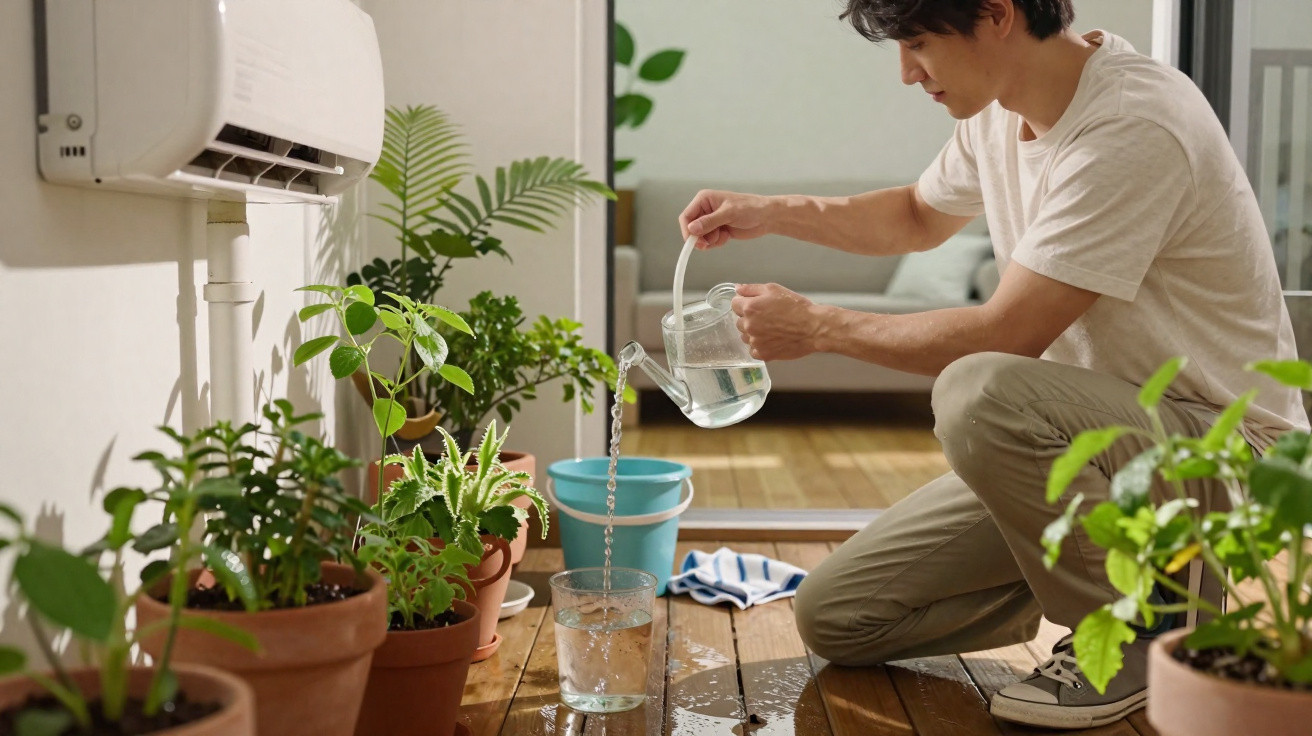
Water from an air conditioner that usually runs away through the drain can be put to a second use before it disappears down the plughole. It is created when moisture in the air condenses and has a low mineral content, making it suitable for reuse in certain household jobs and in the garden. There is, however, an important caveat: although it is often likened to distilled water, it must not be treated as drinking water or assumed to be free from contaminants.
How is water from an air conditioner produced?
As it cools a room, the unit draws warm, humid air across a cold surface. Some of the water vapour in that air then turns into droplets, which flow into a tray before being carried away through the drainage pipe. In hot, humid areas, the amount collected may be enough to make capturing it worthwhile for activities that do not require potable water.
- Moisture from the room enters the unit with the air.
- Contact with the cold coil changes some of the vapour into liquid.
- The collected water drains into the condensate tray.
- The drain pipe carries the liquid outside the appliance.
Is air conditioner water actually the same as distilled water?
Not quite. Condensate contains few salts and minerals because it comes from water vapour in the air, which is why it is commonly said to resemble distilled water. The distinction lies in its route after condensation: before leaving through the drain, it comes into contact with internal parts, dust and microorganisms that may be present within the air-conditioning system.
For that reason, a clear appearance does not mean the liquid is safe for drinking, cooking or washing food. It should only be reused for non-potable purposes, particularly if it has merely been collected from the hose of a domestic appliance without treatment or microbiological testing.
Household uses for water from an air conditioner
Its low mineral content makes condensate useful for jobs that do not involve ingestion or direct contact with food. Research into condensate reuse identifies household applications and irrigation as options for cutting the use of treated water in tasks where it is unnecessary.
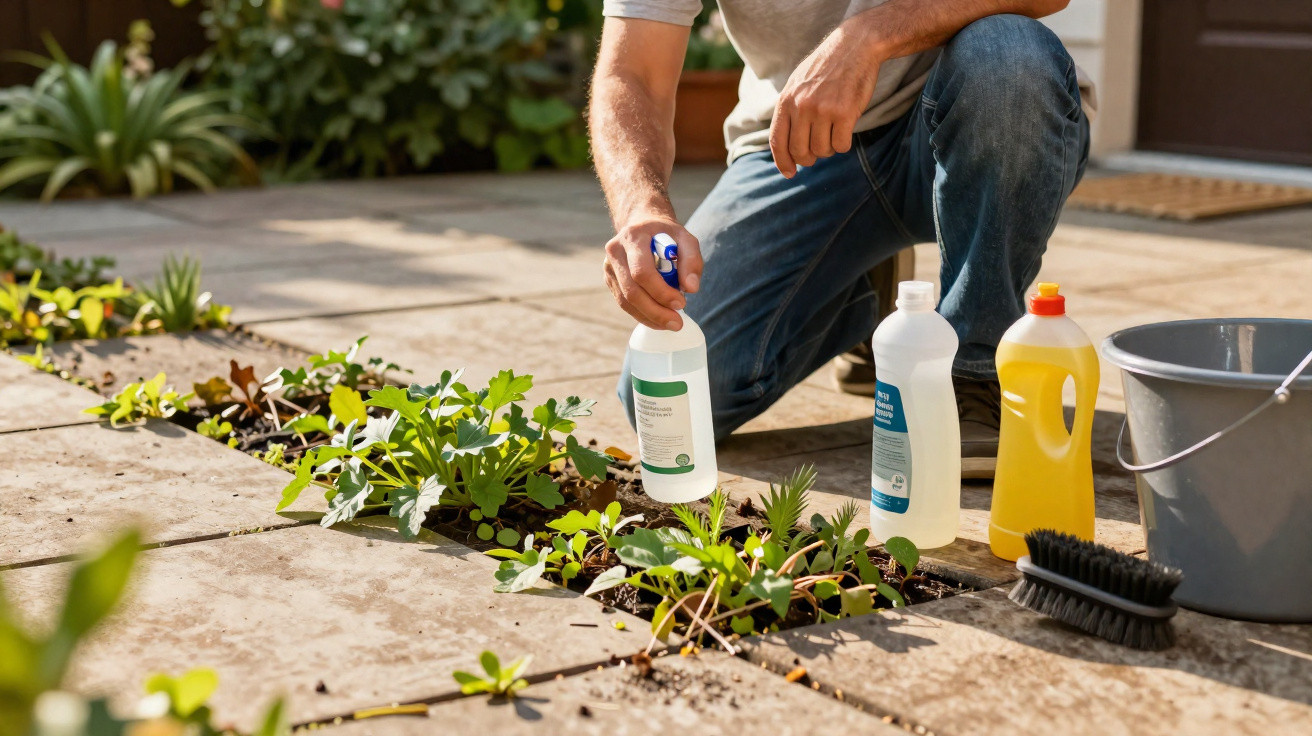
- Washing floors, pavements and outdoor areas.
- Manually filling a toilet cistern for flushing.
- Cleaning certain tools and outdoor items.
- Watering ornamental plants, provided that the appliance is clean and properly maintained.
- Keeping water for other domestic tasks that do not involve human consumption.
Is it safe to use this water for the garden?
Irrigation is among the most extensively studied applications for condensate from air-conditioning systems. Because it has low salinity, it can be used in landscaping, particularly for ornamental plants. Its quality is not the same from every unit, however: accumulated dirt, fungi, bacteria and materials within internal components can affect what reaches the collection container.
As a precaution, direct use is better suited to ornamental plants than to leaves, fruit or vegetables intended for eating. It is also advisable to keep the tray, filters and drains clean, and to discard any water with an odour, unusual colour or visible debris. Collecting it does not turn a poorly maintained appliance into a dependable source of clean water.
Does storing condensate genuinely save water?
The benefit varies according to air humidity, appliance size and operating hours, but the principle is straightforward: water that would otherwise be discarded can replace some of the treated water used for cleaning, flushing or irrigation. Where air conditioners run for extended periods, recovering condensate is already being studied as a supplementary supply for non-potable uses.
The key precaution is not to mistake reuse for potability. Collected water may be low in minerals and share some properties with distilled water, yet it still passes over surfaces that can introduce contaminants. Storing it in a clean container and using it promptly for suitable tasks turns an everyday by-product of air conditioning into a small supply for cleaning and gardening, without replacing water intended for consumption.

Comments
No comments yet. Be the first to comment!
Leave a Comment