
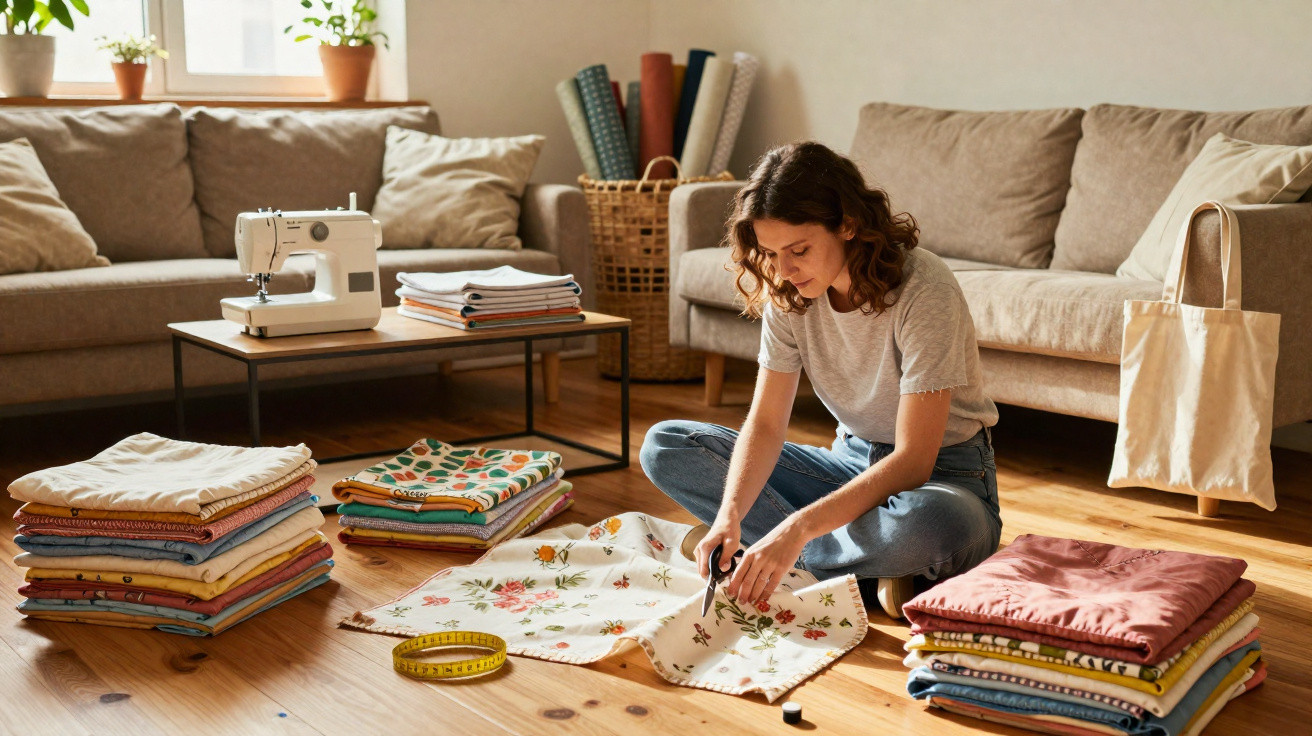
Repurposing old bed sheets has become a common approach in homes aiming to cut waste, save money and embrace more sustainable everyday habits. Rather than throwing fabric away as soon as it becomes torn or stained, many people give these items a new purpose in different rooms. The generous amount of material available can be used to make useful objects, decorative pieces and straightforward household storage solutions.
How can you reuse old bed sheets intelligently at home?
Begin by checking the fabric's overall condition. Set aside heavily worn sections for simpler tasks, while keeping the intact areas for larger projects. This ensures every usable centimetre of the sheet is assigned an appropriate purpose, reducing waste and avoiding unnecessary purchases.
A practical starting point is to mark the sections intended for covers, pillowcases, aprons or linings with tailor's chalk or a fabric pencil. Even without a sewing machine, you can create simple hand-finished edges or use fabric glue, helping the new items remain durable.
What are creative ways to reuse old bed sheets throughout the home?
In bedrooms, living rooms, kitchens and utility rooms, an old sheet can take on new roles without requiring advanced sewing skills. Here are several practical options for organising, protecting and decorating different spaces with the same repurposed fabric:
- Pillow and cushion covers: cut out two rectangles, sew three sides together and leave an opening for the filling or a zip.
- Drawer and shelf liners: trim the fabric to match the surface, protecting furniture and making cleaning easier.
- Tea towels and multipurpose cloths: sections with minor stains can be turned into cloths for the kitchen or utility room.
- Lightweight curtains: with double bed sheets, use the length for smaller windows and simply make a top hem.
- Makeshift tablecloths: a patterned sheet can be used as a cloth for large tables or as a decorative overlay.
One useful method is to split the sheet into sections for separate purposes. A single piece of fabric can produce pillowcases, upholstery protectors and cleaning cloths, serving several rooms at once while extending the material's useful life as much as possible.
How should each old bed sheet be cut and adapted for new purposes?
Accurate cutting is vital for ensuring the repurposing process is effective and that no fabric is wasted needlessly. Before reaching for the scissors, spread the sheet across a flat surface, such as a clean floor or a large table, so that the good areas and worn sections can be seen clearly.
Next, identify the most intact sections for bigger projects, take measurements with a tape measure, and mark straight cutting lines using tailor's chalk or a ruler. Cutting with fabric scissors and folding over the edges makes the material less likely to fray during washing, while giving even simple projects a neater finish.
How can old bed sheets be made into practical everyday items?
Some projects are particularly helpful for anyone wishing to organise the home or protect furniture using just one repurposed sheet. Among the most practical are sofa covers, wardrobe storage bags and simple aprons for cooking or crafts, all of which can be made with basic measurements.
To make a protective sofa cover, measure the furniture, drape the sheet over it, mark any necessary adjustments with pins, then make the required cuts and seams before fitting the adapted cover back in place. For storage bags, cut rectangles, sew the sides and form a channel at the top for a drawstring. An apron, meanwhile, can be drawn directly onto the fabric, with cut-outs at the sides of the torso, ties to fasten it and simple hems around the edges, creating a lightweight, practical accessory for daily use.


Comments
No comments yet. Be the first to comment!
Leave a Comment