
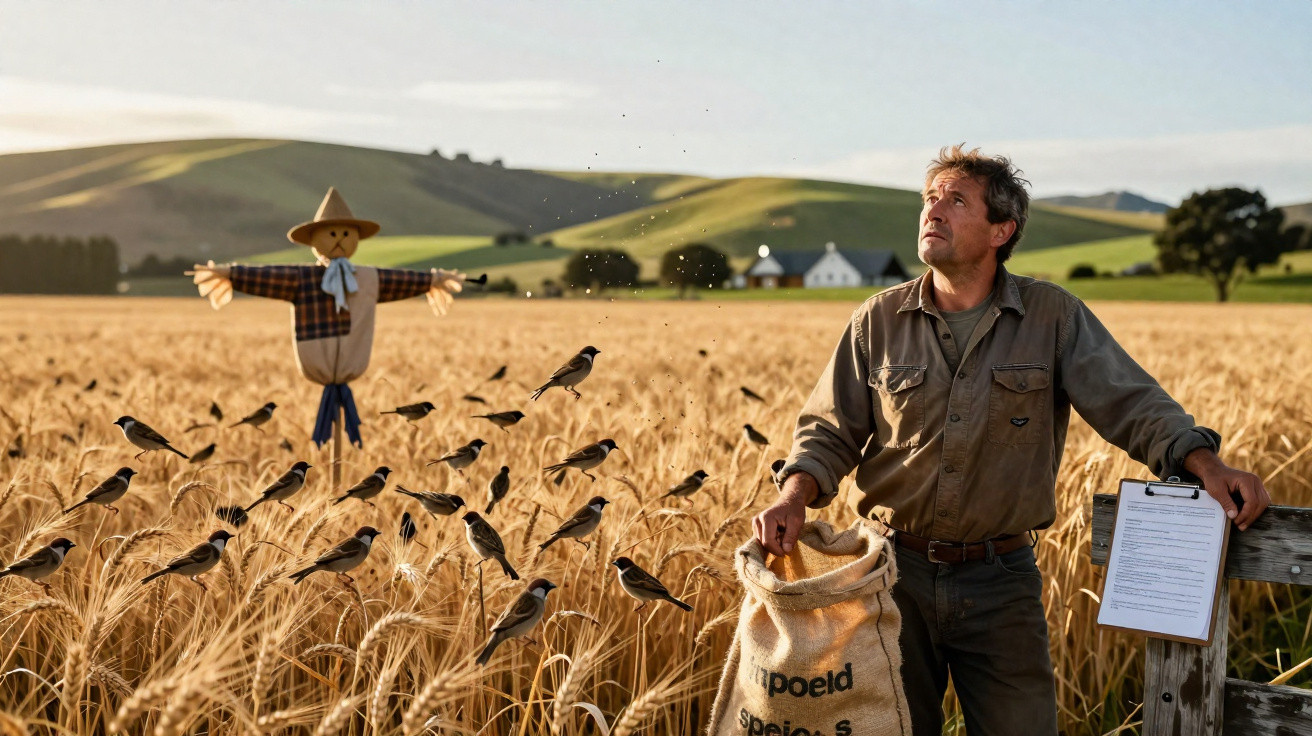
The search for biological solutions in farming has often delivered dramatic surprises for growers. When small exotic birds were introduced to tackle voracious insects, New Zealand experienced genuine devastation in its crops, turning former protectors into a serious economic threat.
How did sparrows reach New Zealand’s farmland?
During the 1860s, colonial crops were hit by severe caterpillar and beetle infestations. Seeking to resolve the issue without chemicals, the local acclimatisation society chose to import forty European sparrows, convinced of these birds’ rapid predatory efficiency.
Settlers expected the birds to keep fields clean and healthy throughout the year. This optimistic view overlooked the species’ ecological traits, creating the conditions for unchecked multiplication that would soon defy any initial agricultural planning.
What happened when Hawaii introduced fish to combat mosquitoes?
In 1905, small fish were released to eat mosquito larvae, but the species’ unexpected appetite affected… Read more
Why did the birds’ diet become a problem?
Although they fed their chicks caterpillars and spiders during the first week of life, adult birds had different feeding habits. They showed a strong preference for seeds and ripe grain, beginning a sustained attack on cultivated wheat fields.
Barley and maize crops also sustained major losses because of the constant presence of flocks. Before long, the amount of grain consumed outweighed the benefits of insect control, causing widespread anger and heavy financial losses for farmers.
Below is a video from the Ellenses YouTube channel that explores the points discussed in this topic in greater depth:
Which factors drove the rapid population explosion?
The region’s mild climate and vast food supply created ideal conditions for the birds’ breeding success. With no significant natural predators on the islands, populations expanded with extreme speed, rapidly spreading across several rural regions of New Zealand.
Their exceptional breeding capacity meant females could produce new broods while still caring for earlier chicks. This accelerated biological pattern enabled unforeseen exponential growth, surpassing within a few years every estimate made by naturalists in the colonial era.
Summary of the ecological impact
Core elements of the crisis
Key aspects of sparrow proliferation in agriculture:
- The initial release of only forty birds in Canterbury in 1867;
- A rapid dietary shift from insects to wheat and maize crops;
- The absence of predators, which enabled uncontrolled mass breeding.
How did farmers try to contain the invasions?
As crops were devastated, farming communities formed dedicated groups to eradicate the introduced birds. Drawing on English methods, these clubs distributed seeds and grain containing lethal poison, aiming to drastically reduce the population threatening annual harvests.
Local authorities also introduced cash rewards for surrendered heads and collected eggs. This measure mobilised young rural residents, leading to the systematic destruction of thousands of nests in an attempt to halt the animals’ advance.
The measures used to address overpopulation involved several approaches:
- Establishing civic organisations and clubs devoted to killing birds;
- Widespread use of poisoned grain bait scattered across farmland;
- Paying financial rewards for eggs and heads from killed birds.
What lessons did this episode offer for environmental management?
The failure of this intervention exposed the vulnerability of ecosystems to exotic species without predators. The case showed that hasty changes to native fauna can turn efforts to help into a complex challenge of conservation and ecological control.
The story of sparrows in New Zealand remains a striking example of the dangers of poorly considered biological control. It demonstrates the need for rigorous scientific assessment before making any change to the natural dynamics of the productive environment.






Comments
No comments yet. Be the first to comment!
Leave a Comment