
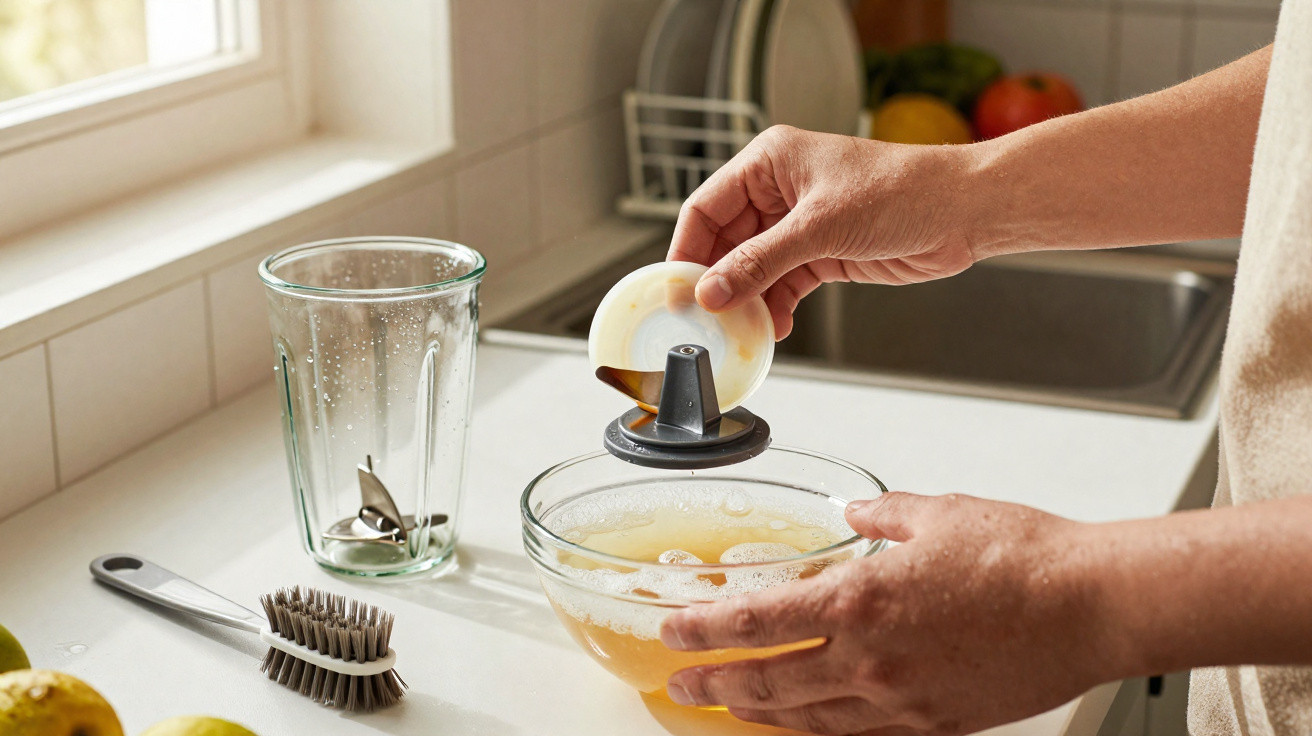
After preparing a recipe, it is easy to wash the blender jug while overlooking some of its smaller areas. Sealing rings, fittings and removable parts of the blade assembly can retain small amounts of food and liquid, depending on the model. That is why cleaning should involve more than just the jug.
Which blender part can hide residues?
Many models have a sealing ring positioned near the blade assembly. It helps to prevent leaks, although the space around it may come into contact with food remnants while the appliance is in use.
Some blenders also include components that can be taken apart for cleaning, whereas others have assemblies that users should not separate. Designs vary considerably between manufacturers, so consult the manual before removing any component.
Why does this area need attention?
Food debris can become lodged in narrow gaps, especially after making thicker recipes. Since these areas are not always visible during a quick wash, residues may remain even when the jug looks clean.
In addition, the sealing ring can come into contact with liquids and food particles. Insufficient cleaning may leave a build-up of residue or even damage the seal.
How should you clean the blender without damaging it?
Before taking any part apart, check the manufacturer's instructions. If the seal or blade assembly can be removed on your model, take it out using the specified method.
Wash the components with water and suitable washing-up liquid, using a sponge or brush that is compatible with the material. Do not use sharp objects to remove trapped debris, as they can damage rubber parts and surfaces.
What should you do after washing?
Rinse every part thoroughly and allow it to dry before reassembling the appliance. Drying is particularly important around connection points, where water can remain for longer.
It is also worth checking the sealing ring regularly. If it is misshapen, cracked or worn, it may need replacing in line with the manufacturer's guidance.
Therefore, the blender part that collects residues is not necessarily the same single component in every appliance. The key is to inspect seals, fittings and removable areas that are hidden during normal cleaning. Understanding the design of your own model helps you clean the appliance hygienically without dismantling components that were not intended to be removed.




Comments
No comments yet. Be the first to comment!
Leave a Comment