
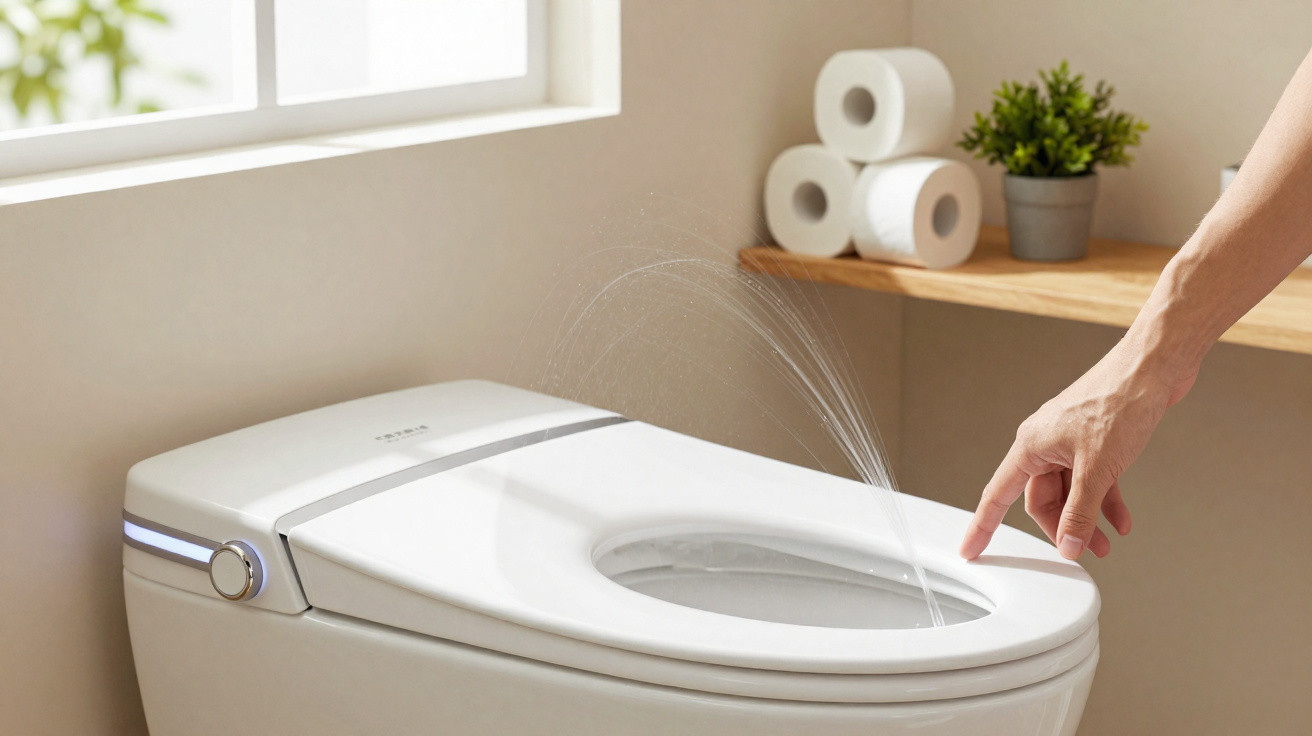
Toilet paper is beginning to share its place with smart toilets, attached bidet sprays and washlet-style seats: systems that use a water jet for intimate hygiene. They promise to cut paper use, improve cleanliness and make the bathroom more convenient, although switching relies on installation requirements, upfront cost and users becoming accustomed to them.
What is replacing toilet paper in bathrooms?
Over the coming years, water-washing equipment is expected to become more widely used. Already common in Japan, it is increasingly appearing across Europe. Options range from a complete smart toilet to an electronic seat fitted onto an existing toilet, or a simpler attached bidet spray.
More sophisticated models offer adjustable water pressure and temperature, air drying, a heated seat and automatic nozzle cleaning. Basic versions, meanwhile, perform the essential job: they replace some toilet paper with water and are generally easier to install.
Why is water cleaning considered more hygienic?
Water removes residue more directly than the dry friction of toilet paper. This can help limit irritation, particularly for people with sensitive skin, haemorrhoids, mobility difficulties or those recovering after surgery.
- A water jet reduces the repeated rubbing of toilet paper against the skin.
- Cleaning is generally more thorough when the water pressure is correctly adjusted.
- Seats with a drying function further reduce reliance on toilet paper.
- Models with a retractable nozzle require regular cleaning to maintain hygiene.
How can this change be more economical?
Initial costs differ considerably. A complete smart toilet costs more than a simple bidet spray or an adaptable seat, but savings can come from lower toilet paper consumption over the months.
The calculation varies according to household size, how frequently the system is used and the price of paper. In larger families, using fewer rolls may affect the budget sooner; in one-person homes, the financial return is usually slower.
What should you consider before installing one of these systems?
Before replacing paper with water, the bathroom’s existing layout and services need to be assessed. Certain models require a nearby water connection, an earthed electrical socket, side clearance around the toilet and suitable water pressure.
- Washlet-style seat: this must fit the shape of the toilet and often requires electricity.
- Attached bidet spray: this is usually simpler, but it depends on safe plumbing installation.
- Complete smart toilet: this provides more features, but calls for a higher investment and careful fitting.
- Small bathrooms: compact options are needed so that movement and cleaning are not obstructed.
Replacing toilet paper works when hygiene, maintenance and real use align
Toilet paper is unlikely to disappear overnight, but it is likely to become less central in bathrooms that adopt water washing. The key appeal of smart systems is their ability to combine comfort, cleanliness and reduced paper consumption without requiring major changes in routine.
For the system to work effectively, the choice must suit the existing bathroom: safe installation, a nozzle that is easy to clean, comfortable pressure and straightforward maintenance. The trend is most convincing when it improves everyday routines, rather than becoming simply an expensive piece of technology in the cloakroom.


Comments
No comments yet. Be the first to comment!
Leave a Comment