
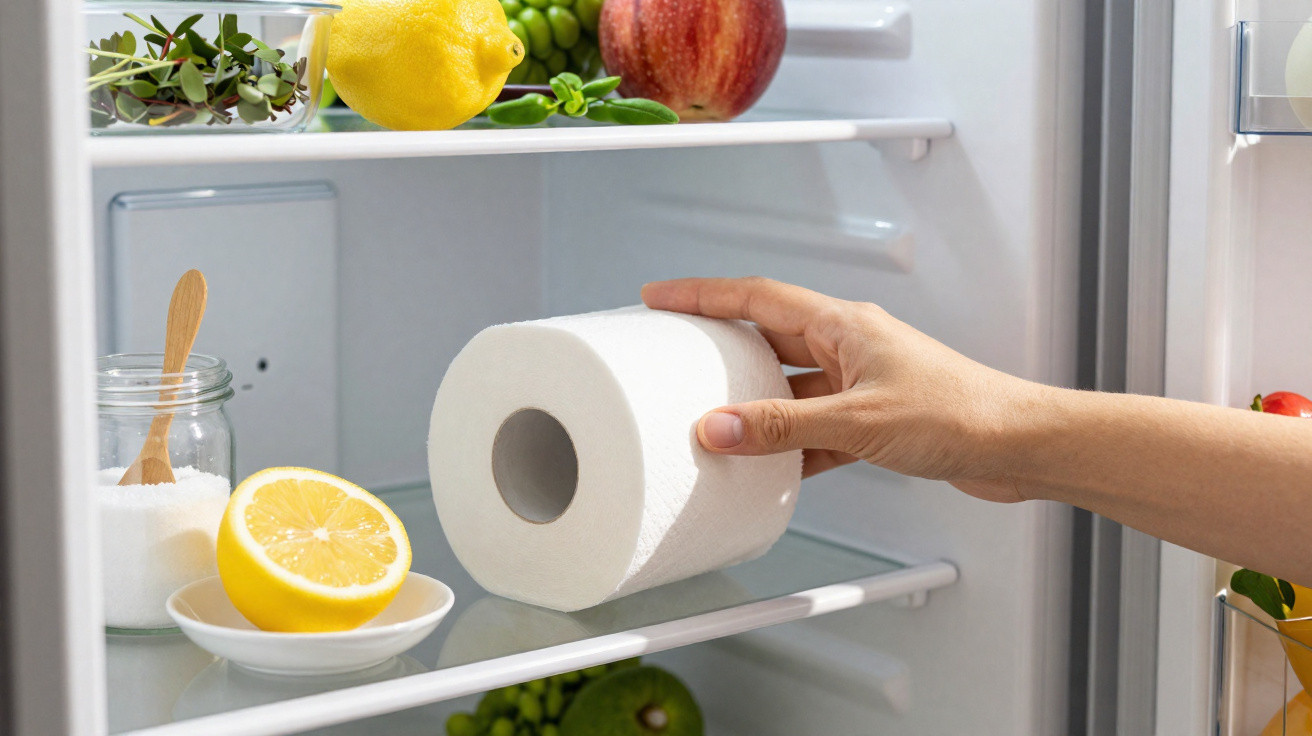
Putting a toilet roll in the fridge may sound unusual, but the tip has become popular because paper is absorbent. The theory is that its fibres capture some of the moisture in the appliance, which may in turn help lessen certain smells. However, this effect should not be regarded as proven or as comparable with a product designed to control odours.
Why do some people put toilet paper in the fridge?
Humidity levels inside a fridge change as the door is opened, food is stored, and liquids evaporate or condense. As paper is porous and able to absorb water, this explains the reasoning behind the practice.
Moisture can also carry odour-causing compounds around the inside of the appliance. For that reason, some people link moisture absorption with reduced smells. However, this does not mean that the paper removes the source of the odour.
Does toilet paper really get rid of bad smells?
This is the point that requires the greatest caution. Some people report noticing less odour after placing a roll in the fridge, but there are no scientific studies proving that this method works as a deodoriser for refrigerators.
If there is spoiled food, a spillage or a poorly sealed container, paper will not address the underlying problem. The food causing the smell must be removed and the affected area cleaned. At most, this tip can be considered an additional household measure.
How do some people use a toilet roll inside the fridge?
The most widely shared versions of the tip advise placing a new, dry and clean toilet roll on a shelf, where it will not come into contact with food or liquids. Some sources recommend replacing it after three or four weeks, or sooner if it becomes damp.
There is no universally proven position that is more effective than another. Nor is there any reason to place the paper directly against fruit, vegetables, meat or other food. If the roll takes in moisture and becomes wet, it should be removed so that it does not become another source of dirt.
What matters most for preventing fridge odours?
Paper is no substitute for basic appliance care. Out-of-date or spoiled food should be discarded, containers need to be kept properly sealed, and spills should be cleaned up promptly. For odour control, options made specifically for this purpose are available, including sodium bicarbonate or activated charcoal, alongside regular cleaning. Sources that discuss the toilet-roll tip also describe it as a supplementary measure rather than a replacement for cleaning.
So, toilet paper in the fridge has a straightforward explanation: it is an absorbent material that may retain some moisture. What has not been demonstrated is that a roll can remove odours or preserve food to any meaningful extent. For a fridge that is genuinely clean and free from unpleasant smells, finding the cause of the problem remains more important than any viral tip.


Comments
No comments yet. Be the first to comment!
Leave a Comment