
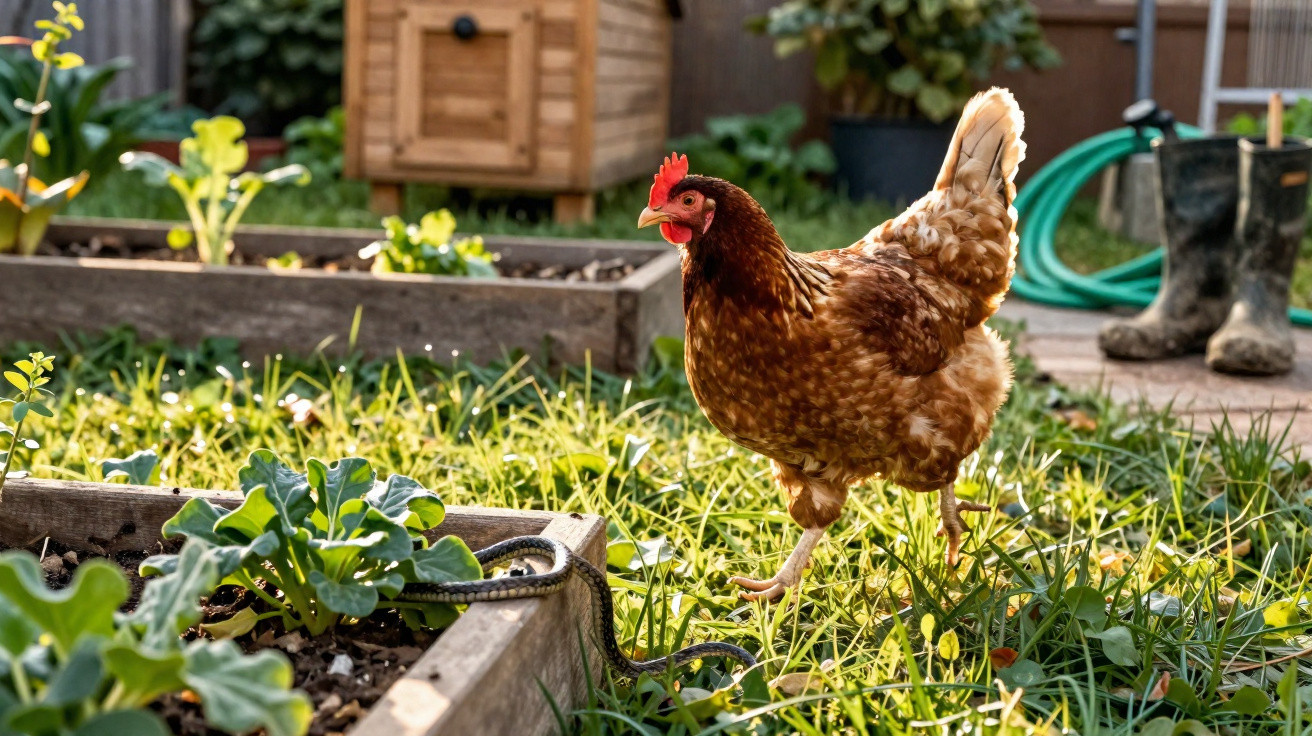
Many garden owners feel uneasy the moment something slithers through the grass. This is especially true for households with children or pets, where venomous species near the home are a particular worry. Rather than turning to poison or drastic methods, increasing numbers of people are relying on a surprisingly straightforward option: certain chicken breeds that make life noticeably more difficult for snakes in the garden.
Why snakes are drawn to gardens
With the first warmer days from April onwards, snakes become active. They favour sunny spots, dry-stone walls, sun-warmed patio slabs and dense hiding places. As a result, they are more likely to move closer to homes and gardens between April and October.
In many instances, the animals involved are not dangerous species at all. Field observations indicate that the vast majority of snakes spotted in European gardens are harmless grass snakes, which mainly hunt mice and other small rodents. Even so, concerns about venomous snakes remain, particularly when young children are playing on the lawn.
The legal position is clear: many reptiles are protected. They must not be deliberately killed or captured, and their eggs must not be destroyed. The aim in a garden is therefore not eradication but distance: ideally, snakes should not settle directly beside the patio in the first place. This is where chickens can serve as a living barrier.
“Chickens create disturbance, vibrations and constant movement – factors that permanently unsettle and drive snakes away.”
How chickens keep snakes away from the property
Natural-history observations and practical experience paint a fairly clear picture: chickens are among the natural enemies of smaller snakes. Although they do not deliberately hunt everything that crawls, their continual activity makes gardens less appealing to reptiles.
Constant movement in the grass: the main disturbance
Chickens scratch, run, peck and stamp about almost continually. These vibrations travel through the ground. For many snakes, this creates stress, so they avoid places with persistent movement. Allowing chickens to roam freely in the garden, or keeping them in spacious runs, can therefore create a kind of living protective zone.
Chickens also respond quickly. When they notice something unfamiliar, they raise the alarm. Their frantic clucking and flapping create further disruption, which snakes are far from keen on.
Physical advantages: armoured legs and a lightning-fast beak
Chicken legs are covered in tough scales and are comparatively less sensitive than bare skin. Small bites are unlikely to cause much harm there. At the same time, chickens can strike extremely quickly with their beaks, enabling them to seize, injure or even eat smaller snakes.
In practice, this is particularly apparent with young snakes and slender species. The “chicken effect” should be viewed more realistically with fully grown, powerful animals: chickens are more likely to keep their distance than actively engage in a fight.
Which chickens, and how many, make sense in the garden
A modest flock is enough for an average domestic garden. The animals’ activity levels and temperament matter more than their sheer size.
Recommended chicken density for the garden
- Around 2–3 chickens per approximately 500 square metres of garden space
- Increase flock numbers gradually on larger plots
- Avoid keeping too many birds, so that lawns and beds are not completely wrecked
Those with only a narrow garden can guide the birds specifically along the main problem areas instead of letting them roam everywhere.
Suitable chicken breeds with a hunting instinct
Hardy, energetic breeds that enjoy scratching are well suited to natural snake deterrence. Examples include:
- Sussex – lively, effective foragers that cope very well with free-ranging
- Marans – resilient, curious and highly active across the garden
- Other traditional utility breeds with a strong scratching instinct
Purely ornamental chickens that tend to be sluggish or have heavy feathering around the head often react more slowly and display less hunting behaviour. Anyone chiefly seeking to deter snakes is better off choosing hardy, traditional chicken types.
Creating a chicken patrol route against snakes
For chickens to have a genuine effect, they need a well-planned area in which to roam. Simply placing a small coop on the lawn is rarely enough.
Identifying snake risk areas in the garden
Common hiding places for snakes in gardens include:
- Dry-stacked stone walls
- Piles of wood and brushwood
- Areas around the compost heap
- Long grass or dense shrubs along fence lines
- Gaps around patio edges and steps
It is worth establishing a chicken patrol route precisely along these areas. A narrow grassy corridor running beside a wall or fence allows the birds to inspect them every day.
The best times to allow chickens out
Snakes depend on temperature. Their highest activity levels are usually:
- During the morning, as stones and walls warm up
- In the late afternoon, when the heat eases slightly
Letting chickens into the garden for several hours during these periods makes the best use of their deterrent effect. Many snakes retreat during the midday heat anyway, while chickens themselves generally prefer to seek shade then.
At night, the birds should be kept in a secure coop with close-mesh wire, so that foxes, martens and birds of prey cannot get to them.
Are chickens alone really enough?
A recurring point in many accounts is that snake encounters decline noticeably once a small flock is regularly active outdoors. Homeowners with old dry-stone walls or winding courtyard spaces, in particular, report a clear sense of relief in their second year of keeping chickens.
Nevertheless, no one should blindly assume that chickens will reliably keep every venomous snake away. Large, assertive animals may still remain nearby if the surrounding environment continues to attract them. A holistic approach is therefore sensible.
“Chickens work most effectively when the garden as a whole is less attractive to snakes and their prey.”
Additional measures that reduce snake pressure
- Reduce rats and mice – chickens clear up leftover food, disturb nests in the soil and thereby reduce suitable rodent habitat.
- Tidy cluttered corners – raise wood piles, store them on pallets or at least lift them slightly off the ground.
- Keep grass short – especially beside paths and around the house, patio and children’s play area.
- Move wild areas elsewhere – create dense shrubbery and deadwood habitats towards the far end of the plot instead.
- Use lighting sparingly – excessive lighting attracts insects and, in turn, other animals that snakes use as food.
Risks, limits and what can reasonably be expected of chickens
Useful though chickens may be, they are not a miracle solution. A direct encounter with a large venomous snake always presents a risk to the bird. Chickens normally avoid larger reptiles, but curious individuals can overestimate themselves.
Anyone living in an area with a significantly higher presence of venomous snakes should also seek advice from local wildlife organisations or reptile specialists before buying chickens. They will know the typical species, local hotspots and appropriate safe distances from the animals’ resting areas.
Keepers benefit in several ways at once: chickens provide eggs, make use of kitchen scraps, loosen the soil and bring life to the garden. Children also learn, almost incidentally, how to care for livestock and understand balance within an ecosystem, rather than immediately thinking every snake should be destroyed.
Practical advice for prospective chicken keepers
Anyone who has never kept chickens should consider more than snake deterrence alone. Several matters should be resolved before getting birds:
- Legal requirements – some local authorities have rules on animal keeping, noise control or bans on cockerels.
- Space needed – a secure coop, a protected run and areas for targeted patrol use.
- Involve neighbours – let them know early, share eggs and prevent disputes about clucking or smells.
- Regular care – feeding, changing water, cleaning the coop and monitoring the birds’ health.
Those who prepare these points carefully and deliberately choose active, hardy chicken breeds will gain more than fresh eggs: they will also have a remarkably effective, natural “snake watch” in their own garden.





Comments
No comments yet. Be the first to comment!
Leave a Comment