
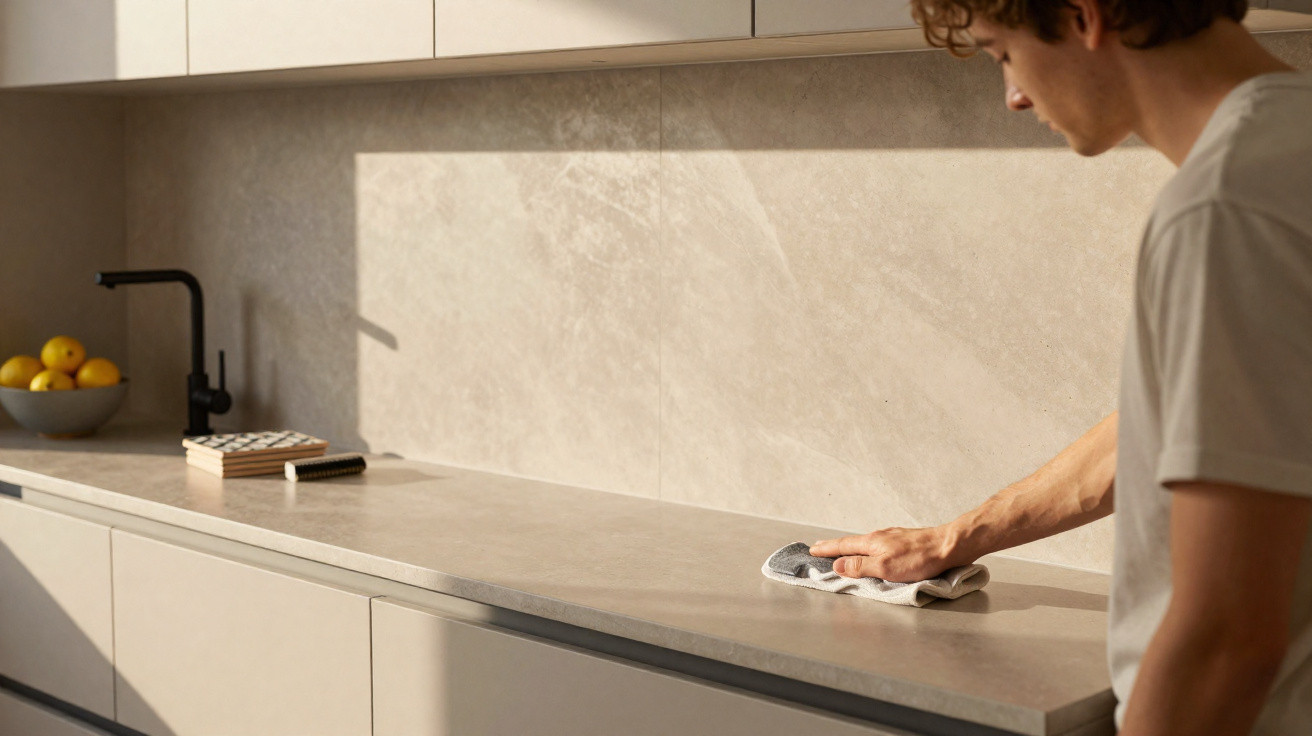
If you are considering a new kitchen, one term is currently appearing everywhere: the seamless splashback. Rather than small tiles with grout lines that take effort to scrub, large uninterrupted panels now create a made-to-measure appearance. Borrowed from high-end interior design, this style is increasingly finding its way into ordinary family kitchens, with notable implications for appearance, cleaning and budget.
Why kitchen tiles are losing their leading position
Grout is frustrating – in everyday use and visually
Tiled splashbacks were the standard for decades. They were durable, familiar and seemed to have no real alternative. Yet their drawbacks are now apparent in many homes: grout discolours, grease settles into it, and the overall surface can quickly look busy and fragmented. This is precisely where the latest generation of wall cladding offers a different approach.
“A continuous wall covering removes visual clutter from the kitchen – and makes the cleaning cloth happier too.”
Instead of individual tiles, designers are using large-format panels or continuous materials that extend from the worktop area to beneath the wall cabinets. The fewer divisions there are, the calmer the surface appears and the fewer places there are for dirt to collect.
The ‘monolith look’: when the worktop flows seamlessly into the wall
One particularly sought-after option uses the same material for both the worktop and the splashback. The worktop simply continues vertically, with no break and no visible transition. Kitchen planners refer to this as a monolithic effect.
This style delivers several benefits:
- The room seems larger because the eye is not interrupted.
- The kitchen takes on a calm, almost furniture-like character.
- Colours and veining become much more prominent.
- Light is reflected more evenly, making the surface look more premium.
This is especially compelling in compact city flats and open-plan kitchen-living spaces. Rather than resembling a conventional ‘workroom’, the kitchen visually merges with the living area.
Materials driving the seamless kitchen splashback trend
From natural stone to high-tech composites: the principal choices
A seamless wall requires materials that are stable and hard-wearing. Kitchen showrooms currently tend to feature the following options:
- Quartz and composite materials: These offer a highly even appearance, a broad range of colours and strong resistance to stains and acids. They suit anyone looking for a modern, understated finish.
- Ultra-compact panels (for example, Dekton): Exceptionally hard, heat-resistant and scratch-resistant. They are well suited to frequent cooks who occasionally put down hot pans.
- Natural stone, including marble, quartzite and granite: Every panel is unique, while large-scale veining can look spectacular. However, it needs effective sealing and a degree of care.
- Resin surfaces (for example, Corian and Hi-Macs): Entirely smooth and warm to the touch, these can be formed without joints. They are ideal for flowing upstands, integrated sinks and bespoke shapes.
- Newer composite materials made from ceramic and stone components: These combine ceramic hardness with a natural-looking finish.
Many of these materials work particularly well with today’s popular natural shades, including warm beige, sand, pale wood effects and subtle stone decors. Such colours achieve their full impact across a large, uninterrupted wall.
Surfaces, colours and textures: turning the wall into a focal point
Seamless does not have to mean dull. Since there are no interruptions in the design, the finish and colour carry the whole visual concept. Common approaches in current kitchen designs include:
- Finely textured surfaces that diffuse light and make the wall look more lively.
- Matt or satin-matt finishes, which conceal fingerprints more effectively than gloss surfaces.
- Earthy and mineral shades such as terracotta, greige, sand, slate grey and olive green.
- Bold veining in marble and quartzite designs that can resemble artwork on the wall.
“The kitchen wall becomes a stage – not through patterned wallpaper, but through surface, texture and light.”
Manufacturers now even offer carefully coordinated collections in which the worktop, end panel, splashback and sometimes the fronts are made from the same material. This produces an especially calm, high-quality overall effect.
Cleaning without grout: practical everyday benefits
Hygiene and maintenance: one wipe instead of a grout brush
The most appealing side effect of this trend becomes clear when it is time to clean. Where grease once worked its way into grout, a damp microfibre cloth and a little mild cleaner will now usually suffice. There is nothing to crumble or chip away, and there are hardly any edges.
Typical day-to-day advantages include:
- No need to go over the area again with a grout brush.
- Fewer opportunities for mould and discolouration to develop.
- A smooth surface that is easy to clean, including behind the hob and sink.
- A longer-lasting visual finish, as the surface does not quickly look worn out.
Family kitchens in particular, where cooking, baking and splashing happen every day, benefit from this durability. Many panels withstand substantial temperature changes, acidic splashes and mechanical wear considerably better than traditional porcelain tiles with cement grout.
What kitchen planners consider during the design process
To prevent a seamless wall from feeling like a sterile laboratory surface, kitchen planners pay close attention to balance and proportion. Common techniques include:
- Using identical materials for the worktop and wall, while deliberately contrasting the cabinet fronts.
- Introducing warm accents through timber, textiles and lighting to retain a homely feel.
- Installing indirect lighting beneath wall units to emphasise the surface.
- Placing accessories purposefully against a calm wall, such as ceramics, glass and solid wood.
The result is a space that appears clean and uncluttered without feeling cold or unwelcoming.
What to establish before making a decision
Planning and installation: steps that avoid problems
Anyone converting their kitchen to seamless walls should take a structured approach. The key considerations are:
- Choosing the material: How much cooking takes place? How susceptible to staining can the surface be? Are lemons, red wine or curry used regularly? The answers determine whether natural stone, quartz or an ultra-compact panel is the more sensible choice.
- Accurate measuring: Sockets, window sills, extractor hoods and recesses all need planning to the millimetre so that the panel ultimately fits as though it were made for the space.
- Confirming technical requirements early: The location of connections, the ducting route for the extractor hood and any recess profiles should all be planned in good time.
- Using a specialist installer: Natural stone and very hard composite panels in particular require professional tools and experience to avoid breakages.
For smaller budgets, more easily worked resin materials or thinner composite panels can be suitable. They may also be fitted retrospectively without dismantling the entire kitchen.
Costs, potential errors and compromises
This look does not come cheaply. Depending on the material, thickness and cutting requirements, costs can soon reach several hundred euros per linear metre. Anyone planning a large wall area should therefore set a realistic budget at an early stage.
Common pitfalls include:
- Selecting a panel that is too thin to remain securely installed over time.
- Poorly cut socket openings that look unattractive afterwards.
- Pairing the splashback with a very basic laminate worktop, which significantly weakens the overall impression.
- Underestimating delivery lead times, especially for special colours and natural stone.
“Anyone investing in a seamless wall should ideally be planning for ten to fifteen years – not for a quick kitchen replacement.”
How architects are approaching kitchens in 2026
Less decoration, more surface
A clear pattern emerges in many designs: instead of colourful tile patterns, wall shelves and decorative objects, planning increasingly focuses on material authenticity. Stone should look like stone, metal like metal and wood like wood. The seamless kitchen wall fits naturally into this approach.
Architects use it, for example:
- as a quiet backdrop in open-plan kitchens;
- as a continuous surface that extends into the dining area; or
- as a contrast to highly natural timber floors and cabinet fronts.
The outcome is a room that is clear, pared back and practical at the same time. The kitchen becomes a working area that does not visually dominate the space, yet looks exceptionally high-quality on closer inspection.
Risks, care guidance and effective combinations
The newer solution is not entirely without risks. With natural stone, intensely coloured foods may leave marks if the sealant deteriorates. Glossy, very dark surfaces reveal fingerprints and water marks more quickly. Anyone who cooks with considerable steam should also ensure adequate ventilation so that condensation does not build up behind the panel.
A few straightforward rules can substantially reduce these risks:
- Wipe up spills promptly rather than allowing them to dry.
- Maintain the surface regularly in line with the manufacturer’s guidance, particularly in the case of stone.
- Ensure that the extractor hood has sufficient capacity above the hob.
- Do not panic over every minor scratch: many materials can be refinished or polished.
Combinations with open solid-wood shelving, industrial-style metal profiles or warm textiles such as curtains and rugs in the adjoining living space can be especially appealing. This creates a friendly, inviting overall atmosphere despite the pared-back wall.
Anyone intending to modernise their kitchen in the coming years is unlikely to avoid the subject of seamless walls. The style feels current, maintenance requirements are reduced, and the room gains a greater sense of calm. Choosing materials wisely is crucial; with the right choice, the trend can quickly become a durable everyday upgrade.

Comments
No comments yet. Be the first to comment!
Leave a Comment