
The first time I noticed it, I genuinely assumed my neighbour had left something out after preparing a meal.
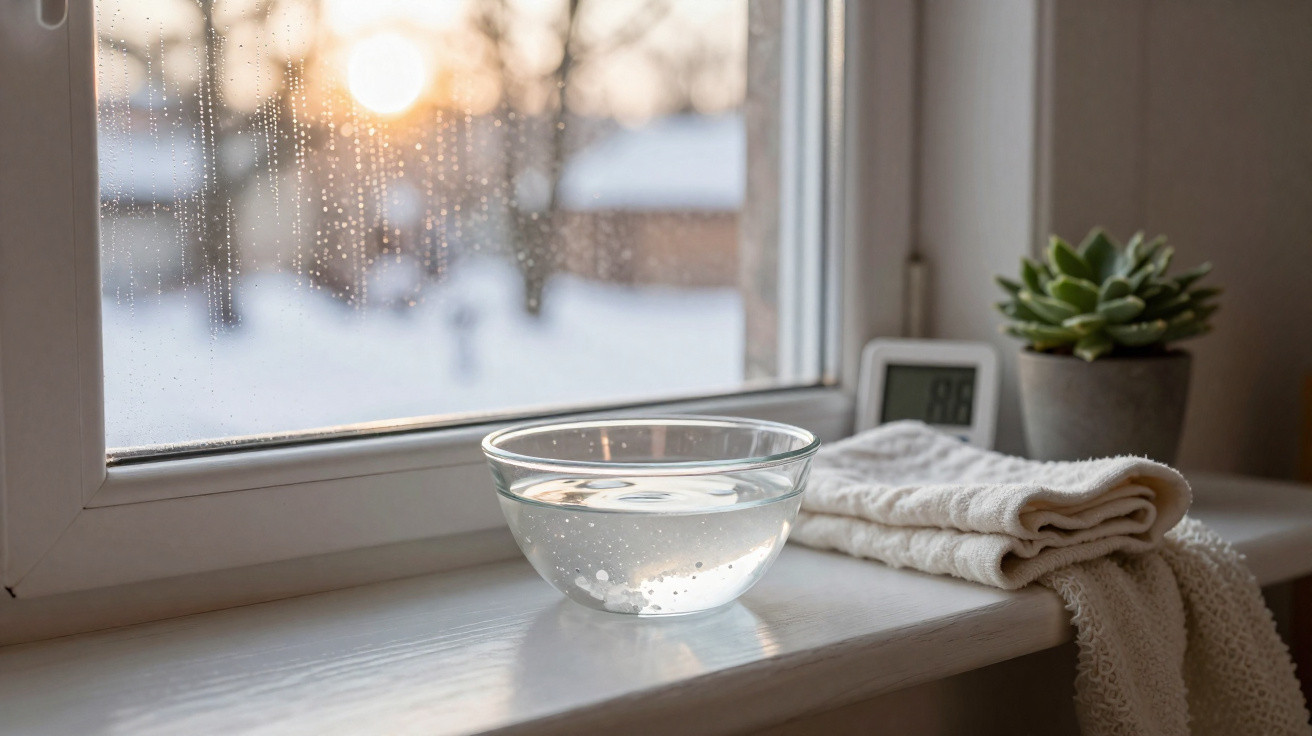
A simple white bowl sat on the windowsill, containing cloudy water beneath a thick layer of salt. Beyond the window, the street was frozen in that flat grey winter weather that seems to seep into your bones. Yet inside her flat, the glass was clear: no mist and no trails of water. Meanwhile, condensation was streaming down my own windows.
We were having tea when she noticed my confused expression and laughed. “It’s my winter version of the aluminum foil trick,” she said, gesturing towards the bowl. “Summer, foil. Winter, salt water.” It sounded like the sort of grandmotherly tip you read once and then forget. But over the following days, I could not stop wondering why something so basic appeared to work so effectively.
Why windows sweat in winter – and where a bowl of salt comes in
On chilly mornings, windows reveal a little drama unfolding in your home. Warm air, carrying unseen moisture from cooking, showering and even breathing, meets the freezing glass. Small droplets form, merge together and creep down the pane like determined little snails. The frame becomes darker, paint starts to swell, and a patch of mould slowly begins to take hold in a corner.
That moisture is not entering from outdoors. It is humidity already inside your home, with nowhere else to escape. During summer, some people stick aluminum foil to their windows to keep out sunshine and heat. In winter, the problem is less obvious: moisture trapped indoors and settling on cold surfaces. The window becomes the house’s weak point. This is precisely where the bowl of salty water quietly has a role.
Imagine a compact city flat with radiators hissing and washing drying on an airer beside the window. A young couple are working at the kitchen table, with laptop leads winding between their coffee cups. By 9 am, the windows are so steamed up that they can hardly make out the street. They open the window for “just five minutes”, but the room quickly becomes freezing and they close it again.
They resort to familiar solutions: kitchen roll, an old towel and wiping the glass each morning. By the third week, the silicone seal along the bottom of the window begins to blacken. Then a friend sends them a picture: a bowl, a handful of coarse salt and some water. “Try this near the window,” she writes. They laugh at first. It looks like a science experiment made with supermarket supplies. Nevertheless, they set a bowl on every windowsill.
Nothing spectacular occurs on the first day. There is no instant miracle. By the fourth morning, however, they spot a difference. The glass still mists slightly around its edges, but the large streams of water have disappeared. The towel they once needed every day remains dry. Looking more closely, they see that the salt has developed a crust, resembling frozen snow. Guests would never notice this small change, but to them it feels as though they have taken back control of their home.
There is no magic involved in the bowl. It is simply physics and chemistry quietly at work. Salt is drawn to water. In technical terms, salt is hygroscopic: it attracts moisture from the air and “absorbs” it into the solution. Set beside a cold window, this small reservoir of brine acts like a magnet for some of the humidity in the surrounding air.
The glass therefore has less moisture to collect. Rather than all the water vapour settling on the cold pane, part of it becomes trapped in the bowl. It will not transform the climate throughout an entire house, but on an ordinary windowsill beside a cold wall, it creates a slightly drier micro-zone. Gradually, that can reduce condensation on that particular window. Think of it as a small, inexpensive dehumidifier positioned exactly where it is needed.
How to use salty water at the window in winter – the easy method
The process itself is surprisingly soothing. Choose a bowl that you will not mind becoming slightly stained over time. Half-fill it with tap water, then add a generous handful of coarse salt. Stir it once or twice. Some of the salt should dissolve, while some remains visible at the bottom. The water should appear slightly cloudy, rather like seawater in a shallow rock pool.
Put the bowl directly on the sill, as near to the glass as possible without risking a spill onto the frame. In a small room, one medium-sized bowl for each window will generally do. For large bay windows, position two smaller bowls, one at either end. Check the bowl roughly once a week: when the salt has dissolved completely or has created a hard crust, replace it. Dispose of the liquid, rinse the bowl quickly and make a fresh mixture.
A few common mistakes lead people to claim that “this trick doesn’t work”, when in reality their arrangement is undermining it. The first is placing the bowl out of sight behind heavy curtains or blinds. The salty water needs access to the room’s air in order to interact with it. When fabric surrounds it, its effect falls sharply.
Another mistake is hoping for miracles in a home that is already saturated with moisture. If you dry three loads of washing in a tiny lounge without ventilation, even ten bowls of salt will not rescue the windows. Small habits are still necessary: briefly air rooms, switch on the extractor fan while cooking and avoid pressing furniture tightly against cold walls. Let’s be honest: nobody really does that every day. But doing these things a little more often, alongside the bowls, can help tip the balance.
A third common error is overlooking the fact that salt has a limit. After the solution becomes saturated and the salt cannot take in any more moisture, the bowl no longer does anything. This is when people say, “It worked at first, then nothing.” The solution is dull but straightforward: refresh the mixture regularly, especially in damp spaces such as bathrooms and small kitchens.
“It’s not witchcraft,” laughs Claire, a 39-year-old tenant in a drafty old building. “It’s just the only low-cost thing that stopped my bedroom window from crying every single morning.”
Her experience reflects plenty of others. Forums and social media are full of pictures showing bowls on windowsills, above radiators and in corners where mould had begun to appear. Some people strongly recommend combining salty water with the familiar summer tip: aluminum foil on the glass or exterior shutters in July to reflect heat, followed by bowls in January to control humidity. The connection is straightforward: in both cases, the aim is to protect the delicate boundary between indoors and outdoors.
- Choose coarse salt instead of fine table salt, as it lasts longer and dissolves at a slower rate.
- Start by putting bowls beside the coldest windows with the most condensation rather than placing them everywhere.
- Look for mould on window frames and walls, then remove it early before it has the chance to spread.
- Combine the bowl method with brief daily ventilation instead of depending on it by itself.
- Keep pets and small children away from the bowls, because salty water is not suitable for curious tongues.
From simple hacks to another way of living with winter
There is something quietly comforting about these modest home-made solutions. A bowl of salted water on a windowsill does not announce itself as a “smart home” feature or a connected device. It simply remains there, unassuming, performing a task that goes unnoticed until it no longer does it. At a time of short days and high energy bills, that kind of uncomplicated support brings a warmth of its own.
We have all had those times when a home feels slightly hostile: water dripping down the windows, radiators humming and heavy air lingering after a shower. These small tricks will not turn an old flat into a perfectly insulated haven, but they can improve how the space feels each day. The pane is a little drier. The frame remains clean for longer. There is a quiet satisfaction in wiping less, scrubbing less and worrying less about the next mould patch.
Some readers may try the bowl and never abandon it. For others, it may prove to be a modest extra alongside larger measures, such as insulating windows, inspecting vents or using a proper dehumidifier in the dampest room. The underlying idea remains the same one that makes aluminum foil useful in summer and salt water useful in winter: you do not have to accept the season exactly as it arrives. You can adjust your home’s microclimate, one bowl at a time, and perhaps pass on the tip to the next person wondering why your windows have stopped “crying”.
| Key point | Detail | Benefit for the reader |
|---|---|---|
| Salty water absorbs moisture | Salted water is hygroscopic and draws humidity from the air around cold windows | Helps cut condensation without costly equipment |
| Placement matters | Bowls should be positioned close to the glass rather than concealed behind curtains | Maximises the practical effect of the trick on misted windows |
| Routine, not miracle | Replacing the salty water regularly and airing rooms are still essential | Prevents mould, protects frames and makes the home more comfortable |
FAQ:
- Does a bowl of salty water really stop window condensation? It will not remove every trace of condensation, but it may noticeably lessen it on windows where a bowl is placed, particularly in small enclosed rooms.
- What type of salt should I use for this trick? Coarse cooking salt or rock salt is most suitable because it dissolves gradually and continues absorbing moisture over time.
- How often should I change the water and salt? Usually every 7 to 10 days, or as soon as the salt has completely dissolved or formed a dense, hard crust on the surface.
- Is this method enough for a very damp house? No. In very humid homes, it is only a supporting measure; proper ventilation, perhaps a dehumidifier, and sometimes insulation or repairs will be needed.
- Can I use the same bowl trick in summer? Yes, it can still absorb humidity during summer, but in hot weather aluminum foil or window shades are generally more effective against heat than salty water by itself.





Comments
No comments yet. Be the first to comment!
Leave a Comment