
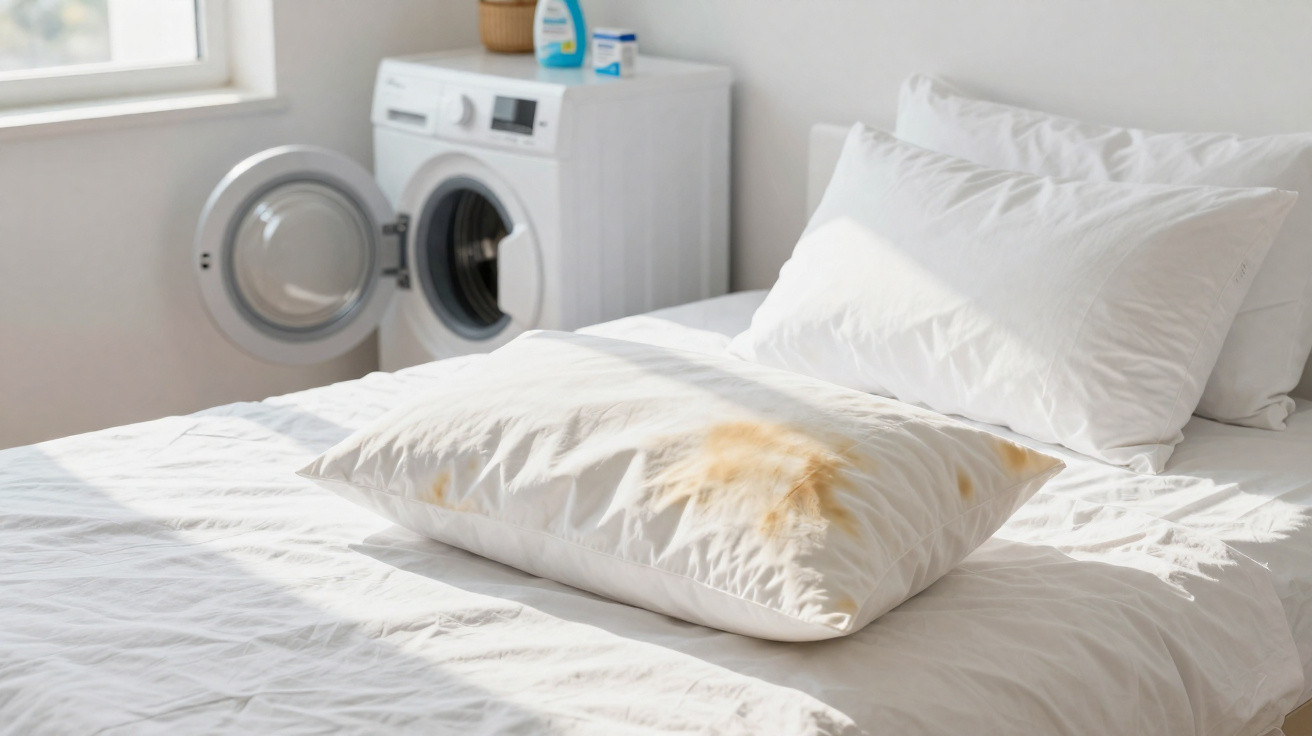
They appear gradually, staining the fabric a tea-like colour and making even a newly made bed seem slightly worn.
The daylight was gentle that morning, while the room carried the scent of washing powder and sleep. I removed a pillowcase and stopped at the patchwork of marks below: a spread of amber, darker at the edges, nothing like the pillows in shop photographs. First I considered binning it, then I remembered the cost of feather filling, and thought of sweat, skin oils, sleepless nights and hot summers. We have all felt that sinking sensation after turning over a pillow. I took it to the utility room as though making a modest promise, placed it on top of the washing machine and studied the care label as if it might offer advice. The solution begins before the wash cycle.
Why pillows turn yellow - and what it really means
Yellowing pillows are not evidence of poor hygiene. It is caused by a blend of perspiration, natural body oils, saliva, skincare products and gradual oxidation. Cotton covers absorb these substances, while down and polyester filling retain them. Even someone who is impeccably clean can end up with a yellow pillow.
Last summer, my neighbour Mia attempted to make her pillows brilliantly white by adding chlorine bleach. The marks faded for one day, only to reappear in a richer shade, like over-brewed tea. She assumed the pillows had been ruined. In fact, they had simply been treated the wrong way.
The reason is straightforward: proteins and lipids attach to fibres before oxidising and becoming darker. Chlorine may set protein-based stains, and can yellow certain fabrics when it reacts with remaining body residue. By contrast, oxygen bleach and enzymes dismantle those deposits rather than fixing them in place. Heat supports the cleaning reaction, as does allowing enough time. The type of filling is important too: down needs different treatment from memory foam.
Step-by-step: Restore pillow whiteness safely
For pillows that can go in a washing machine, including down, feather and polyester versions, begin with a pre-soak. Fill the drum or a basin with hot water, staying within the temperature stated on the label, then dissolve one scoop of oxygen bleach (sodium percarbonate) and add a heavy-duty enzyme detergent. Soak the pillow for 30–60 minutes before running a complete hot wash. Use an additional rinse, then tumble-dry on a low-to-medium setting with dryer balls until the pillow is entirely dry. Sunlight remains the least expensive stain remover on earth.
Deal with the outer cover before washing: spray yellowed areas with an enzyme pre-treatment, leave it for 10 minutes, then gently brush with a soft brush. Put two pillows in the machine at once to maintain balance. Avoid fabric conditioner, as it coats fibres and holds residue in place. Realistically, no one follows this routine every day.
Memory foam requires another approach: do not soak it, machine-wash it or apply heat. Vacuum its surface, clean individual marks with a small amount of mild detergent, then dab persistent stains with 3% hydrogen peroxide and blot until almost dry. Never use chlorine bleach on memory foam.
“My rule: soap + soak + spin + sun. If you give each step a little time, yellow loses.” - a hotel laundry chief who’s rescued hundreds of pillows
- Quick whitening blend for machine-washable pillows: 1 scoop oxygen bleach + 1–2 tbsp enzyme detergent + 1/2 cup baking soda in the wash.
- Rinse booster: add 1/2 cup white vinegar to the final rinse to remove residue and odours.
- Drying: use low-to-medium heat and two dryer balls, stopping to fluff the filling; finish in sunlight where possible.
Keep them white longer - and sleep better
Pillowcases provide the first layer of defence. Launder them every week, use a zipped protector and change cases midway through the week if you sleep hot. Having a shower before bed or removing night cream reduces the material that causes yellowing. Drying is the step that determines success or failure. A pillow that remains even faintly damp will continue its staining cycle.
With gentle wash programmes, oxygen bleach and thorough, patient drying, down and feather pillows can last for years. Polyester benefits from slightly more heat followed by time in the sun. Foam needs ventilation and patience rather than water. During summer, a compact dehumidifier can reduce perspiration at its source. Washing two pillows together keeps the machine steady and the filling evenly cleaned.
Treat whiteness as a regular rhythm rather than a battle. Wash pillows every 3–6 months, shield them each day and let them sit in the sun whenever possible. Yellowing fades with a gentle, reliable routine.
Certain habits feel like self-respect in the form of laundry. Seeing a stained pillow gradually become bright again makes the whole bed seem different - fresher, newer and a little more welcoming. Cleanliness also carries the smell of possibility. Small acts of care can lead to improved sleep, and in turn, better mornings. There is no magic involved; it is simply a calm combination of chemistry and time: a soak, a hot wash, a clean rinse and a long dry. What is your pillow routine - the one you genuinely stick to?
| Key point | Detail | Why it matters to the reader |
|---|---|---|
| Why pillows yellow | Sweat, oils, saliva and oxidation attach to fibres | Explains the cause of stains and supports more informed cleaning |
| What actually whitens | Enzyme detergent + oxygen bleach + hot water + time | Safely removes proteins without damaging fibres |
| Safe drying | Low/medium heat, dryer balls, then sunlight | Avoids clumping, odour and renewed yellowing |
FAQ:
- Can I use chlorine bleach to whiten pillows? It may have the opposite effect by setting protein stains and yellowing some fabrics. Choose oxygen bleach (sodium percarbonate) with an enzyme detergent instead.
- How often should I wash pillows? Wash the pillows themselves every 3–6 months, cases weekly and protectors monthly. People who sleep hot or live in humid homes may need a more frequent schedule.
- Can I wash memory foam pillows? No. Clean foam marks with mild soap, blot stains using diluted 3% hydrogen peroxide, then leave it to air-dry fully for 24–48 hours.
- Does sunlight really help whitening? Yes. UV light can fade remaining discolouration and destroy odour-producing microbes. When conditions allow, air pillows in direct sunshine for several hours.
- When should I replace a pillow? Replace it if it still smells after washing, remains flat or lumpy, or causes neck discomfort. Polyester: ~1–2 years; down/feather may last longer with proper care.
Comments
No comments yet. Be the first to comment!
Leave a Comment