
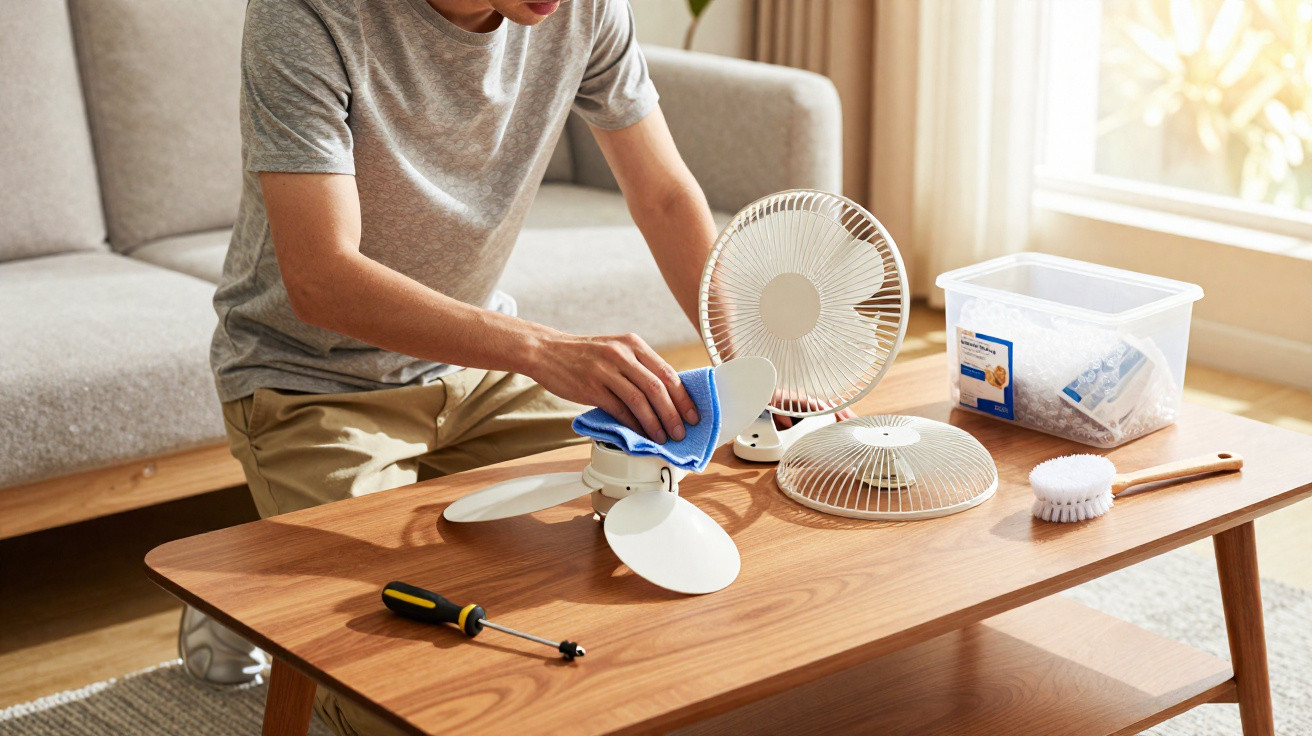
As colder days arrive, many people switch off their fans and put them away until the next summer. Home maintenance specialists warn that thorough cleaning and correct storage help prevent caked-on dust, extra strain on the motor, higher energy use and a shorter fan lifespan.
How is a technical check carried out before storing the fan?
Before advising on storage, repair and servicing professionals usually carry out a quick inspection of the unit. The aim is to spot built-up dirt, signs of rust, looseness in moving parts and any damage to external components.
They typically pay closest attention to the blades, protective grilles, motor, power lead, buttons and base. In many situations, proper cleaning alone can cut down noise, prevent unnecessary overheating and improve performance when the fan is used again next season.
How to clean the fan blades, grille and housing safely
Cleaning is widely regarded as the most important step before leaving a fan stored away for months. The first thing to do is always to unplug the appliance, wait until the blades have come to a complete stop, and dismantle only the parts that the manufacturer’s manual says are removable.
Once that is done, it helps to follow a straightforward sequence that keeps the process safe and effective for both plastic and metal parts:
- Remove the front grille, following the clip or locking method described in the manual.
- Take off the blades carefully, noting their position to make reassembly easier later.
- Wipe the blades and grille using a soft cloth lightly dampened with water and mild (neutral) detergent.
- Dry every part thoroughly with a dry, lint-free cloth, ensuring no moisture remains.
For the outer housing and base, a damp cloth on its own is best, and you should avoid directing water anywhere near the motor. With pedestal or wall-mounted models, extra care around electrical parts is essential, repeating the cleaning if there is heavy grease or more stubborn, stuck-on dust.
Why does built-up dust harm the fan motor?
Over the months, dust tends to compress, particularly in damp rooms or where there is kitchen grease. This hardened layer increases resistance as the blades rotate, forces the motor to work harder and can raise both electricity consumption and internal heating.
If the motor’s air inlets become partly blocked, the internal airflow that cools components is reduced. Technicians report that many early-summer call-outs involve fans that were stored while still dirty and then start up again with unusual noises, a burning smell, or the need to replace bearings - and sometimes even the motor itself.
How to store the fan in a dry place more safely
After it has been cleaned and allowed to dry completely, the fan should be stored indoors, protected from damp, water splashes and extreme temperature changes. Bedrooms, pantries and closed cupboards are usually better options than outdoor areas or open utility rooms.
A few additional measures can help preserve the appliance: use a fabric cover or thicker plastic cover without fully sealing the air inlets, avoid placing weight on the blades and grilles, and keep the cable coiled without tight bends. For ceiling models, periodically cleaning the blades and canopy with the main switch turned off helps reduce corrosion and mould, and ensures the fan is ready to run efficiently when the heat returns.





Comments
No comments yet. Be the first to comment!
Leave a Comment