
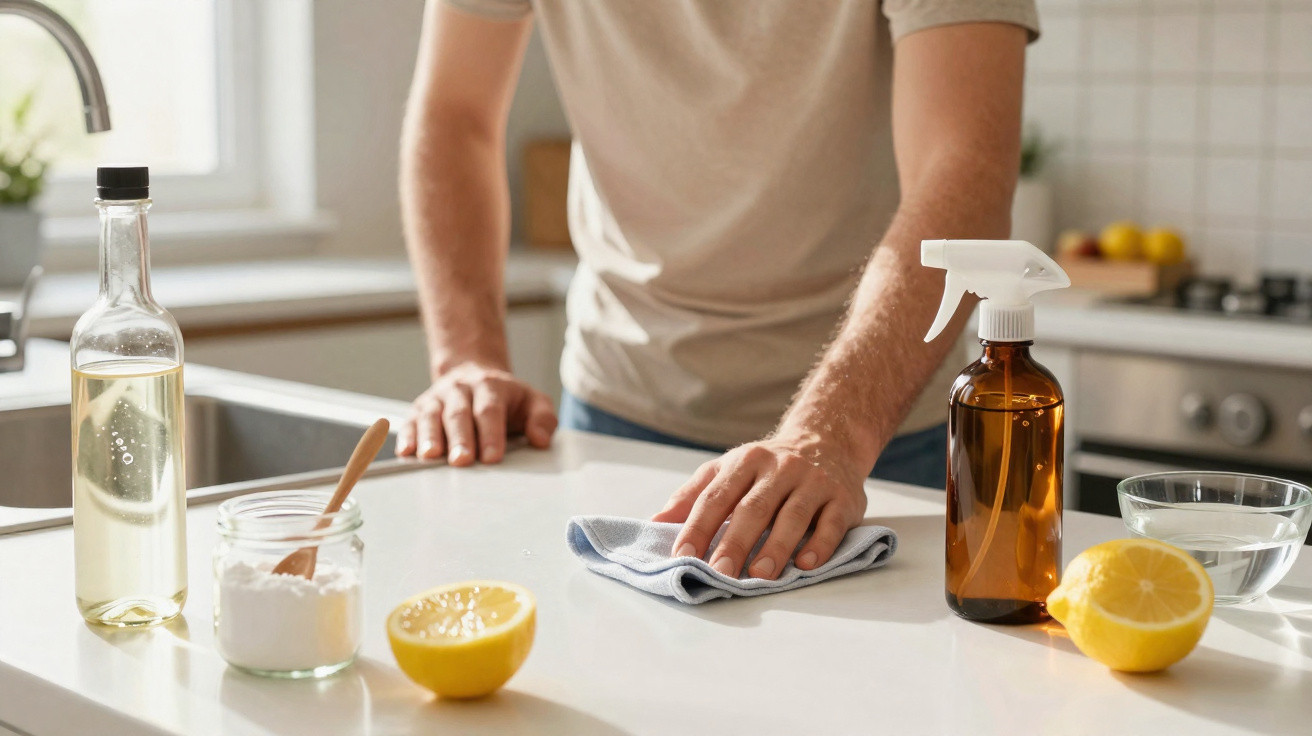
Using bicarbonate of soda with vinegar has become a popular choice in many homes as a simpler, more budget-friendly way to clean. Rather than relying only on manufactured cleaners, lots of people use this pairing to tackle light dirt and help neutralise odours on floors, tiles, drains, fabrics, and other areas around the house.
How to use bicarbonate of soda and vinegar for household cleaning
This household method is generally based on two main effects: bicarbonate’s gentle abrasive action and vinegar’s ability to loosen residue and help cut down smells. In kitchens, it’s common to sprinkle bicarbonate of soda on worktops, hobs, and greasy surfaces, then spray vinegar over it to create the fizzing reaction.
In the bathroom, the same approach is often used on grout lines, the toilet, and the shower enclosure, where bicarbonate works as a mild “cleaning powder”. For hard, cold flooring, you can dilute vinegar in water and add a small amount of bicarbonate of soda-always following the flooring manufacturer’s guidance to avoid damaging the surface.
What proportions are recommended and how do you prepare the mixture?
The ratio of bicarbonate of soda to vinegar depends on what you’re cleaning, but there is a commonly used mix for hard surfaces. It typically produces a moderate fizz-enough to help lift thin build-ups without wasting ingredients.
To make it easier, many people start with a basic measure and adjust depending on the size of the area and how stubborn the dirt is:
- 1 part bicarbonate of soda (for example, 1 tablespoon);
- 2 to 3 parts white vinegar (2 to 3 tablespoons);
- Apply the bicarbonate first, then spray the vinegar until the powder is damp;
- Scrub with a soft sponge, rinse, and dry with a clean cloth.
How to apply bicarbonate of soda and vinegar in different areas
For hard surfaces, it’s best to mix or apply small amounts because the reaction happens quickly. A typical method is to dust bicarbonate over the spot, spray vinegar on top, wait a few minutes for the fizzing to settle, scrub, and then rinse with clean water before finishing with a dry cloth.
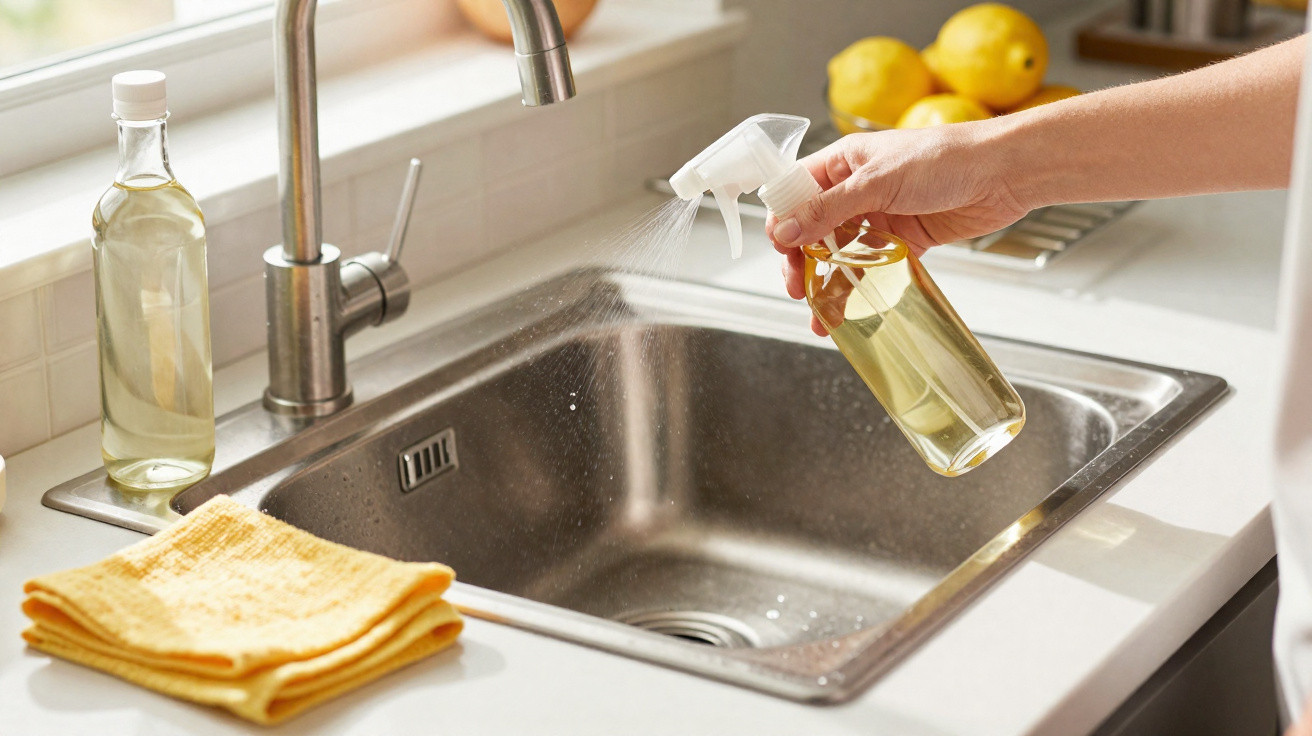
For sinks and drains, many people pour a few spoonfuls of bicarbonate directly into the opening, follow with a glass of vinegar, wait 10 to 15 minutes, and then flush through with hot water. On tiles and grout, the process is similar, but using a soft-bristled brush usually improves the appearance and helps lift dirt that collects in corners.
What benefits does this combination offer for cleaning and neutralising odours?
The biggest advantage of using bicarbonate of soda and vinegar is how straightforward and low-cost it is, as both are everyday items found in most supermarkets. As part of a light cleaning routine, this duo can help remove residue, reduce smells, and lessen reliance on products with strong artificial fragrances.
Another useful point is its flexibility: the same combination can be used in the kitchen, bathroom, utility room, and even on some fabrics, as long as you test it first in an inconspicuous area. For fridges, people often use bicarbonate alone in an open container, while for rugs, mattresses, and sofas it’s commonly applied dry and left for a few hours before vacuuming. Afterwards, diluted vinegar may be used in targeted sprays to help reduce lingering odours.



Comments
No comments yet. Be the first to comment!
Leave a Comment