
One morning, as you open the shutters in the guest bedroom, you notice a brown stain that appears to have spread overnight. Paint is blistering near the window, wallpaper is lifting in one corner, and a slightly chilly smell lingers despite the heating. Most of us know that moment of wondering whether a quick wipe with a sponge will do, or whether the wall is concealing something far more expensive.
Before urgently calling in a tradesperson or repainting too soon, a piece of aluminium foil can provide a useful first clue. Applied properly for 24 hours, it can indicate whether the damp is caused by indoor air or is actually passing through the wall. It is a simple step, but the information it provides is valuable.
The damp stain that changes the feel of a room
A damp wall does not always make itself known immediately. Often, it starts with a feeling: one room seems colder than the rest, clothes stored in a cupboard develop a musty smell, or a dark mark returns in the same place after every clean. It can be tempting to blame tired paintwork or poor insulation because the issue looks superficial. Yet the cause can be very different, depending on whether water is settling from the air inside the home or entering from outdoors.
In a ground-floor flat, one family recently spotted droplets behind a chest of drawers pushed against a north-facing wall. Once they moved the furniture, the evidence was clear: a blackened patch about 40 centimetres across, concentrated near the skirting board. The window was frequently kept shut, laundry dried in the living room, and the mechanical ventilation system had been making irregular noises for months. The issue was not necessarily in the foundations: moisture-laden indoor air was simply condensing at its coldest point.
Condensation forms when warm, humid air meets a cold surface, such as a poorly insulated wall, windowpane or north-facing corner. Water ingress tells a different story: water enters the masonry through a crack, faulty guttering, the roof, a porous façade or the ground. The two problems can sometimes look remarkably alike. This is where the aluminium foil test is useful, although it is not a replacement for a proper diagnosis.
The aluminium foil test: 24 hours for a clearer answer
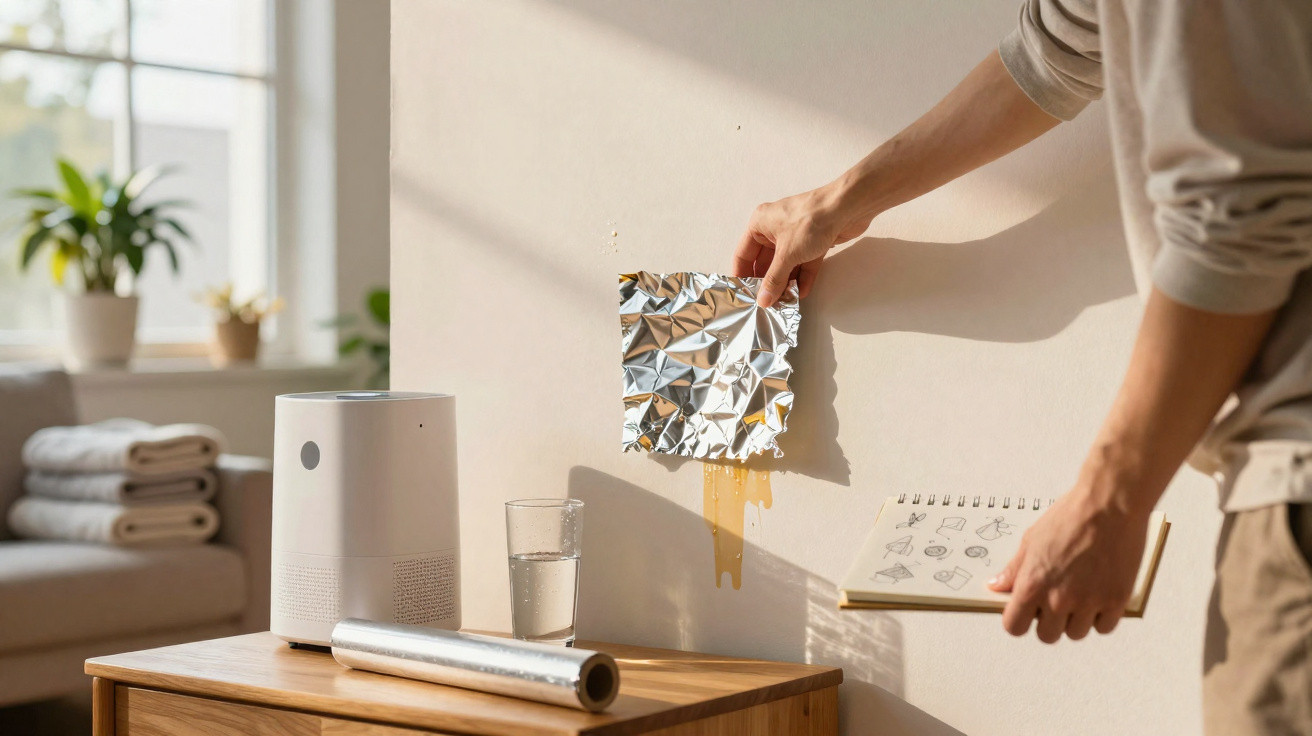
Cut a piece of aluminium foil measuring roughly 30 centimetres by 30 centimetres, then gently dry the suspect area using a clean cloth. Press the foil flat against the wall; it makes no difference whether the shiny or matt side faces outwards. Seal all four edges carefully with waterproof tape. The aim is to prevent air from circulating behind it. Leave it in place for 24 hours, without suddenly turning up the heating or moving furniture right beside it.
After a day, inspect both sides without jumping to conclusions. If droplets or dampness appear on the side facing into the room, the moisture is probably coming from the surrounding air, pointing towards condensation. If the side against the wall is wet, the wall itself is releasing or receiving water, which may suggest water ingress, rising damp or a hidden leak. The result is a clue, not a definitive answer, particularly with an older wall.
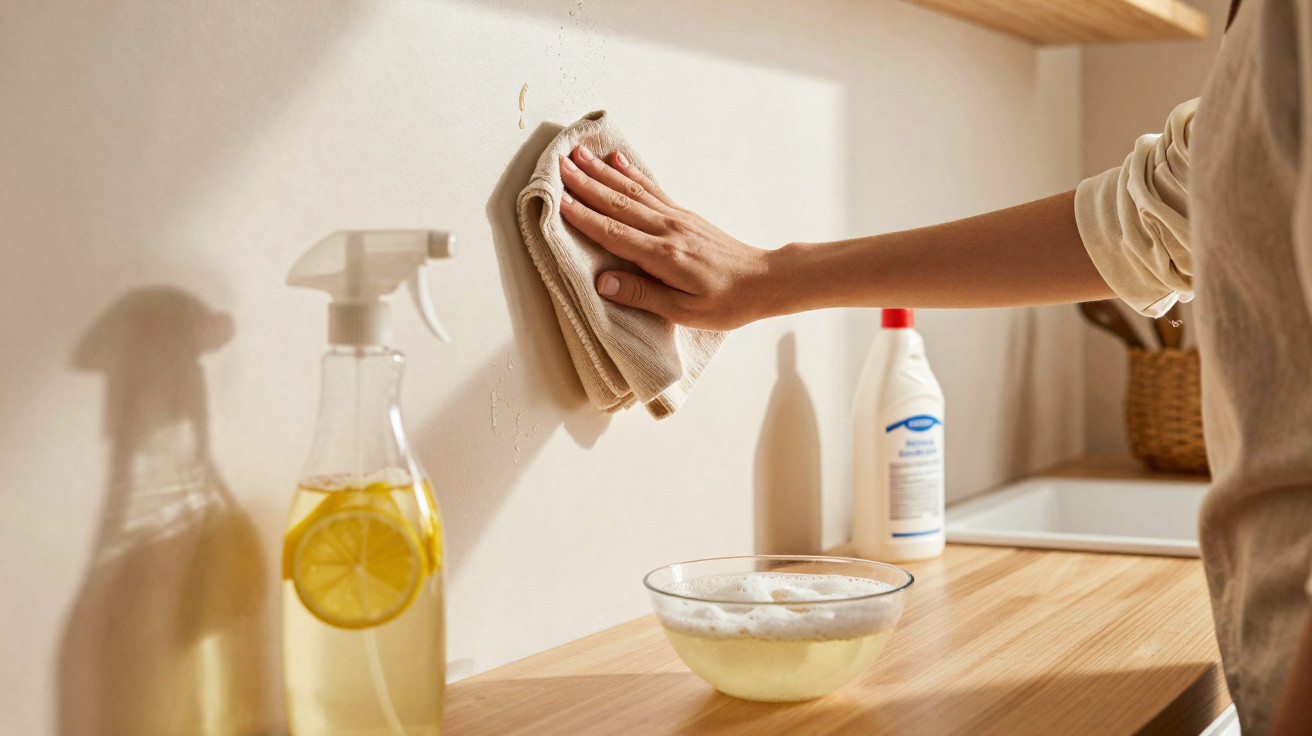
A common mistake is to carry out the test immediately after washing the wall, running a dehumidifier for hours, or airing the property with every window wide open in a strong draught. Let us be honest: nobody really does that every day, and it is the home’s usual routine that needs to be assessed. If you remain unsure, repeat the test in two locations: beside the stain and on an unaffected area of the same wall.
“A damp stain is not merely a mark on the wall: it is a signal that must be understood before it is covered up.”
- Dampness on the room side: likely condensation, inadequate ventilation or a thermal bridge.
- Dampness on the wall side: possible water ingress, leak or rising damp.
- No visible dampness: monitor how the stain develops and look for a one-off cause.
After the aluminium foil test: the right habits can stop the stain taking hold
When condensation appears to be the cause, the first response should not be more heating but fresher air. Air the home for five to ten minutes in the morning and evening, check that ventilation grilles are not blocked, and avoid drying laundry in a small enclosed room. An inexpensive hygrometer can also settle household debates: when relative humidity stays above 60%, the air becomes favourable to mould growth.
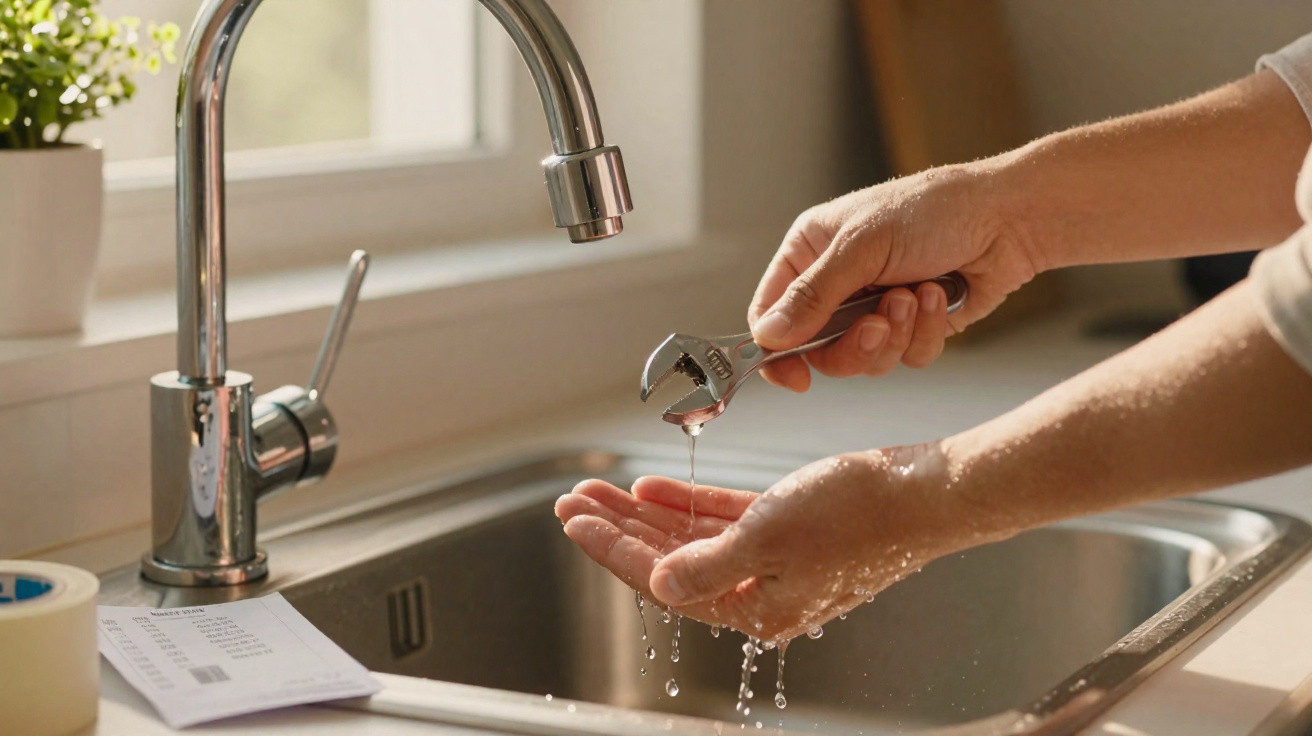
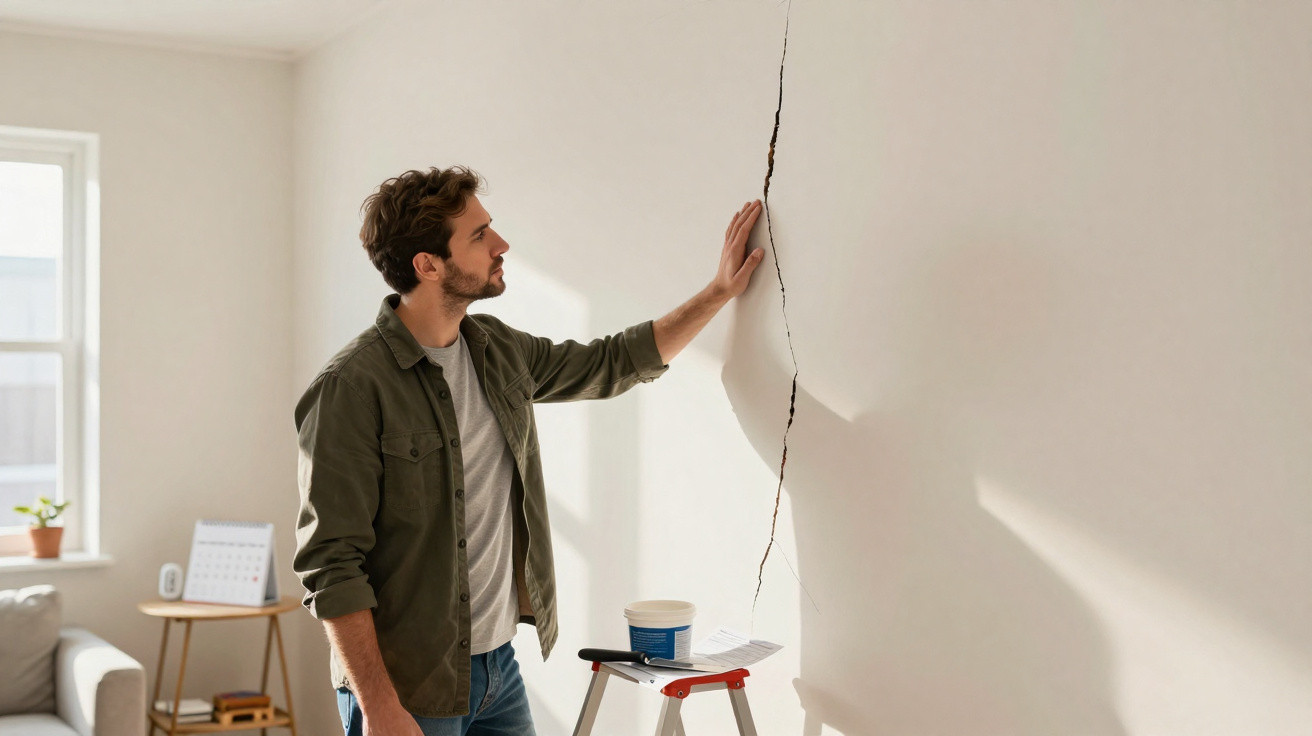
If the foil shows dampness on the wall side, inspect the outside before repainting. An overflowing gutter, cracked downpipe, damaged window seal or façade exposed to driving rain can all be enough to feed an indoor stain. In an older house, the mark may also rise from the base of the wall, accompanied by white salts or crumbling paint; photograph these signs before any work is carried out.
The main reassurance offered by this test is that it helps prevent guesswork. Repainting a damp wall with so-called anti-damp paint may hide the issue for a few weeks, only for an even larger stain to return. A damp specialist, roofer, plumber or façade contractor will not investigate the same things, depending on the result. This straightforward piece of aluminium foil can therefore help you choose the right professional to contact.
| Key point | Detail | Benefit for the reader |
|---|---|---|
| The 24-hour test | A sheet of aluminium foil is sealed tightly onto the suspect wall. | Gain an initial clue without breaking, drilling or buying costly equipment. |
| Dampness on the room side | Condensation is often linked to overly humid indoor air and a cold surface. | Take action on airing, ventilation and everyday habits. |
| Dampness on the wall side | Water may be caused by ingress, a leak or moisture rising through the masonry. | Avoid disguising the symptom and quickly contact the appropriate professional. |



Comments
No comments yet. Be the first to comment!
Leave a Comment