
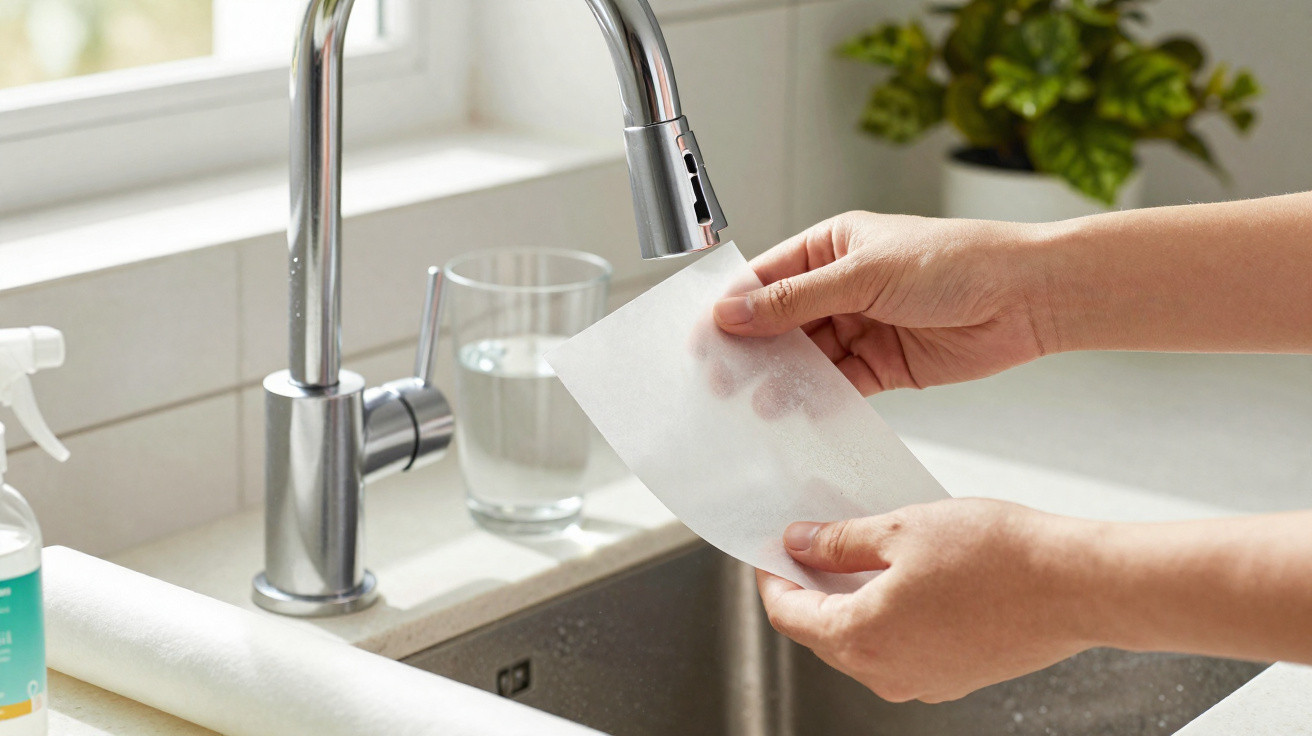
A tap can look freshly cleaned one day, then dull again as soon as the next water marks dry. In hard-water areas, that cycle can feel never-ending.
The answer may be sitting in a kitchen drawer: a sheet of baking paper. Rather than relying on expensive specialist products or harsh chemicals, more households are using this simple trick to help taps stay shiny and delay limescale build-up. It may sound like an internet gimmick, but it stands up surprisingly well in everyday use.
Why limescale returns to the tap so quickly
Anyone living in a hard-water area will know the issue: as soon as the tap is turned off, droplets remain, dry out and leave pale rings behind. The main cause is calcium carbonate - limescale formed from mineral-rich tap water.
The first signs appear quickly:
- Chrome or stainless steel loses its shine
- Small white marks form around the base of the tap
- Splashes show up on the sink or basin
- The water flow changes because the aerator is becoming blocked
Traditional anti-limescale sprays do remove these deposits reliably, but they often have a strong smell and can damage surfaces if used frequently - especially alongside a rough scouring pad. Household options such as vinegar, lemon juice or bicarbonate of soda are gentler, but need time to work and should be rinsed away thoroughly.
To keep limescale under control, occasional deep cleaning needs to be combined with quick drying care that is easy to make part of daily life.
The unexpected helper: baking paper as limescale protection
This is where an unusual idea comes in: baking paper, normally used to line trays so cakes or vegetables do not stick. The paper has a slightly smooth, coated surface. Used on dry chrome or stainless steel, it performs two jobs at once.
First, it buffs away light limescale haze and faint water spots without scratching the surface. Second, rubbing creates an extremely thin water-repellent film on the tap. Water droplets bead up more readily, spread less across the surface and dry faster instead of leaving marks behind.
Many users report that taps remain visibly clean for five to seven days after this treatment - considerably longer than after a standard wipe with a washing-up cloth.
How the method works step by step
For the trick to work properly, the order matters:
- Dry the tap thoroughly: Use a clean microfibre cloth to remove all remaining water, including around the base, handle and joints.
- Prepare the baking paper: Scrunch a sheet into a soft ball. This creates more rubbing surface.
- Polish gently: Run the paper ball over the spout, handle, base and, if needed, the shower handset. Light pressure is enough; allow around one minute for the whole tap.
- Wipe once more: Finish by giving it a quick polish with a dry microfibre cloth. This helps spread the film evenly.
The method works best on smooth, shiny surfaces such as standard chrome or polished stainless steel. With black or matt taps, test a discreet area first to check that the appearance does not change. Take particular care around natural stone, such as marble or travertine, so that the coated paper does not touch the sensitive surface.
First, remove existing limescale thoroughly
If taps are heavily scaled, do not start with baking paper. Begin with a more intensive clean instead. The paper routine can only work to its full potential once thick deposits have been removed.
Typical steps for an effective start:
- Unscrew the aerator and soak it in warm vinegar water for several hours
- Rub heavily affected areas with vinegar, lemon juice or a bicarbonate of soda paste
- Allow the product to work, then rinse thoroughly with water
- Dry the tap completely afterwards
Once some of the original shine has returned, a quick baking-paper treatment once a week is often enough to maintain it. This pushes the next major descaling session much further into the future - and reduces the amount of specialist cleaner needed in the cupboard.
Baking paper does not replace an initial deep clean, but it noticeably extends the fresh-looking period after cleaning.
How to build the method into everyday life
With a sensible routine, this extra care takes hardly any additional time. It is practical to keep a piece of baking paper close to the sink or basin. After washing up or brushing your teeth, simply dry the tap briefly and then run the paper over it for a few seconds.
Supporting habits make the effect stronger:
- Rub the tap down quickly with a microfibre cloth after showering
- Remove the aerator every few weeks and rinse it under running water
- Check the spray pattern: blocked nozzles lead to more splashing and marks
Those living in areas with very hard water can also consider aerating tap attachments or central water-treatment systems. These options cost more, but they ease the burden not only on taps, but also on washing machines, boilers and dishwashers.
Where the limits of the baking-paper method lie
As clever as the trick is, it is not a cure-all. Baking paper will not remove thick, old limescale crusts. It also cannot polish away discolouration or chrome surfaces that have already been damaged. In these cases, conventional cleaners - or, in the worst case, replacing the tap - are the only options.
The method is not suitable for every finish either. Coated, coloured or particularly delicate materials can react differently to friction. Anyone with high-end designer taps should check the manufacturer’s care instructions and use only very light pressure.
How baking paper works with other household remedies
The trick becomes especially useful when combined with familiar household cleaners. One possible system that works well in many homes is:
| Interval | Measure |
|---|---|
| daily | Dry the tap briefly with a microfibre cloth |
| once a week | Use baking paper to polish and create a protective film |
| every 4–8 weeks | Descale with vinegar, lemon juice or bicarbonate of soda if needed |
This can significantly cut the use of standard anti-limescale sprays without leaving the sink, basin or shower looking neglected. For families with children or pets, using fewer aggressive cleaning products is another benefit.
Why hard water is more than just a cleaning problem
Behind unattractive marks is a technical issue: hard water affects pipes and appliances throughout the home. Deposits form on heating elements in dishwashers and washing machines, using up energy. Limescale builds up in shower heads and changes the water flow. Even coffee machines and kettles scale up faster and may not last as long.
Watching the condition of your taps can therefore give you an idea of the overall water hardness in the home. Heavy marking on a tap usually means greater strain on appliances too. Regular descaling can noticeably extend their lifespan - while baking paper is more of a bonus for appearance and reduced cleaning effort.
Practical tips for everyday use
No specialist brand is needed to try this: ordinary supermarket baking paper is enough. Silicone-coated types usually work better than very thin, uncoated papers. The important thing is that the surface feels slightly smooth rather than rough and fibrous.
For households aiming to create as little waste as possible, reuse is worth considering. One sheet can generally be used several times, provided it stays clean and does not tear. After that, it belongs in the general waste - unlike kitchen roll, which is often put in paper recycling.
Anyone who likes the method can prepare a small baking-paper “polishing ball” and store it in a dry container in the bathroom or beneath the sink. That turns an internet hack into a regular household habit - and makes the sight of the tap far less frustrating.

Comments
No comments yet. Be the first to comment!
Leave a Comment