
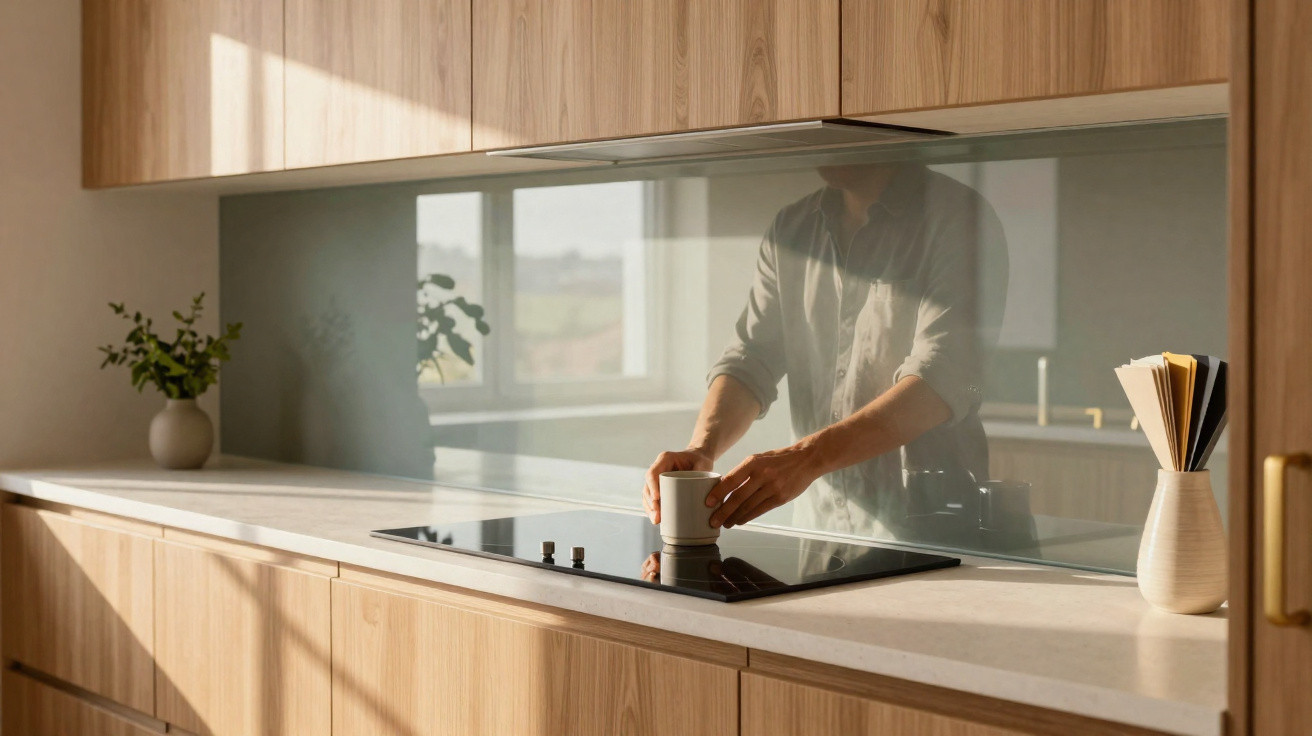
The splashback is no longer just the practical strip behind the hob. As more homeowners look for ways to refresh a kitchen without replacing every cabinet, this once-overlooked surface is becoming a focal point, offering a more dramatic alternative to white metro tiles and stainless steel.
One option making a surprisingly confident return is smoked glass. Once dismissed as a 1970s leftover, it is now appearing in renovation plans as a warm, polished update that can change the feel of a kitchen without a full refit.
The controversial comeback of smoked glass
For some people, smoked glass still brings to mind brown-tinted lounges and dim dining rooms. For others, it is one of the most understatedly luxurious kitchen updates available in 2026.
Smoked glass divides opinion, yet its return says a lot about how we want our homes to feel: warm, timeless and just a bit dramatic.
This is not the muddy brown glass many people remember from their grandparents’ homes. Today’s versions use more refined shades: soft anthracite grey, bronze with golden undertones, or a deep near-black that still allows light through.
Designers say its revival reflects two major changes: a desire for long-lasting materials and a step away from constantly changing décor trends. Rather than repainting cupboards every couple of years, many homeowners want one bold, characterful element that will still work a decade or more from now.
Smoked glass answers that need. It can give a rustic kitchen a cleaner, more architectural finish. In a stark all-white room, it takes away some of the clinical edge while still feeling current.
Why are people so split about it?
The reaction to smoked glass is partly emotional. Anyone who lived through its first wave may find it dated at first glance. Younger homeowners, however, often see it as retro in a positive way: a reference to the past used with more restraint.
The real disagreement tends to be about atmosphere. Some enjoy the moody, lounge-like feel it brings to a cooking area. Others worry that it could make an already small kitchen feel darker or sit awkwardly with pale cabinetry.
- Fans like its softer look compared with harsh mirrored finishes.
- Sceptics worry about a return to “old-fashioned” interiors.
- Designers say newer tints and formats are what set it apart.
The main difference is control. Modern smoked glass is available in precisely balanced tones and finishes, rather than just plain brown sheets. That subtlety helps move it from kitsch towards quiet elegance.
Light, depth and the “soft mirror” effect
What is bringing kitchen specialists back to the material is less about nostalgia and more about what it does with light. During winter, natural daylight is especially valuable. A splashback that only absorbs it can leave a small room feeling enclosed.
Fully mirrored splashbacks, once widely used, reflect light forcefully and reveal every splash and smudge. Smoked glass falls somewhere between the two: reflective enough to bring movement into the room, but soft enough to avoid the look of a dressing-room mirror.
Think of it as a soft-focus mirror: it catches light, hints at reflections, and gives the wall a subtle, cinematic glow.
Its slight translucency can fool the eye. The wall appears to recede slightly, bringing depth to narrow galley kitchens and compact rental homes. You will not see a sharp reflection of clutter, but you will notice shadows, shapes and colour, preventing the surface from looking flat.
Practically, the tinted finish also disguises everyday mess quite well. Water marks, light grease and limescale are often less obvious than they are on clear glass or polished steel. For busy households, that can be a strong selling point on its own.
Cost, installation and day‑to‑day reality
Another reason this splashback is becoming more popular is that it offers a balance between a luxurious appearance and a fairly manageable price. It is often supplied in large, made-to-measure panels, so there are fewer joins and grout lines.
| Aspect | Smoked glass splashback |
|---|---|
| Visual impact | High-end look, subtle reflections, depth |
| Budget | Typically mid-range, cheaper than many stones |
| Maintenance | Wipes clean easily; marks less visible than on clear glass |
| Installation | Requires accurate measuring; usually fitted by a professional |
Most panels are toughened for safety and can be fitted behind hobs, as long as the manufacturer’s distance guidance is followed. Cleaning is generally no more complicated than using a microfibre cloth and a non-abrasive spray.
One detail to consider is that large panels need exact measurements. Socket cut-outs, corners and window reveals all require precision. For that reason, homeowners often turn to professional fitters rather than attempting it as a DIY job.
How smoked glass works with today’s favourite materials
The return of smoked glass is not happening on its own. It fits neatly with wider kitchen design changes: a preference for rawer, more tactile finishes and a move away from high-gloss surfaces everywhere.
Smoked glass really comes alive when it sits next to something rougher, warmer or more textured.
Designers often combine it with:
- Light oak or ash worktops – the warmth of the grain balances the cool sheen of the glass.
- Walnut cabinetry – dark timber and tinted glass create a bar-like mood without becoming heavy.
- Polished concrete – a matte floor or worktop allows the glass to introduce a controlled touch of shine.
- Natural stone – marble or limestone gets a modern contrast from an inky, translucent backdrop.
To stop the look becoming cluttered, stylists usually keep the area in front of the splashback simple. A few carefully chosen ceramic pieces, a worn wooden chopping board, perhaps a small lamp or plant – and not much else.
Design choices that stop it feeling dated
If you are concerned about creating a 1970s time capsule, the details matter. Subtle colour decisions and thoughtful framing can transform the overall effect.
Picking the right tint
Colour shapes the mood, but it also influences how bright the room feels. Deep black tints can look striking, though they need good natural or artificial light. Pale grey or gently bronzed glass is often a better choice for compact city flats or north-facing kitchens.
A useful rule of thumb is that the darker the splashback, the lighter the surrounding finishes should be. White, cream or pale wood cupboards help prevent the whole scheme from feeling oppressive.
Finishes and formats
Most smoked glass splashbacks have a glossy finish, although some suppliers provide satin or etched options that soften reflections. These can suit bright, sun-filled kitchens where glare may be an issue.
Shape is another consideration. A full-height glass panel reaching the ceiling behind the hob creates a dramatic focal point. Shorter sections that stop just above the worktop feel more understated and are often preferred for rental homes or smaller refurbishments.
When smoked glass makes sense – and when it doesn’t
Smoked glass will not suit every kitchen. It has clear advantages, but there are limits to where it works best.
- Ideal for small kitchens needing more depth; minimalist schemes that risk feeling cold; rooms with mixed materials that need one element to tie them together.
- Less suited to spaces with no natural light already; heavily patterned walls where the glass would conceal a surface you have paid for; very traditional homes where ornate tiles are intended to remain a feature.
There is also a psychological side to it. Smoked glass creates a more intimate, cocooning atmosphere, closer to a living room than a purely practical workspace. If you prefer your kitchen to feel bright, clinical and “professional”, it may not suit your taste.
Practical questions homeowners often ask
People considering the change usually come back to the same concerns: scratches, safety and cleaning.
Toughened glass is hard to scratch through normal everyday use, but repeatedly knocking knives or heavy cast-iron pans against it will eventually leave marks. Doing food preparation on boards, rather than directly against the splashback, greatly reduces the risk.
On safety, most reputable suppliers offer heat-resistant, toughened glass suitable for behind induction or ceramic hobs. With gas hobs, minimum distances from flames and the use of heatproof glass are essential; installers will usually check these requirements before fitting.
Cleaning is easier than many expect. Fingerprints are less noticeable on tinted glass than on mirrors. A straightforward routine – a quick wipe each day and a deeper degrease every week or two – keeps it looking sharp without constant polishing.
How designers use smoked glass to reshape a space
Professionals often use a glass splashback to subtly improve a room’s proportions. In a long, narrow kitchen, extending a dark smoked panel along the worktop can visually anchor the space, making the upper half seem lighter by comparison.
In an open-plan living space, smoked glass behind the hob can make the kitchen feel like an extension of the lounge rather than a purely functional corner. Its reflective surface picks up colours from sofas, artwork and lamps, helping the areas feel connected.
Even in rental properties, where structural changes are not possible, a made-to-measure panel fitted over existing tiles can dramatically alter the mood while keeping the original finish intact below. Landlords are increasingly open to this type of reversible update, particularly when it improves perceived value.
Key terms and combinations worth knowing
Two terms come up regularly in discussions around this trend: “toughened” and “tinted”. Toughened glass has been heat-treated to improve its strength and to break into smaller, less hazardous pieces if it shatters. Tinted simply means colour is added within the glass itself, rather than applied as a film on the surface.
Designers sometimes pair smoked glass with under-cabinet LED strip lighting. The source stays hidden, while the glow spreads across the glass and creates a bar-like evening atmosphere. Warm white LEDs work best with bronze or brown-leaning tints, while cooler whites suit grey and black shades.
Another growing combination is smoked glass with fluted textures. Vertical grooves add rhythm and diffuse reflections more gently. This reduces the mirror effect further, appealing to people who want depth without seeing recognisable shapes reflected in the surface.
For anyone renovating this year, a smoked glass splashback is less about following a short-lived fashion and more about recognising a wider change: kitchens no longer need to look purely practical. They can be atmospheric, slightly theatrical rooms where light, reflection and material choices set the tone long after the cooking is done.


Comments
No comments yet. Be the first to comment!
Leave a Comment