
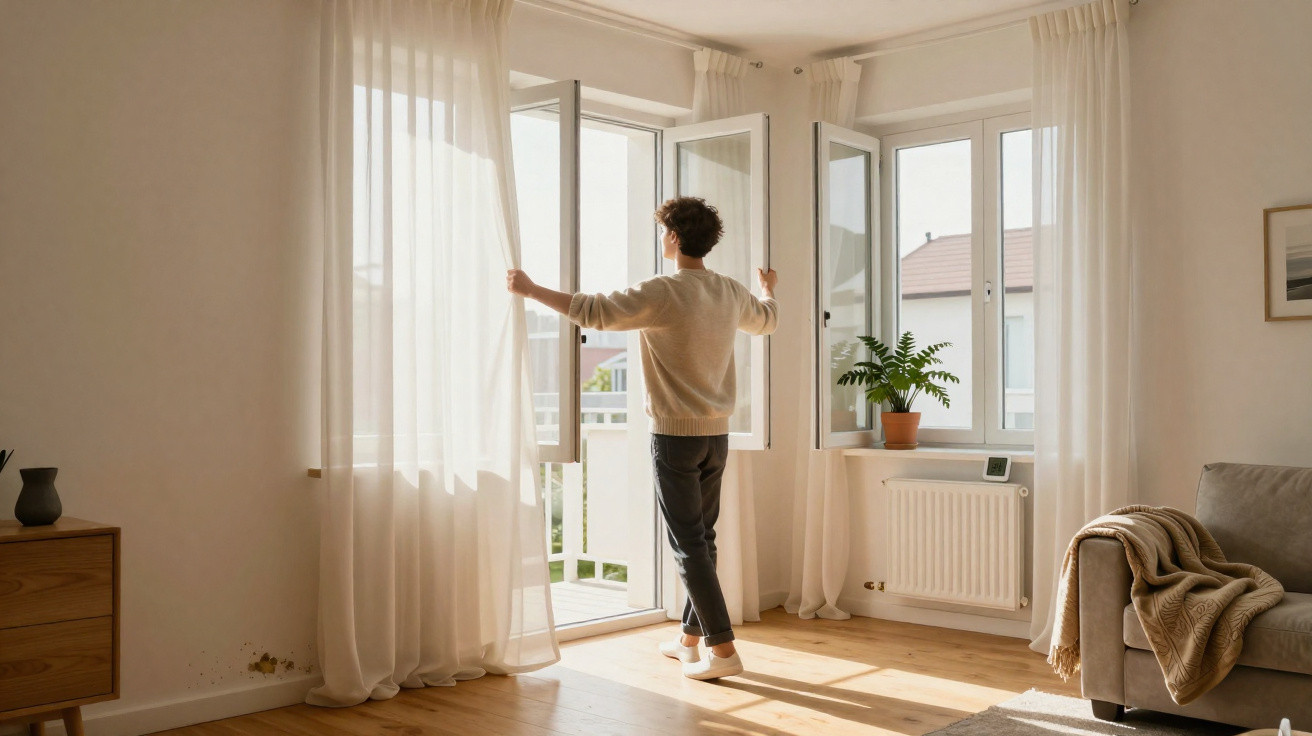
Proper ventilation can make a real difference to how your home feels day to day. It helps cut the risk of mould, tiredness and headaches while avoiding unnecessary heat loss. You do not need to leave windows open for hours: getting the timing and duration right is what matters.
Why daily ventilation is essential
Indoor air is often more polluted than the air outside, even in a well-kept home. Cooking, showering, breathing and cleaning all affect the air we live in, which is why experts regularly find a build-up of pollutants indoors.
- Cleaning products, deodorants and air fresheners release volatile substances.
- Cooking and heating create moisture and gases.
- Furniture, carpets and paint can give off pollutants for years.
- Our breathing increases the CO₂ level in the air.
When air remains trapped in the home, these substances can build up noticeably. This may show up as headaches, stinging eyes, trouble concentrating or a dry throat.
Regular ventilation removes pollutants and moisture, improves wellbeing and significantly lowers the risk of mould.
Well-insulated homes are particularly good at keeping warmth inside, but they can also keep pollutants in. Without deliberate ventilation, the indoor environment can quickly become unbalanced.
How long should windows stay open?
One of the most common misconceptions is that leaving a window tilted open all day provides the freshest air. Experts advise against it. A permanently tilted window gradually cools the walls without properly replacing the stale indoor air.
Air the home fully instead of leaving windows tilted: the rule of thumb
Short, powerful bursts of ventilation are recommended: open the windows fully rather than leaving them on the latch. In a typical home, this usually means:
- Open windows wide 2 to 3 times a day
- Leave them open for around 5 to 10 minutes, depending on the season
- Create a through-draught where possible by opening windows or doors on opposite sides
During these few minutes, stale, humid air is pushed out quickly and fresh air comes in. Furniture and walls barely cool down, so they continue to hold their heat. Once the windows are closed, the room soon feels comfortably warm again.
Ventilating briefly and thoroughly several times a day is more effective - and more energy-efficient - than leaving a window tilted open for hours.
Winter, spring and autumn, summer: the right duration
The best ventilation time depends greatly on the outdoor temperature:
| Season | Recommended ventilation time | Note |
|---|---|---|
| Winter | 5 minutes with windows fully open | Keep it short and intensive to prevent the home cooling down |
| Spring/autumn | 5–10 minutes | Several times a day, especially morning and evening |
| Summer | 10–20 minutes, depending on temperature | Ideally air the home when it is cooler outside than indoors |
If you live in a particularly damp older property or have lots of houseplants, you may need to extend the ventilation time slightly. The aim is always the same: dry, fresh air without noticeably cooling the home.
When is the best time to ventilate?
The time of day matters more than many people realise. Outdoor temperature, humidity and pollution from traffic or industry can vary considerably throughout the day.
Ventilating in the morning and evening usually has the greatest effect
- Straight after getting up: CO₂ builds up in bedrooms overnight. A proper burst of fresh air can make you feel noticeably more alert.
- In the evening: Moisture from the day can escape, allowing the home to air out before everyone goes to bed.
- After showering or cooking: Ventilate the bathroom and kitchen straight away to reduce humidity and prevent mould, especially in poorly ventilated internal bathrooms.
In towns and cities, it is worth checking conditions outside. Near busy roads, air pollution is often much higher during rush hour. If possible, ventilate outside these peak times - early in the morning, later in the evening or during quieter periods.
If you are prone to allergies, follow pollen forecasts and ventilate later in the evening or after rain where possible.
Common ventilation mistakes - and how to avoid them
Many problems in the home are linked directly to poor ventilation habits. Three mistakes come up time and again:
1. Leaving windows tilted open all winter
A window left permanently on the tilt mainly causes the window reveal to cool down. Moisture then settles there, creating ideal conditions for mould. At the same time, you are effectively heating the outdoors.
Instead, keep the heating running as normal and air the home briefly but thoroughly.
2. “Being afraid of the cold” and not ventilating at all
Keeping windows shut at all times because of heating costs only appears to save money. Mould, musty smells, damaged plaster and health issues can end up costing far more - not to mention the impact on comfort at home.
With short ventilation intervals of just a few minutes, heat loss remains manageable while air quality improves noticeably.
3. Ventilating only one room
If you only air one room, moisture can continue spreading through the rest of the home. Internal hallways, storage cupboards and windowless bathrooms can easily be overlooked.
Ideally, build a ventilation routine: open all internal doors in the morning, open several windows wide and allow a through-draught for 5–10 minutes.
How can you tell whether your home has been ventilated enough?
Learning how your own home behaves helps you make the best choices. Some signs are clear warnings:
- Windows regularly steam up on the inside.
- The air feels heavy, musty or stuffy.
- Dark marks appear in corners or behind furniture.
- You wake up with headaches or dry mucous membranes.
A simple hygrometer or CO₂ monitor can be very useful. If humidity stays above around 60%, you need to ventilate more often or for longer. If the CO₂ reading rises sharply, there is not enough fresh air coming in.
Humidity between 40 and 60% and regularly falling CO₂ levels are considered a good range for living spaces.
Additional tips for healthy indoor air
Ventilation is the foundation, but a few extra steps can help maintain good air quality every day:
- Use an extractor hood while cooking, ideally one that vents outdoors.
- Avoid drying laundry permanently in living rooms or bedrooms.
- Do not push furniture directly against cold external walls, so air can circulate.
- Use fewer harsh air fresheners and cleaning products, and use them more sparingly.
- Keep radiators clear rather than covering them with heavy curtains or furniture.
Plants can make a room feel more pleasant, but they do not replace ventilation. In very small or poorly ventilated spaces, they can even add to the humidity.
If you work from home a lot, borrow the old school-break habit: open the windows wide for a few minutes every one to two hours. Concentration lasts longer and afternoon tiredness is noticeably reduced.
A few regular habits - a short through-draught in the morning, after cooking and before bed - can improve your home’s air quality for the long term. Your heating bills do not have to suffer; in fact, dry, freshly ventilated air feels warmer at the same temperature than damp, stuffy air. The result is a home that stays comfortable, healthy and better protected structurally over time.

Comments
No comments yet. Be the first to comment!
Leave a Comment