
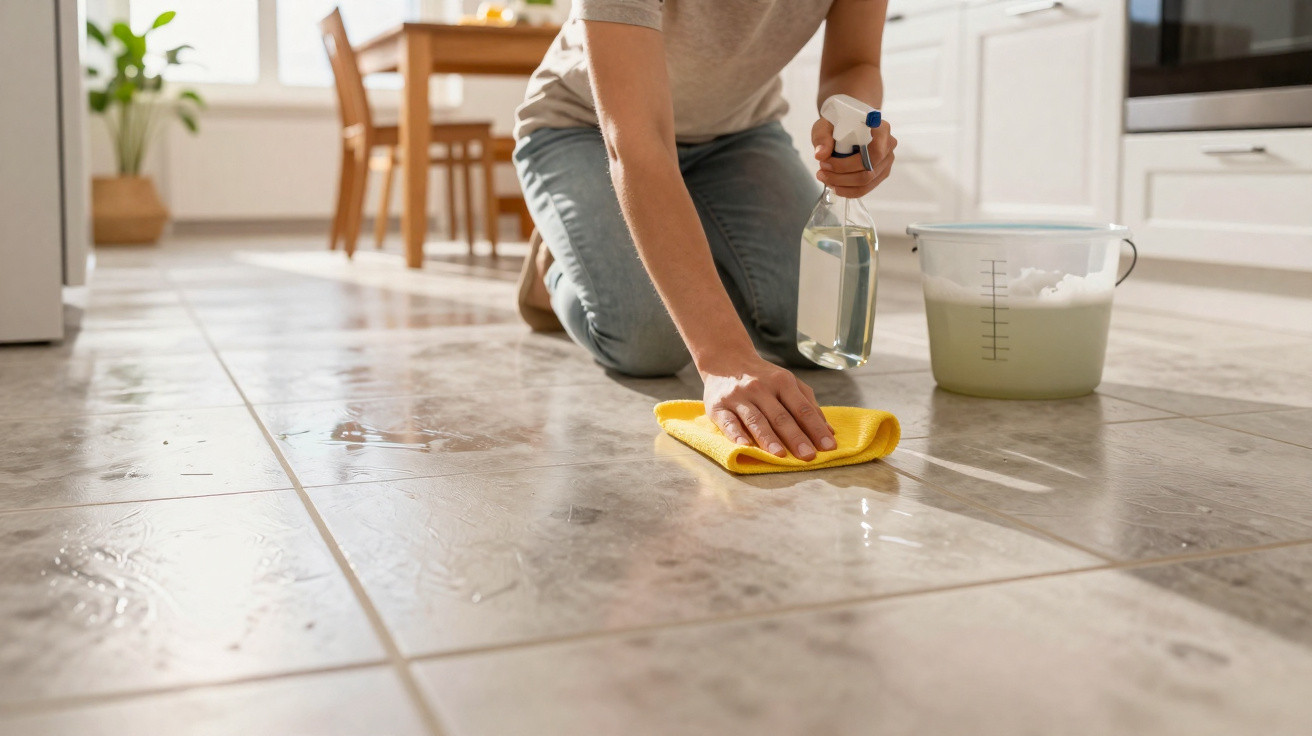
Anyone with a porcelain stoneware floor in the kitchen or living room will know the issue: streaks after every mop, a dull haze and unattractive marks that simply refuse to disappear. It is easy to reach for lemon juice, bicarbonate of soda or harsh cleaners. Cleaning specialists warn, however, that many of these products do more harm to the surface than good. A classic cupboard staple can work far better - provided it is used correctly.
Why many porcelain stoneware floors become dull over time
Porcelain stoneware is considered hard-wearing, easy to maintain and almost indestructible. In everyday use, though, the picture is often rather different. The floor loses its sheen, appears patchy, and streaks remain after each clean. There are several reasons for this:
- Overly strong or unsuitable cleaners: Many people follow the idea that more is better, choosing harsh multi-purpose cleaners or highly acidic solutions.
- Uncontrolled homemade cleaner mixes: Lemon juice one time, a spoonful of powder the next, with a different dose on every occasion.
- Residue that creates a film: Surfactants, soap deposits or powders that have not dissolved properly can settle on the surface.
- Moisture left on the floor: Failing to dry the floor encourages streaks and water marks.
Unglazed or matt porcelain stoneware in particular has a more sensitive surface than many people realise. It can certainly be cleaned effectively, but it does not tolerate extreme pH values or abrasive materials. If these experiments are repeated continually, its natural shine can suffer permanently.
Lemon and powders: why popular kitchen tricks can backfire
Household favourites sound tempting: lemon juice for a fresh scent, or powder to “scrub without chemicals”. Professional building-cleaning specialists are considerably less enthusiastic about them.
Lemon juice is highly acidic. Used infrequently and in small quantities, it will usually cause no problems. But anyone who adds it to every bucket of cleaning water or applies undiluted juice can damage the glazed surface. Tiny cracks can form, allowing dirt to lodge even more easily.
Powdered products with an abrasive effect - including supposedly mild homemade remedies - can very slightly roughen the surface if scrubbed vigorously. This may barely be visible at first. After several months, however, an increasingly dull film can develop that is difficult to wipe clean again.
Too many self-mixed cleaning cocktails leave behind a milky film that makes the floor look grey and dull - even immediately after cleaning.
There is another issue: combining different products creates chemical mixtures with an unpredictable pH value. Sometimes the result is too acidic, sometimes too alkaline. Neither is healthy for stoneware in the long term.
The overlooked miracle product from the kitchen cupboard
Professionals in commercial cleaning use a product that almost everyone has at home: clear household vinegar, ideally colourless vinegar with a high level of purity. When diluted correctly, it cuts through grease, has a mild disinfecting effect and leaves very little residue.
The ideal mixture for gleaming porcelain stoneware
Dilution is crucial. The following basic formula is recommended:
- 1 part clear household vinegar
- 3 parts lukewarm water
Put this mixture into a bucket used exclusively for floors. Warm water noticeably improves its grease-dissolving effect and helps loosen dried-on dirt.
A second component is then needed: a microfibre mop or microfibre floor cloth. This material picks up dirt far more effectively than traditional cotton cloths, ensuring that the vinegar solution is not merely spread around but lifted away again together with the loosened dirt.
Step-by-step: how professionals clean porcelain stoneware
- Remove loose dirt: Vacuum or sweep the floor thoroughly so that grains of sand cannot scratch it.
- Prepare the vinegar solution: Mix one part clear household vinegar with three parts lukewarm water in the bucket.
- Wring out the microfibre: Squeeze the mop or cloth thoroughly; the floor should only become lightly damp.
- Mop the area: Work in strips without leaving puddles behind. For heavy soiling, rinse the mop in the bucket during cleaning.
- Wipe again with clean water: Use a second clean cloth with plain water only to remove vinegar residue.
- Dry by hand: Go over the surface with a dry microfibre cloth until no droplets remain. This produces a visible shine.
The manual drying stage is the overlooked trick: it prevents streaks and water marks, and brings out the original shine of the stoneware.
Everyday care: keeping a stone floor attractive for longer
Those who care for porcelain stoneware flooring regularly but gently will need special tricks far less often. For weekly cleaning, professionals recommend a straightforward combination:
- Lukewarm water
- A small amount of neutral floor cleaner without shine-enhancing additives
- A well-wrung microfibre mop
The same principle applies here: dry the floor as thoroughly as possible afterwards. Especially in kitchens, this prevents grease splashes and dust from combining into a stubborn film.
How to deal with stubborn stains correctly
Rather than filling the entire bucket with aggressive additives, specialists recommend treating stains precisely where they occur:
- Greasy stains: Sprinkle a little powder directly onto the affected spot, work it with a soft brush in circular movements, then rinse thoroughly with clean water.
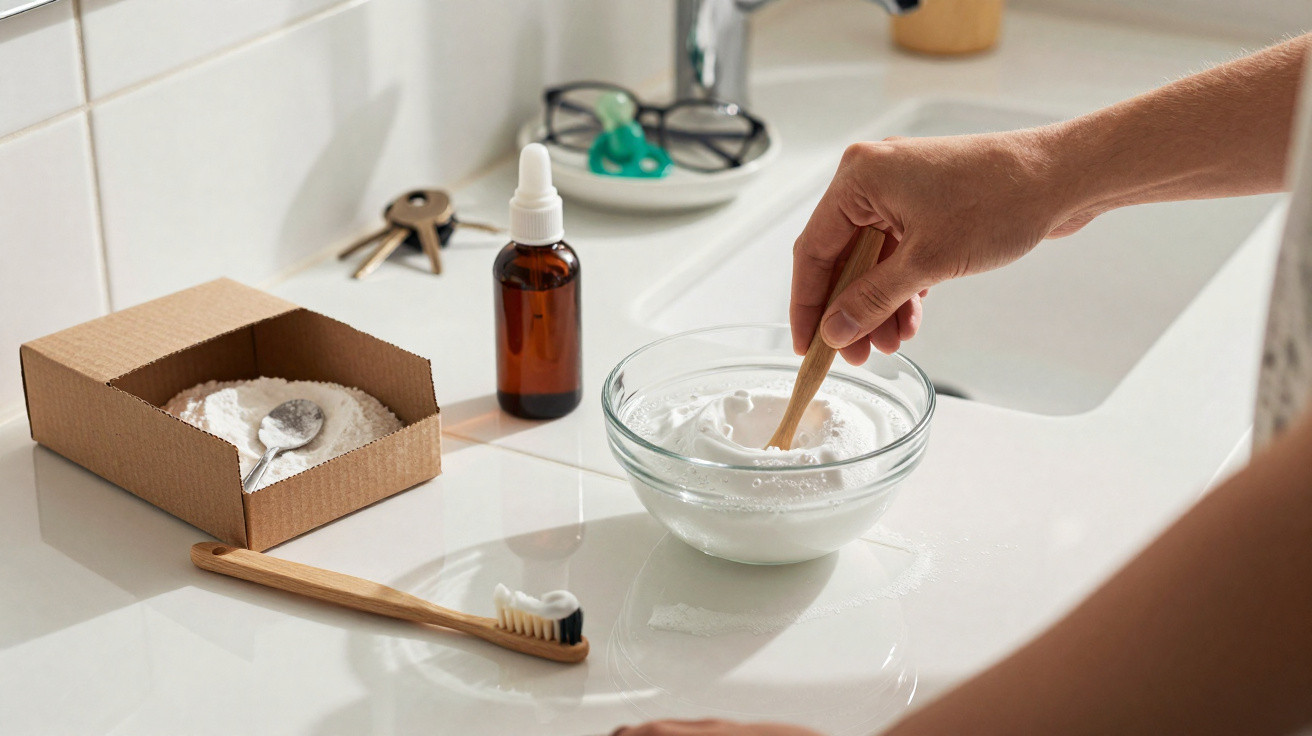
- Rust marks: Make a paste from clear vinegar and powder, apply it only to the affected area, leave it for around 15 minutes, then rinse carefully without scrubbing aggressively.
This keeps the treatment localised and prevents unnecessary stress on the rest of the floor.
Mistakes that permanently destroy the shine of porcelain stoneware
Anyone who values their floor should avoid several common pitfalls:
- Constant use of harsh cleaners: Highly acidic or strongly alkaline products attack the surface.
- Scouring powders or hard pads: These cause micro-scratches and make the finish more vulnerable to dirt.
- Using too much cleaning product: Heavy doses leave sticky residue that attracts dirt almost magnetically.
- Standing water: Pools of water encourage limescale marks and stains, particularly in pale grout lines.
A more sensible approach is prevention: use a sturdy doormat area at the entrance, fit felt pads beneath chairs and tables, and avoid dragging heavy furniture across the floor. This makes scratches and tracked-in sand far less likely.
Shine boosters: when oil or wax can be useful
For special occasions, or when the floor looks particularly dull, some people turn to shine products that are actually intended for other surfaces. Professionals advise restraint, but mention two options for a temporary effect:
- A touch of cooking oil: Apply a very small amount to a soft cloth and use it only on especially dull spots, then buff thoroughly with a dry cloth.
- Beeswax: Spread a thin layer, allow it to dry completely, then buff firmly until only a subtle sheen remains.
These measures are better suited as occasional shine boosters than for routine cleaning. Too much oil or wax makes the floor slippery and attracts dust.
What porcelain stoneware actually is - and why it matters for care
Porcelain stoneware belongs to the ceramic tile family. It is fired at very high temperatures, is barely porous and absorbs almost no water. These qualities make it particularly popular in heavily used spaces such as kitchens, hallways and open-plan living-dining areas.
Its low porosity does, however, have a downside: anything left as a film on the surface is immediately noticeable. Unsuitable cleaners or excessive doses do not sit “within the material”; instead, they remain as a visible layer on top. This is why a clear cleaner that rinses away easily, used in moderate quantities, usually achieves much better results than a haphazard mixture of different products.
Anyone who consistently uses diluted household vinegar, neutral cleaner, microfibre and a dry finishing pass will often notice a difference after just a few cleaning sessions: the floor not only looks clean, but once again resembles the way it looked when moving in - clear, calm and pleasantly glossy, without appearing greasy.
Comments
No comments yet. Be the first to comment!
Leave a Comment