
The striking thing about a Finnish home in deep winter is often what you don’t hear: no radiators ticking, no fan heaters whirring, no constant cycle of heating switching on and off.
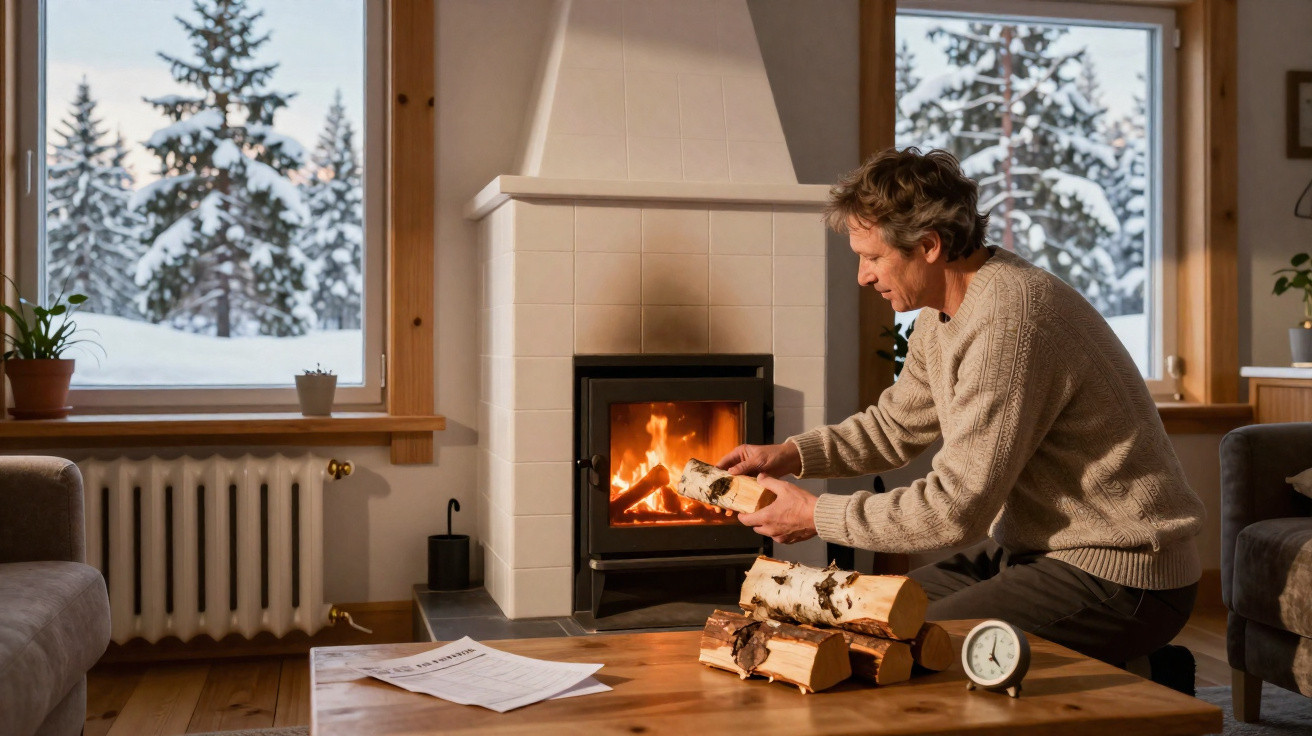
In a wooden house outside Tampere in mid-January, it is –18°C outside. Frost covers the windows and the sky is steel-grey, but indoors it is 22°C-warm enough for socks, with no visible heaters along the walls.
Ask the retired engineer who lives there where the radiators are, and he laughs. Instead, he gestures towards a hefty white tiled stove in the corner, sitting there like a familiar old companion and giving off a gentle, steady heat.
His electricity bill? Less than half of what his neighbours pay.
Speak to enough Finnish heating specialists and the same unexpected thought keeps coming up.
Perhaps radiators are already living on borrowed time.
In the land of winter, radiators are losing
Walk through a Finnish suburb built before the 1980s and you will notice a familiar feature in many older homes.
Rather than slim metal radiators, there are substantial hand-built stoves of brick or soapstone, often finished in off-white or pale green tiles.
They can seem like relics from a grandparent’s house, especially beside smart thermostats and underfloor heating.
Yet these “masonry heaters” are quietly changing the idea of what efficient warmth looks like in a northern climate.
Energy researchers in Finland have been looking closely at the figures.
A properly designed masonry stove, fired once or twice daily, can provide consistent radiant heat for 12–24 hours while using remarkably little wood.
In some case studies from Finnish building institutes, homes with modern masonry stoves reported heating costs 20–40% lower than high-end heat-pump systems, particularly in older, more draughty properties.
That is before considering the worry over electricity price rises or gas disruption that made the past few winters a financial nightmare for many Europeans.
So what explains it?
Radiators heat the air by design. They depend on convection: warm air rises, cool air drops, and the pattern continues. It works, but the heat can feel uneven and temporary, especially where windows leak and walls are poorly insulated.
Masonry stoves work differently: they heat mass. Tonnes of brick or stone take in the energy from a short, hot fire, then release it gradually as gentle, penetrating radiant warmth.
You feel comfortable even when the air is a couple of degrees cooler, and the home remains cosy long after the flames have disappeared.
For Finnish specialists, that move from heating air to heating mass is exactly where radiators begin to seem outdated.
The “old” system that beats the smart ones
Operating a masonry heater is almost surprisingly straightforward.
You load it with dry logs once or twice a day, light the fire, and allow it to burn hot and fast for a few hours. No slow smouldering and no constant tending.
Inside, carefully designed channels carry the hot gases through the masonry and charge it with heat.
Once the fire has burned out and the doors are shut, the large white structure simply continues radiating warmth through the day and into the night.
Consider a young family in Jyväskylä renovating a detached house from the 1960s.
They retained the old radiators “just in case”, but installed a new certified masonry stove for roughly the cost of a mid-range heat pump.
During their first winter after the work, they recorded everything: outdoor temperatures, wood use, electricity bills and room temperatures.
On most days, one morning firing kept the living areas warm until bedtime. When temperatures reached a bitter –25°C, they added an evening firing.
The radiators?
They were switched off for most of the heating season.
From an engineering perspective, the benefit is quite blunt.
Depending on its size and use, a large masonry heater can store 500–1,500 kWh of heat in its mass over a week. That reserve helps smooth out cold spells, energy-price surges and even short power outages.
Radiators linked to electric or district-heating systems cannot offer the same buffer. When prices spike or the power cuts out, comfort can disappear with it.
And honestly, few people want to spend every evening adjusting a thermostat to catch the cheapest hour-by-hour tariff.
With a substantial heating mass, there is no need.
You can absorb those fluctuations with a system designed, quite literally, for a country where winter lasts half the year.
How Finns are quietly changing how they heat
For anyone drawn to the idea, Finnish experts tend to repeat the same advice: consider the house before the stove.
The most effective arrangement is not an enormous heater in a small, draughty cottage, but a correctly sized and positioned stove in a reasonably well-insulated home.
The rule many Finnish builders follow is simple: place the masonry stove as near to the centre of the home as possible.
This allows radiant warmth to reach several rooms, rather than turning one end of the lounge into a sauna while the hallway stays freezing.
There is also a subtle shift in attitudes.
For decades, “modernisation” in Finland meant replacing wood stoves with neat radiators connected to district heating, oil, or later electric boilers. It seemed clean, automatic and future-proof.
Then came unstable energy prices, climate targets and a younger generation realising that their grandparents’ heating systems were not merely nostalgic.
They were robust.
Many Finns who removed their old stoves now wish they had not.
Some try to make up for it with small electric heaters or fan-powered devices blowing hot air at their legs. You probably know the result: one roasting corner, dry air and an electricity bill that lands like a slap.
One Finnish energy consultant put it plainly:
“Radiators are good at turning money into warm air.
Mass heaters are good at turning one short fire into a whole day of comfort.”
Experts advising homeowners often return to the same checklist when weighing up heating systems:
- Upfront vs. lifetime cost – A masonry stove can last 40–60 years with minimal repairs, while many modern systems require major replacement after 15–20 years.
- Fuel flexibility – Firewood, pellets, or even future low-carbon fuels can be used without total reliance on the grid.
- Comfort quality – Radiant heat warms walls, floors and people, rather than only the air temperature shown on a thermostat.
- Resilience – During a power cut or gas shortage, a well-built masonry heater continues to work as long as you have wood.
- Carbon footprint – When sourced sustainably, wood burned in efficient stoves can be far less carbon-intensive than fossil-based or peak-hour electricity.
What this quiet Finnish revolution says about the rest of us
Spend a few days in Finnish homes that still use large masonry heaters and a clear pattern emerges.
The technology is not flashy. There are no glowing displays or layers of app menus. Just a repeatable routine, a solid mass of warm stone and rooms that feel gentle on the skin rather than dry or draughty.
It tells a different energy story from the one we usually hear, where progress always means smaller, slimmer and more digital.
Here, the answer became heavier, more tangible and closer to the warmth you feel when late-afternoon sun lands on a stone wall.
For people outside Finland, the message is not “everyone should immediately build these stoves”. Local building regulations, air-quality standards and housing types all matter.
What Finnish experts are really challenging is the assumption that radiators supplied by distant energy systems are the peak of home comfort.
They are asking a more fundamental question.
What if the best heating for the next 30 years is something that retains warmth like a thermos holds coffee, rather than something needing a constant, costly feed of energy every minute it is cold outside?
The question remains after winter has passed. It lingers quietly, like a warm wall beneath your hand.
| Key point | Detail | Value for the reader |
|---|---|---|
| Radiators vs. radiant mass | Masonry heaters store heat in brick or stone and release it gradually | Helps you understand why old-school systems can feel warmer with less energy |
| Cost and resilience | Lower running costs, long lifespan and heat during outages | Gives you a roadmap to more predictable bills and fewer cold-weather surprises |
| Comfort quality | Steady radiant warmth versus fluctuating hot-and-cold air from radiators | Helps you prioritise not just “degrees” but how your home actually feels |
FAQ:
Are Finnish experts really saying radiators are “doomed”?
Not overnight, and not everywhere. The “doom” is more about long-term relevance: as energy prices fluctuate and resilience becomes more important, many Finnish specialists expect radiant mass systems to play a greater role than classic radiator-based setups, especially in colder regions.Isn’t burning wood bad for air quality and the climate?
Old, smoky fireplaces are. Modern certified masonry stoves burn hot and quickly, producing far lower particulate emissions. When wood is sustainably sourced and efficiently burned, total lifecycle emissions can be significantly lower than fossil-based heating.Can I combine a masonry heater with a heat pump or radiators?
Yes. Many Finnish homes take a hybrid approach: a heat pump or radiators provide background heat and hot water, while the masonry stove covers the coldest days and delivers that deep, pleasant warmth in living spaces.What if I live in an apartment, not a detached house?
Full masonry heaters weigh tonnes and need structural support, so they are uncommon in typical flats. However, lighter “stove-like” mass heaters and improved radiant panels are emerging, based on the same principle: store heat and release it slowly.Does this mean I should rip out my radiators right now?
No. Most Finnish experts would begin with insulation, draught-proofing and smarter controls. Then, if you are renovating or building, you can seriously compare a mass-based system with another 30 years of classic radiators. The simple truth is that the best time to rethink heating is when you are already planning a major change.


Comments
No comments yet. Be the first to comment!
Leave a Comment