
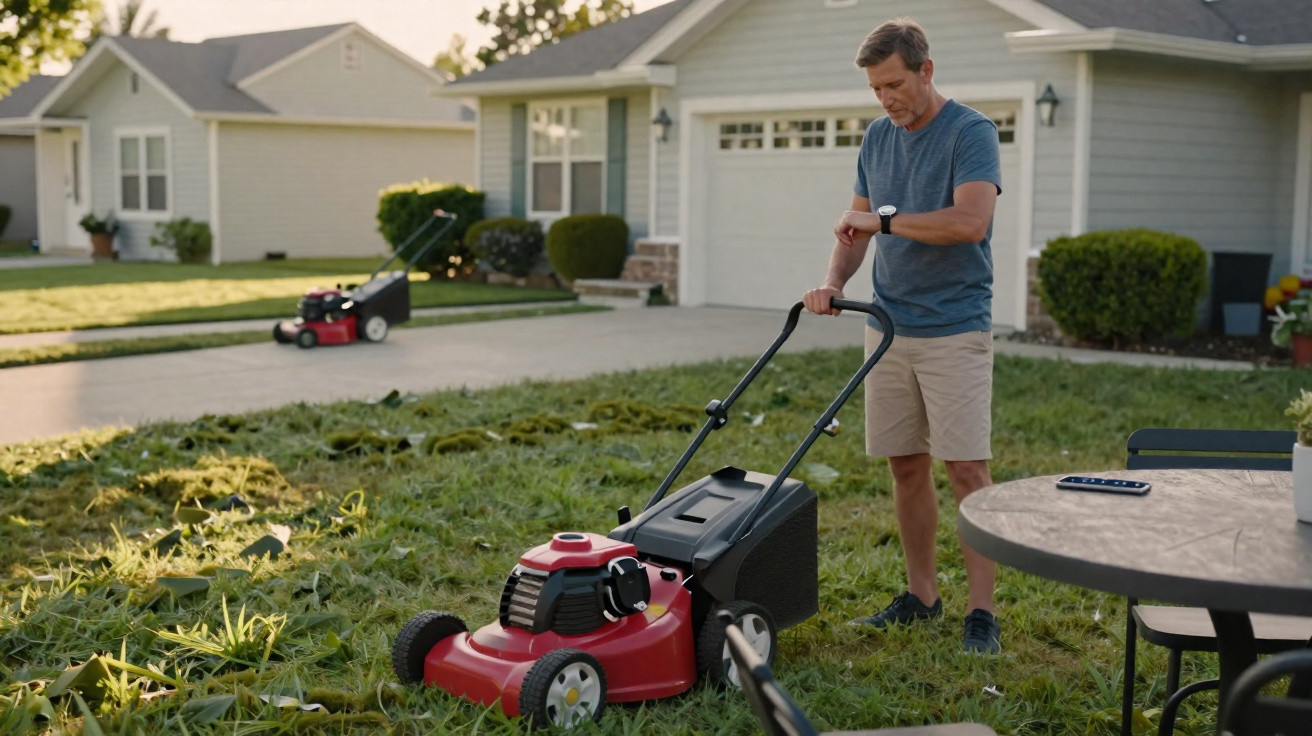
The day can be perfectly calm until a lawn mower cuts through it: engine rattling, windows closing, dogs barking and children waking up. On bright days from spring through late summer, that familiar sound is part of suburban life.
But from 21 February, the usual midday mowing routine is set to become a problem. A new rule will ban lawn mowing between noon and 4 p.m., meaning a casual weekend job could result in a fine. Your lawn and your schedule suddenly come with limits. For many homeowners, it is more than a small rule change: it reshapes what everyday neighbourhood life is meant to sound like.
From harmless habit to fine-worthy offense
The restriction falls right in the middle of the day: no mowing from 12 p.m. to 4 p.m., with penalties now possible. That is exactly when many people usually do it - mowing during a lunch break, tackling the garden at Saturday lunchtime, or deciding to “just quickly do the front”. A routine that once seemed harmless could suddenly lead to a ticket.
The official case combines noise control, air quality and public health as heatwaves become more severe. Authorities see those four hours as a protected spell: a quieter, cooler break in neighbourhoods that rarely fully switch off. For families, shift workers and children napping after lunch, it may be a welcome relief. For busy homeowners, it can feel like another scheduling problem.
Imagine a sweltering Sunday in June, when the air is already humming by 10 a.m. Emma, 38, works full-time and has two young children. Her only bit of “me-time” is that early-afternoon window when her partner takes over indoors and she heads outside to push a noisy, petrol-powered machine up and down the lawn.
She used to fit it in between naps and snacks, headphones on, mowing through the hottest part of the day. Under the new rule, that entire slot becomes off limits. Emma will need to start earlier, mow at dusk, or risk a fine that could reach triple figures, depending on how her local council enforces the rule. One neighbour may receive a warning. The next could find a ticket on the letterbox.
On paper, the reasoning is straightforward. Authorities want to reduce noise pollution at the time when heat, stress and the general urban hum are already at their highest. The midday quiet period is intended as a buffer, particularly as summers lengthen and health services warn people against exertion in the hottest hours.
There is also an environmental point. Traditional petrol mowers are surprisingly polluting: brief periods of use can build up to significant emissions over a season. Keeping them switched off during peak heat may slightly reduce smog formation and volatile fumes lingering around neighbourhoods. It also encourages homeowners to question whether an immaculate, very short lawn is really worth the effort. Put simply, the humble mower has become part of a much wider debate.
How to adapt your mowing routine without losing your mind
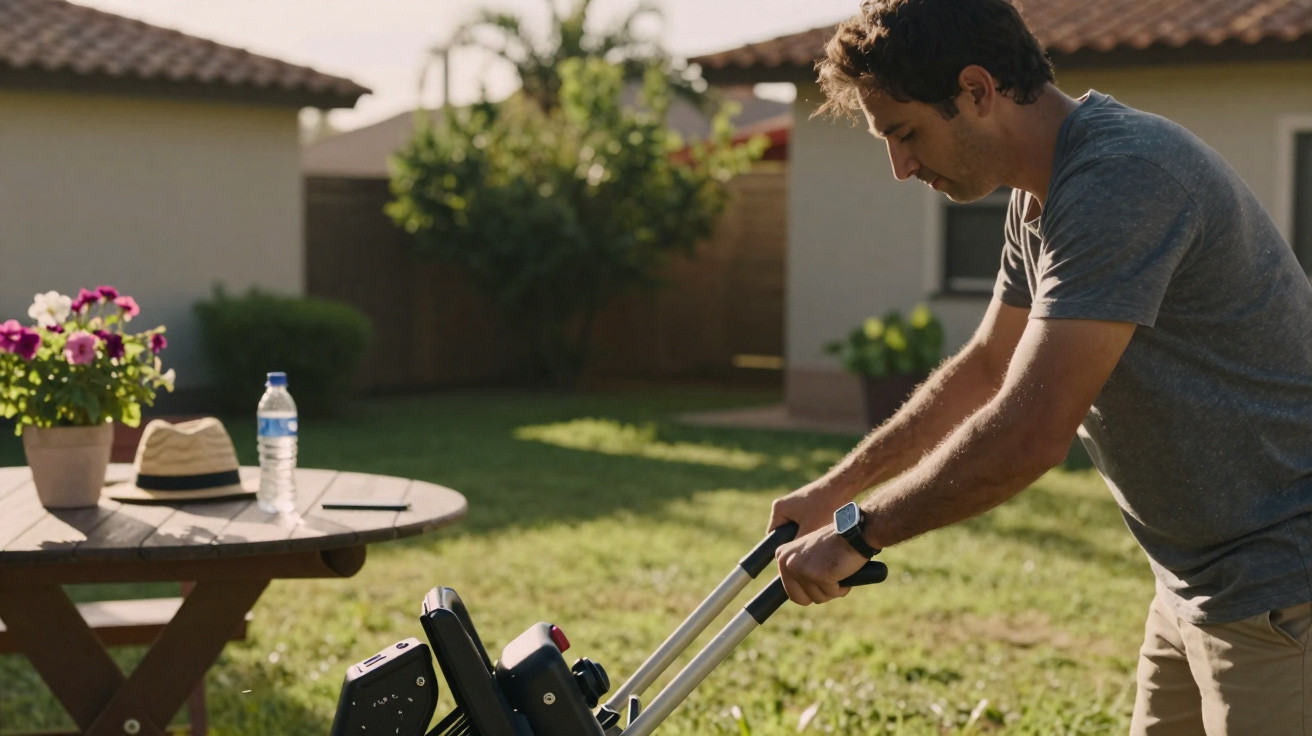
The first move is practical: rearrange your timing rather than panic. Look over your week and set aside new “green windows” before noon or after 4 p.m. Early mornings, particularly at weekends, may become prime mowing time, provided you still follow any existing noise restrictions.
If you work from home, a quick 20–30 minute session at about 10 a.m. could replace the old after-lunch habit. For anyone working standard office hours, late afternoon or early evening mowing becomes the new norm. Think of it as turning the routine around: coffee first, grass later, lower sun. You are not giving up your lawn. You are simply changing its soundtrack.
We have all had that moment when the only free time in the day clashes with everyone else’s peace and quiet. This rule highlights something few people enjoy admitting: our “quick chores” can easily get on our neighbours’ nerves. The annoyance is understandable, especially for people balancing children, two jobs or shared-custody arrangements.
There will be slip-ups. Someone will forget, start the mower at 12:15 p.m., and get a disapproving glance or a knock at the door. Realistically, nobody follows a new routine with military precision every day. The important thing is to view the change less as a personal attack and more as a shared experiment in getting along. You are adapting, your neighbours are adapting too, and everyone may feel both irritated and relieved.
“I used to think, ‘It’s my garden, my time, I’ll mow when I want,’” admits Paul, a 52-year-old homeowner who has already been warned once under a pilot version of the rule.
“But when I stopped at midday for a few weeks, I suddenly noticed how loud everyone else was.
It changed the way I thought about my own noise.”
To avoid trouble - and help keep the peace - a few practical steps can make a difference:
- Switch to a quieter electric or battery-powered mower if you can.
- Check local bylaws for the precise hours and possible fine amounts.
- Treat mowing sessions like appointments rather than last-minute impulses.
- Speak to neighbours who work nights or have young children and agree expectations.
- Use the banned hours for quiet garden work: weeding, pruning or planning.
One small shift in mindset can turn a restrictive rule into a reason to reorganise your whole outdoor routine with less stress over time.
Beyond the mower: what this rule says about our neighborhoods
This new midday mowing ban is not only about grass length or petrol fumes. It quietly raises a bigger question about the sort of neighbourhoods we want over the next decade. Do we want suburbs and small towns that sound like permanent building sites, or places where silence still gets a few protected hours?
Some homeowners will complain, others will barely notice, and a few will be glad they can finally open the windows at lunchtime without an engine roaring nearby. There is a deeper change too: a move from private convenience towards shared comfort. You are no longer simply looking after your lawn; you are part of a collective choice about how daily life feels between the house and the pavement.
Perhaps, after a few months, the quiet from noon to 4 p.m. will start to feel completely normal. Perhaps you will miss the sound of mowers as part of summers gone by. Either way, the small rule arriving on 21 February will carry well beyond the edge of your garden.
| Key point | Detail | Value for the reader |
|---|---|---|
| Midday mowing ban | No lawn mowing allowed between 12 p.m. and 4 p.m. from 21 February, with fines possible | Helps you avoid unexpected penalties and legal trouble |
| Routine reshaping | Encourages mowing in the morning or late afternoon, with quieter equipment | Makes garden work more efficient, less stressful and neighbour-friendly |
| Shared neighbourhood benefits | Less noise, lower emissions, safer behaviour during peak heat | Improves daily comfort and long-term health for you and your community |
FAQ:
Question 1 Does the new rule really apply every day, even on weekends and holidays?
Yes, the midday ban generally covers all days, including weekends and public holidays, unless your local bylaws set out specific exceptions. Check your council website or local noticeboard for the exact wording.Question 2 What kind of fines are we talking about if I mow between noon and 4 p.m.?
The amount depends on your local authority, but it can range from a written warning for a first offence to fines reaching the low hundreds for repeated breaches.Question 3 Does the rule target only petrol mowers, or electric ones too?
The ban generally applies to mowing itself, regardless of the mower type. Electric and battery models are quieter and cleaner, but they are still covered if used during restricted hours.Question 4 Can my neighbour report me if I accidentally mow at 12:30 p.m.?
Yes, neighbours can make a complaint, which may lead to a visit or warning from local authorities. However, many areas encourage discussion and education before fines, especially when the rule first begins.Question 5 Are there any exceptions, like for professional landscapers or emergencies?
Some local authorities allow exceptions for certified professionals or urgent safety work, though these are usually limited and documented. If you use a gardening service, ask how it intends to manage the new time restrictions.



Comments
No comments yet. Be the first to comment!
Leave a Comment