
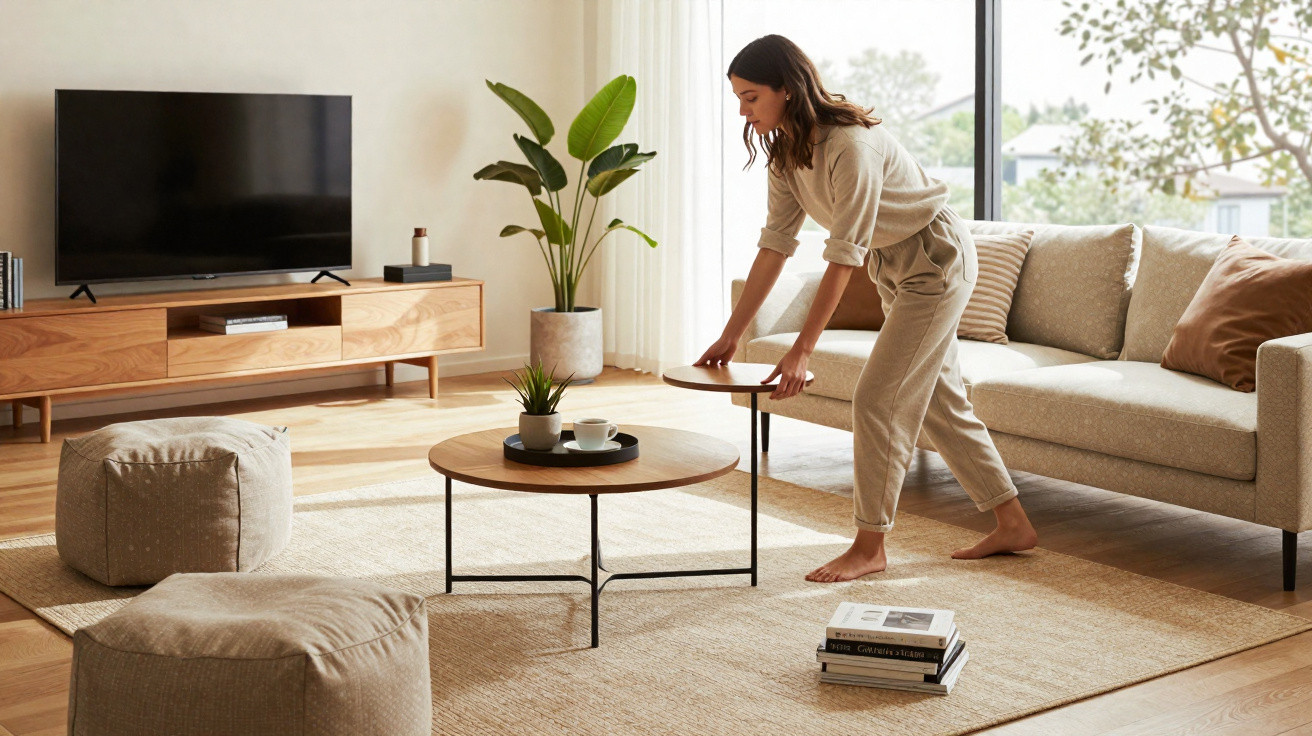
The coffee table in the living room has long been an almost automatic feature of many interior design schemes. In contemporary spaces, however, it is increasingly giving way to lighter, more flexible options that favour movement, comfort and multiple functions-particularly in smaller flats and open-plan living areas.
What trend is replacing the traditional coffee table?
The leading alternative to the coffee table in the living room is a mix of freestanding, modular and multi-purpose furniture, including side tables, stools, pouffes, C-shaped tables and nesting tables that can slot alongside the sofa. Rather than relying on one large, weighty item in the centre of the room, the arrangement is created with smaller pieces that are easy to move and can suit different everyday activities.
These items still provide the traditional surface for drinks, remote controls and books, while offering far greater freedom of placement and movement. They can be pulled close to the sofa when needed, then moved aside to create room for children to play, exercise, set up a travel cot or accommodate extra guests during informal gatherings.
Watch a video on the Doma Arquitetura YouTube channel about creating a fluid living-room layout and using occasional tables instead of a traditional coffee table:
https://www.youtube.com/watch?v=E_tM0f1I1rQ
Why is the coffee table losing its place in the living room?
In many schemes, the coffee table in the living room becomes an obstacle to movement, especially in compact rooms. The gap between the sofa, TV unit and central table can become too narrow, making it harder to walk through the space and reducing its day-to-day practicality.
Modern living rooms are used for relaxing, as an extension of the home office, for gaming and even for exercise. Lighter furniture and movable occasional pieces are better suited to this changing routine, offering practical advantages for those using the room:
- Visual lightness: less bulk in the middle allows the room to feel more open.
- Practicality: items can be moved easily for cleaning or a quick rearrangement.
- Safety: there is less risk of bumping into furniture, particularly for children or older people.
- Versatility: the layout can be changed according to the number of people present and the activity taking place.
How can you adapt the trend in small and medium-sized living rooms?
In smaller rooms, replacing the coffee table in the living room with more compact alternatives often produces an immediate improvement in circulation and the sense of space. One practical approach is to choose a set of two or three small side tables, positioned beside the sofa and armchair, then grouped in front of the upholstery whenever required.
Another option is to use upholstered pouffes or low stools with a firm top. These can serve as extra seating when the house is full and, with a tray placed on top, become a surface for drinks and snacks. In particularly narrow spaces, C-shaped tables that fit over the side of the sofa provide support for a laptop, snack or book while taking up less floor area and keeping the centre of the room clear.
How can you modernise the living room cheaply and without renovations?
Refreshing the living room without the classic coffee table does not require a large budget or structural work. Often, the first step is simply to remove the central piece for a few days and see how the room functions without it, gradually introducing affordable alternatives such as wooden stools, an upholstered pouffe or a small metal side table.
Items usually kept on the coffee table can be moved into baskets beside the sofa, trays placed on the arm of the upholstery, and cubbyholes in the TV unit. This keeps everything organised without taking up the central area. To create a visual focal point, larger rugs, floor lamps and well-positioned artwork can take centre stage, making the living room feel more current, functional and in tune with the way homes are lived in today.


Comments
No comments yet. Be the first to comment!
Leave a Comment