
The door swings open, a sweet-and-sour smell hits you, and somewhere at the back left there is still a splatter of tomato from the last reheating disaster. Inside, the microwave – that quiet everyday hero – looks more like a student flat-share in 2009 than a clean kitchen in 2026. You quickly put your plate in, press start and secretly hope guests never think to open that door. We all know the small moment of embarrassment when someone asks: “Can I use your microwave for a moment?”
The strange thing is that most stains appear within seconds, then remain there for weeks – or even months. Yet getting the appliance looking reasonably new again often takes only 5 minutes. You simply need to know what to do.
Why the microwave becomes a hidden problem area
It sits there, quietly humming, somewhere between the coffee machine and toaster. Nobody posts photos of their microwave on Instagram, and nobody talks over a glass of wine about how thoroughly they cleaned it that day. Still, most of us use it almost every day: to reheat pasta, warm baby food or rescue a coffee. Every use leaves microscopic traces, which gradually merge into a sticky, invisible coating.
Over time, that unseen layer turns into a visible film: greasy edges, dried-on sauce splashes and a faint yellow tinge in the corners. In a survey by a major household brand, almost 70 per cent of respondents admitted that they clean their microwave “far less often” than they really should. And yes: let’s be honest, nobody actually does it every day. The microwave represents the compromise between speedy convenience and postponed responsibility.
The reasoning is remarkably simple. A microwave feels like an enclosed space that keeps everything “inside”. That is true, but it contains not just heat – it also traps odours and grease particles. Any splatter that is not wiped away immediately is effectively reheated with the next meal. Heat, steam and grease form a sticky coating that settles ever more deeply into crevices, ventilation slots and the ceiling of the interior. The longer you leave it, the more effort – or cleverness – it takes to remove.
The 5-minute method: make the inside of your microwave look new again
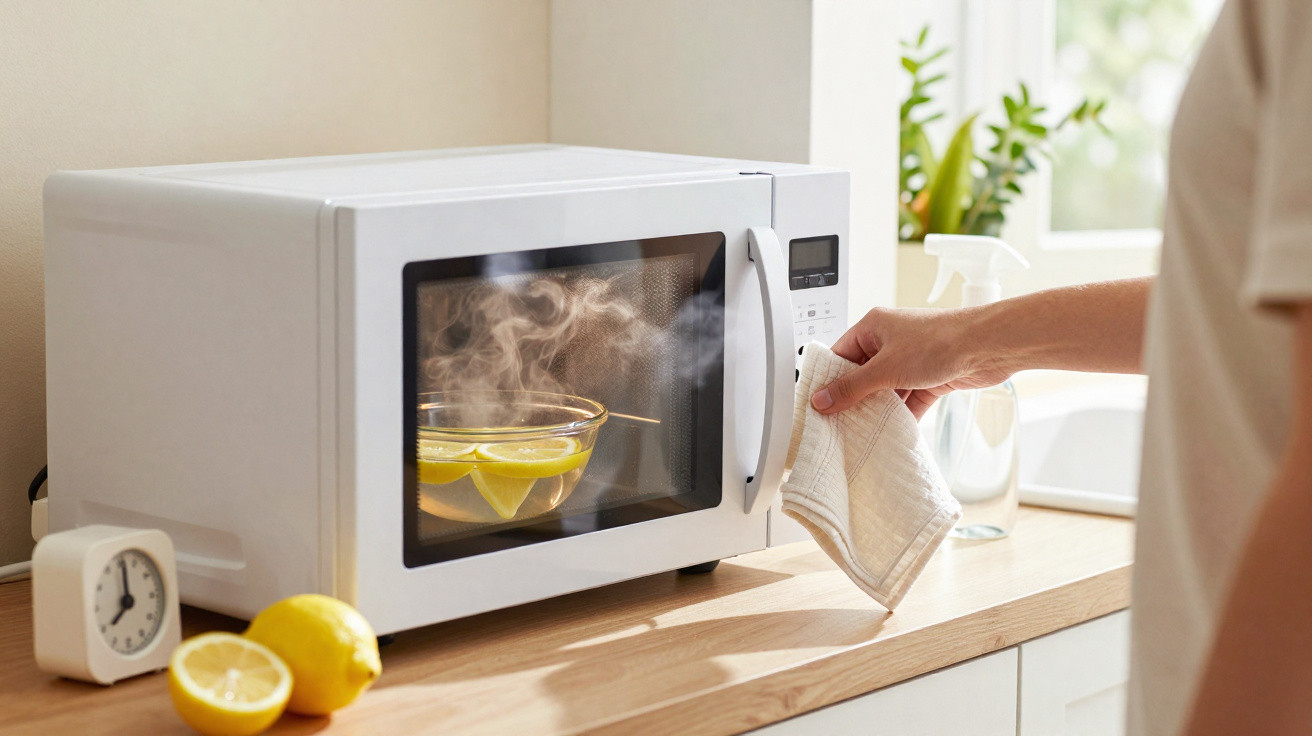
The quickest approach needs no specialist cleaner. You will need a microwave-safe bowl, water, half a lemon or a little vinegar, plus a cloth or sponge. Fill the bowl with water, squeeze in the lemon or add a splash of vinegar, then place it in the microwave. Run it on a high setting for 3–4 minutes, until the water is steaming properly and the interior walls are covered in condensation.
Now comes the important part: keep the door closed and wait another 1–2 minutes. The hot steam does the work for you, loosening grease and crusted-on residue. Once you open the door, wipe out the interior with a cloth, including the ceiling, turntable and door. Many people are surprised every time by how easily dried tomato sauce suddenly comes away. It is not magic – just heat, moisture and a little acid.
Many people do not fail because of the method, but because they take too heavy-handed an approach. They scrape dried cheese with a knife or scour the interior wall with a harsh sponge until the coating suffers. This creates tiny, almost invisible scratches that collect even more dirt next time. A mild cleaner and soft cloth are entirely sufficient. It is also better to remove the turntable and wash it separately in the sink rather than frantically turning and wiping it while it is still in the appliance.
There is another psychological trap: when it looks truly awful, many people think the effort is hardly worthwhile. That is exactly when the 5-minute rule pays off most. Spend five minutes today and open the door without worry tomorrow, rather than being annoyed by it for weeks.
“The biggest obstacle to cleaning a microwave is not the dirt – it is the moment we decide to ignore it,” says a friend of mine who works as a domestic cleaner. “But once you see it gleaming after five minutes, you will never want to go back to the old state.”
- A bowl of water with lemon/vinegar
- Heat for 3–4 minutes, then leave for 1–2 minutes
- Wipe the interior with a soft cloth
- Clean the turntable separately in the sink
- Briefly repeat the process for stubborn areas
How a clean microwave changes daily life
Anyone who has properly cleaned their microwave once soon notices that it is not only about appearance. A clean interior smells neutral, food tastes less like “yesterday”, and you use the appliance more comfortably again. Suddenly, there is no need to feel embarrassed when somebody asks: “Can I warm something up for a moment?” These are small, quiet comforts that make a real difference in everyday life.
It is also striking how quickly a new routine can take hold. After a few weeks, many people who start using the 5-minute method find that their microwave no longer gets as dirty as it did before. A quick weekly water-and-lemon steam treatment and wipe, and you are done. The major frustration never appears because layers of dirt are not allowed to build up in the first place. And yes, sometimes a quick wipe immediately after an “exploding plate” is all that is needed.
The plain truth is that nobody needs a perfectionist cleaning schedule – just a small, realistic reflex. If you are already standing beside the microwave while your food rotates, you can prepare the bowl of water and lemon. One look, one movement, three button presses – that is all it takes. An irritating chore becomes a quiet, automatic gesture that takes up hardly any time while making your kitchen feel a little easier every day.
| Key point | Detail | Benefit for the reader |
|---|---|---|
| 5-minute steam clean | Heat water + lemon/vinegar; the steam loosens grease and crusted-on residue | A fast, affordable method without specialist cleaners |
| Gentle care | Soft cloths; no abrasive sponges or knives | Longer microwave lifespan, with fewer scratches and odours |
| Simple routine | Use briefly once a week or after “accidents” | A small habit rather than a major clean, with less daily stress |
FAQ:
How often should I clean the inside of my microwave? For most households, using the 5-minute steam method once a week is realistically enough. After larger “explosions”, wipe it out straight away before anything dries on.
Can I use vinegar on its own instead of lemon? Yes, a splash of ordinary household vinegar in water works very well. The smell disappears after airing the microwave briefly with the door open, while lemon leaves a fresher scent.
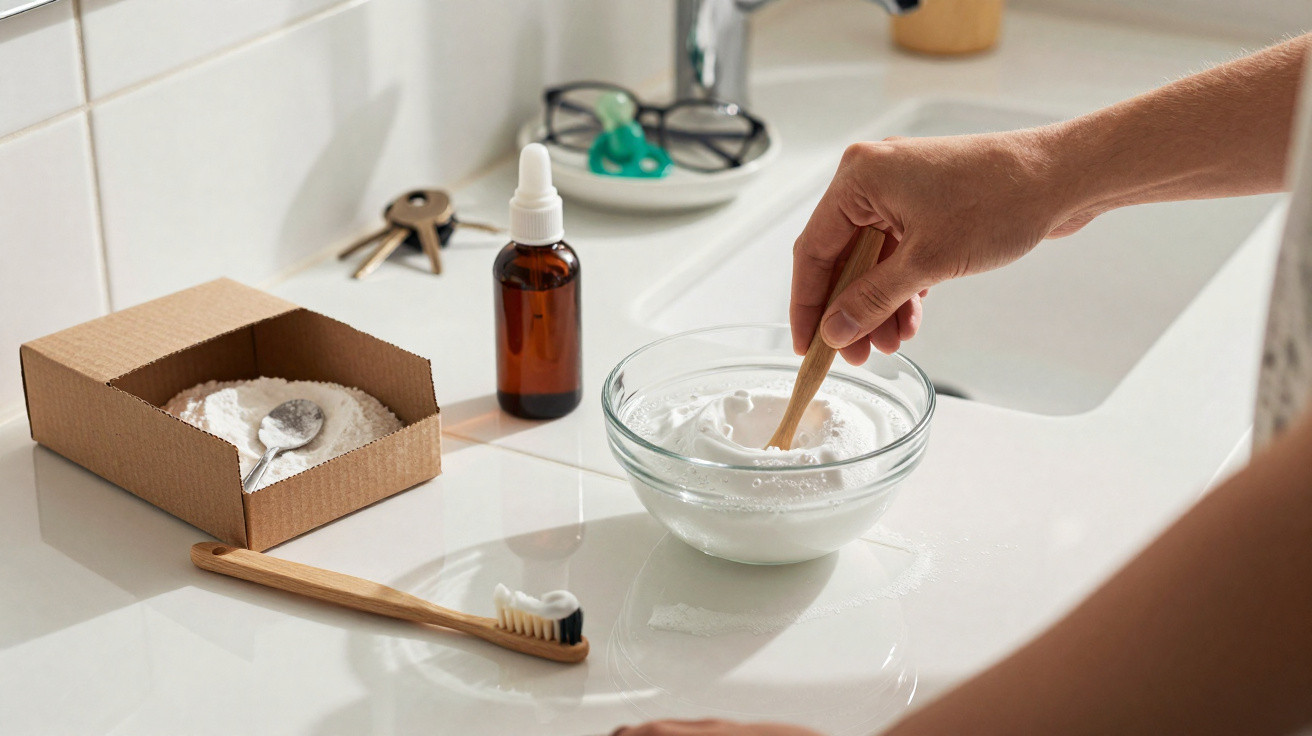
Is baking powder a good idea in the microwave? Baking powder can help with very stubborn stains, but it should only be used as a paste on a cloth, not loose inside the appliance. Always wipe thoroughly afterwards so no powder remains.
Can I use aggressive oven cleaners in a microwave? Experts generally advise against this, as residues inside the appliance could come into contact with food during the next reheating cycle. It is better to use mild household options such as lemon, vinegar and a little washing-up liquid.
What should I do about burnt smells that simply will not disappear? First clean the interior thoroughly, then heat a bowl of water with lemon slices for 5–10 minutes and allow the steam to work. For very intense odours, repeat the process once or twice and air the appliance between treatments by leaving the door open.



Comments
No comments yet. Be the first to comment!
Leave a Comment