
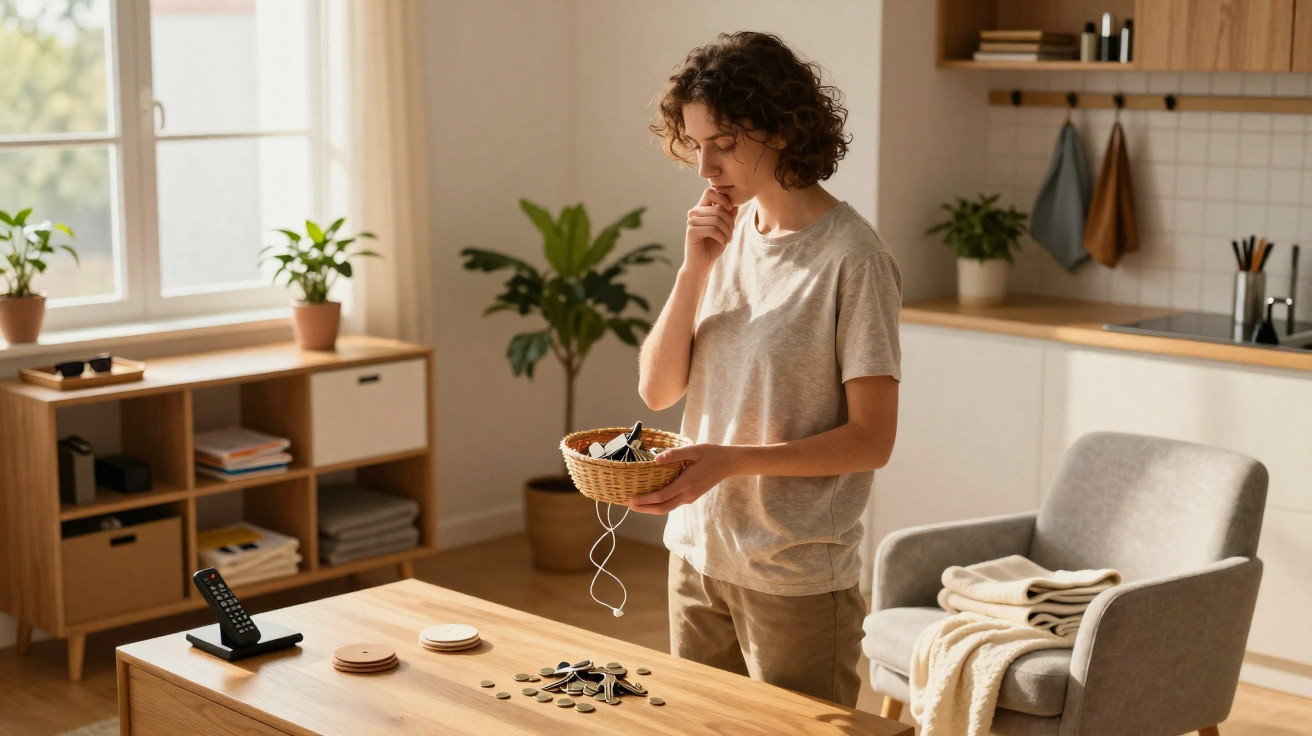
The rubbish has been taken out, the worktops cleaned and the floor still carries a faint scent of lemon cleaner. By Sunday evening, the sitting room is nearly ready for a magazine shoot - the sort of room you might quietly photograph and send to a friend as evidence: look, I’ve got my life together.
By Wednesday, though, it is a different story. Keys are dropped on the console table “just for now”. Post sits in a precarious stack. A supermarket bag full of “misc things” waits beside the stairs. The kitchen drawer will no longer shut properly. And there is that peculiar, all-too-familiar sense that the clutter has started breeding again.
Professional organisers offer a straightforward explanation: the mess is not actually living where you assume it is.
The five invisible zones quietly wrecking your tidy house
Professional organisers often refer to “invisible zones” - parts of the home your mind has relegated to the background, so you no longer properly see them. These are the surfaces and corners that discreetly collect possessions, only to deliver them back as chaos a week later. Think of the coat hooks behind a door, the chair that is really a pile of laundry, or the shallow drawer containing… everything and nothing.
One organiser in London told me that clients repeatedly say the same thing: “I tidy constantly, but my house never stays tidy.” She can enter a home, check five particular places and generally identify the reason in under 30 seconds.
These areas tend to be small: a 40 cm stretch of hall, the tray that catches keys and loose change, or the bottom stair. Yet they work like magnets, drawing in items without a permanent place: flyers, hairbands, spare screws, receipts, charging cables and unopened post. The issue is not merely clutter - it is the decisions you keep avoiding in these areas.
An organiser I spoke to describes the hallway console as “the altar of lost intentions”. You will recognise it. During the morning rush, someone leaves sunglasses, a letter from school or a missed-delivery card on it. Later, an unfinished craft project is added to the mix. No one decides, “This lives here forever.” It is simply the easiest flat surface before shoes come off.
A recent UK survey by a storage brand found that almost 60% of people think their home looks untidy again within 48 hours of a deep clean. When asked where clutter accumulates, people gave answers that were strikingly alike: kitchen worktops, stairs, the “junk drawer”, bedside tables and the top of the washing machine. The homes and households may differ, but the unnoticed pressure points are the same.
One Manchester family monitored the pattern for a week. Rather than shifting a fresh pile immediately, they took a quick photograph of it. By Sunday evening, five habitual offenders had become clear: a basket by the stairs, the end of the kitchen island, the dining chair by the window, the fridge top and the bedside cabinet. Seeing the evidence in photos made it impossible to ignore.
In reality, these zones reveal a mismatch between keeping a home tidy and actually living in it. Cleaning concerns surfaces, while decluttering involves choices. Invisible zones are where those choices are deferred repeatedly. Where should this go? Is it even needed? Will anybody read that flyer, use that cable or return that item? When something lands there, the unspoken response is: “I’ll think about it later.”
The problem is that “later” does not arrive. The stacks turn into visual noise, and you cease to register them until they hit a breaking point and prompt a major clear-out. That removes the symptom, not the behaviour that caused it. This is why clutter appears to “return” after a deep clean: the zones themselves never changed.
Resetting every hidden zone so clutter does not bounce back
The first move is simple, if mildly uncomfortable: walk around your home as though you were visiting it for the first time. Not the version prepared for guests, but the ordinary Tuesday-at-6pm version. Enter through the front door and notice where your gaze goes. Then follow your own “dropping trail”: keys, bag, post, shoes, backpacks and lunchboxes.
Next, identify your five invisible zones. In many homes, there is one at the entrance, one in the kitchen, one around the stairs or hall, one in the bedroom and one otherwise random “magnet” - often a chair or the flat top of an appliance. Name them aloud. “This is my clutter hotspot number one.” It may sound absurd, but it helps your brain notice them again.
This week, redesign only one zone. The aim is not to “tidy better”, but to give it a different purpose. If post always ends up on the hallway table, turn it into an “incoming paper station”, with a small tray above and a bag for shredding or recycling below. The objective is not an Instagram-perfect arrangement. It is an honest system for the way you genuinely live.
Many people tackle clutter with a bin bag and a sudden surge of guilt-driven motivation. Invisible zones respond far better to small, unglamorous systems. For the junk drawer, organisers often recommend shallow tubs or cardboard box lids to form sections for “tools”, “batteries”, “tech bits” and “random smalls”. Then comes the uncomfortable rule: only what fits can remain.
The same principle applies to stairs. That ongoing heap of “things going upstairs at some point” needs a limit, rather than wishful thinking. Put one basket on the bottom step. Once it is full, someone takes it upstairs, empties it and returns it empty. Will this happen every day? Naturally not. Let’s be honest: nobody really does that every single day. Even so, doing it twice a week is better than acting as though those things are merely “passing through”.
Bedrooms are more deceptive. A bedside table often reveals exactly what your evenings look like: half-read books, phone chargers, face cream and perhaps one or two crumpled tissues. Try designating a firm “landing strip” no bigger than a placemat. Keep tonight’s book, glasses, a glass of water and your phone there. Everything else must either have a home or leave. The goal is not a minimalist hotel bedroom; it is to remove the low-level shame created by that leaning tower beside where you sleep.
Home organisers consistently return to one principle: a system must be easy enough to use on a bad day. One told me,
“If a storage solution needs three steps and two brain cells, it will fail the second you’re stressed or tired. Your invisible zones show you exactly where life gets too complicated.”
View the five zones through that lens, then reduce the friction instead of trying to change your personality. If you dislike filing, install an open wall pocket near the door rather than placing an attractive closed box on a high shelf. If bags constantly land in the kitchen, fit a strong hook at the height where your arm naturally swings - not where a design moodboard suggests it belongs.
- Give each repeat item in a hotspot an effortless home within arm’s reach.
- Choose containers that accommodate the pile you really make, rather than the one you wish you made.
- Create one tiny reset ritual for every zone: 60 seconds linked to something you already do.
- Allow one space to remain imperfect; you are running a life, not styling a catalogue.
These adjustments will not eliminate piles overnight. They simply ensure that, when clutter turns up - and it will - it has an honest place to go quickly. Often, that is what separates a home that looks “lived in” from one that feels as though it is quietly suffocating you.
Living alongside the five invisible zones, rather than fighting them
After you have spotted the five invisible zones in your own home, you begin to see them everywhere: in friends’ homes, cafés and office kitchens. There are the same collection points and the same understated stacks of “deal with this later”. Realising it is not only your hallway, drawer or chair can be strangely reassuring.
The answer is not a dramatic minimalist transformation. It is a modest change in how you interpret clutter. Instead of treating it as a moral failure or evidence of poor discipline, see it as information: a sign of where routines conflict with reality, or where a household’s rhythm needs a gentler place to land. That post pile signals that incoming papers have no quick route to a decision. That laundry chair suggests your wardrobe system requires more effort than your real weekday-evening energy allows.
In practical terms, turning these observations into action takes time and can feel unexpectedly emotional. Clearing the washing-machine top may bring years of “I’ll deal with that later” into view as odd socks, broken pegs and partly used stain removers. You might feel wasteful, guilty or even cross with your former self for purchasing and retaining so much. On a good day, recognising those feelings means you are finally having the real conversation with your home.
The most useful message organisers tend to share is that homes should change over time. Life moves on - children grow up, jobs alter and health varies - so the zones change too. The goal is not to preserve your home in one perfect state, but to keep renegotiating the five small spaces that quietly control the rest. Every day, they are where your habits, hopes and reality meet.
| Key point | Detail | Why it matters to the reader |
|---|---|---|
| Identify the 5 invisible zones | Entrance, kitchen, stairs/hallway, bedside table, random “chair/pile” | Gives a clear name to the places where mess always returns |
| Change the role of each zone | Turn a “surface that takes everything” into a dedicated station with a specific function | Reduces decisions and stops clutter returning after a major clean |
| Create tiny reset rituals | 60-second routines linked to everyday actions (coming in, going upstairs to bed, putting on a wash) | Helps you stay in control without spending every evening or the whole weekend on it |
FAQ:
- What are the “five invisible zones” exactly? They are the small spaces in most homes that quietly collect clutter: usually the entrance drop point, a kitchen surface, the stairs or hallway, the bedside table and one arbitrary “dumping ground”, such as a chair or appliance top.
- How can I identify them in my own home? Move through your home as you normally do and watch for where you leave things without thinking. For a few days, photograph each new pile rather than moving it immediately. The patterns will emerge more quickly than you might expect.
- Do I need specialist storage products to sort them out? Not at all. Trays, bowls, shoebox lids and baskets already in your home can often do the job. The crucial point is giving recurring items an obvious, simple home close to where you naturally put them down.
- How long does it take to alter these habits? Most people notice a change within a week when they work on one zone at a time. A complete habit change generally needs several weeks of small, repeated resets, rather than one enormous decluttering session.
- What happens if my family ignores the new systems? Make every system as effortless as possible for the most rushed and least motivated version of everyone in the household. Explain each zone’s new “job” in a single sentence, then offer gentle reminders rather than expecting perfection. The aim is cooperation, not another cause of tension.


Comments
No comments yet. Be the first to comment!
Leave a Comment