
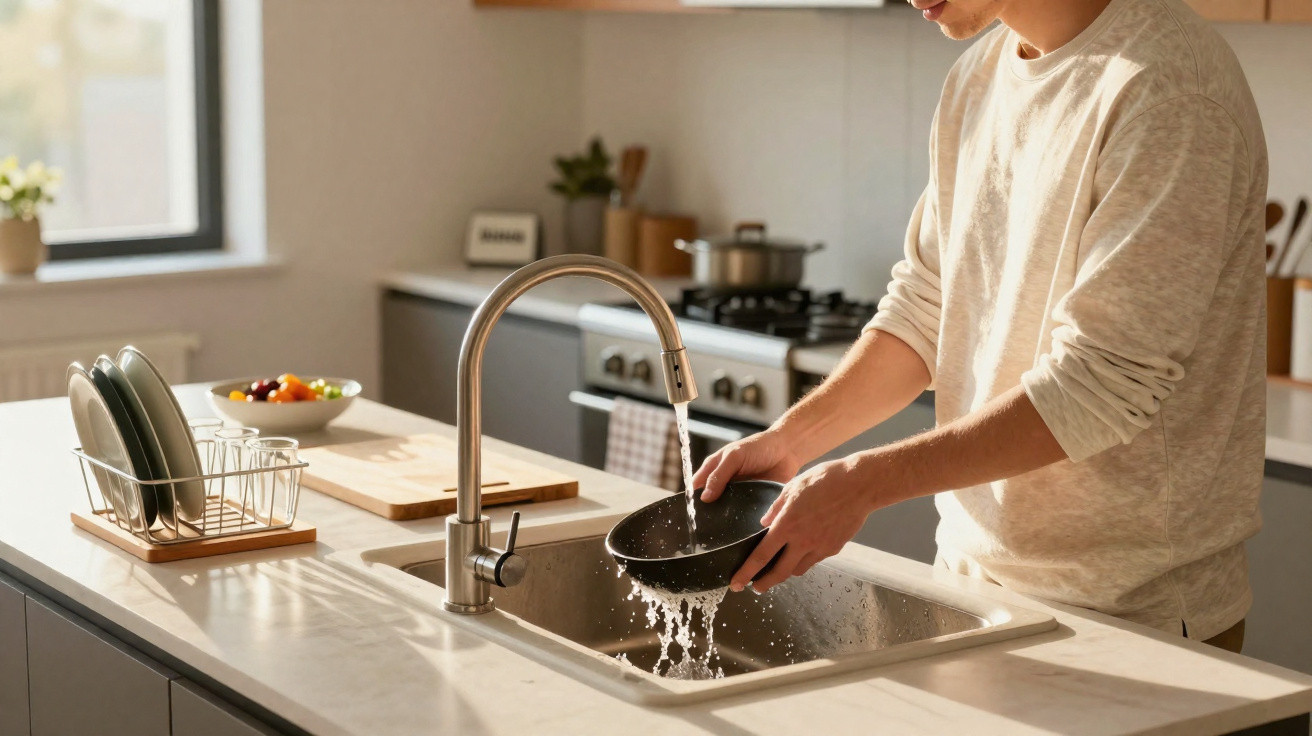
It is 21:37, and the light above the worktop is still on. The dinner plates are lined up, with a wide streak of tomato sauce running across one rim like a minor mishap. Cutlery is piled in the sink, beside it sits a lone saucepan with pasta stuck to the bottom. Someone calls from the living room: “Are you coming? The film is starting!” Then comes that tiny moment of choice. Do I stay in the kitchen for another minute, or dash away and hope the pile of washing-up somehow disappears overnight? This unremarkable crossroads determines what your kitchen will look like tomorrow morning. And how your day will begin. A clean kitchen does not start in the morning. It starts right here.
The one habit that changes everything
The unglamorous, almost dull truth is this: the one habit that genuinely keeps kitchens clean is dealing with things straight away. It is not the major cleaning session on Saturday, but the small response immediately after cooking. Rather than leaving plates “just for a moment”, put them straight into the dishwasher. Wipe the worktop before sauce splashes dry on. Rinse the frying pan while it is still warm. It sounds obvious and can occasionally feel irritating. Yet these few minutes decide whether your kitchen becomes a permanent building-site feeling or a room you are happy to enter in the morning. It is a small agreement with yourself: I will not leave behind anything that will annoy me later.
We all know how it goes: an evening when you decide not to tidy up “just this once” is rarely an isolated occasion. Yesterday’s saucepan suddenly remains beside today’s frying pan, then two glasses join them, followed by a lunch box from work. By the third day, even making a sandwich creates chaos. In a household survey, many people said they feel more stressed in a messy kitchen before the day has properly begun. Not because it is as dirty as a commercial kitchen after a Saturday night, but because it carries that lingering sense of “I’m falling behind”. A small pile of washing-up can suddenly become a symbol of everything else you are not managing to get done.
The reasoning is surprisingly straightforward. Once washing-up is left out, it creates a kind of visual permission to add more things to it. One plate acts like a magnet. Psychologically, it is almost unfair: our brains quickly become accustomed to seeing clutter and eventually barely register it consciously. That makes the barrier to getting started even higher. If you train yourself to finish tasks immediately, your kitchen stays in a state your mind stores as “normal”. A saucepan left out then starts to feel disruptive, rather than the other way round. The one habit, then, is not really cleaning at all; it is breaking the habit of putting things off.
How dealing with things straight away works in everyday life
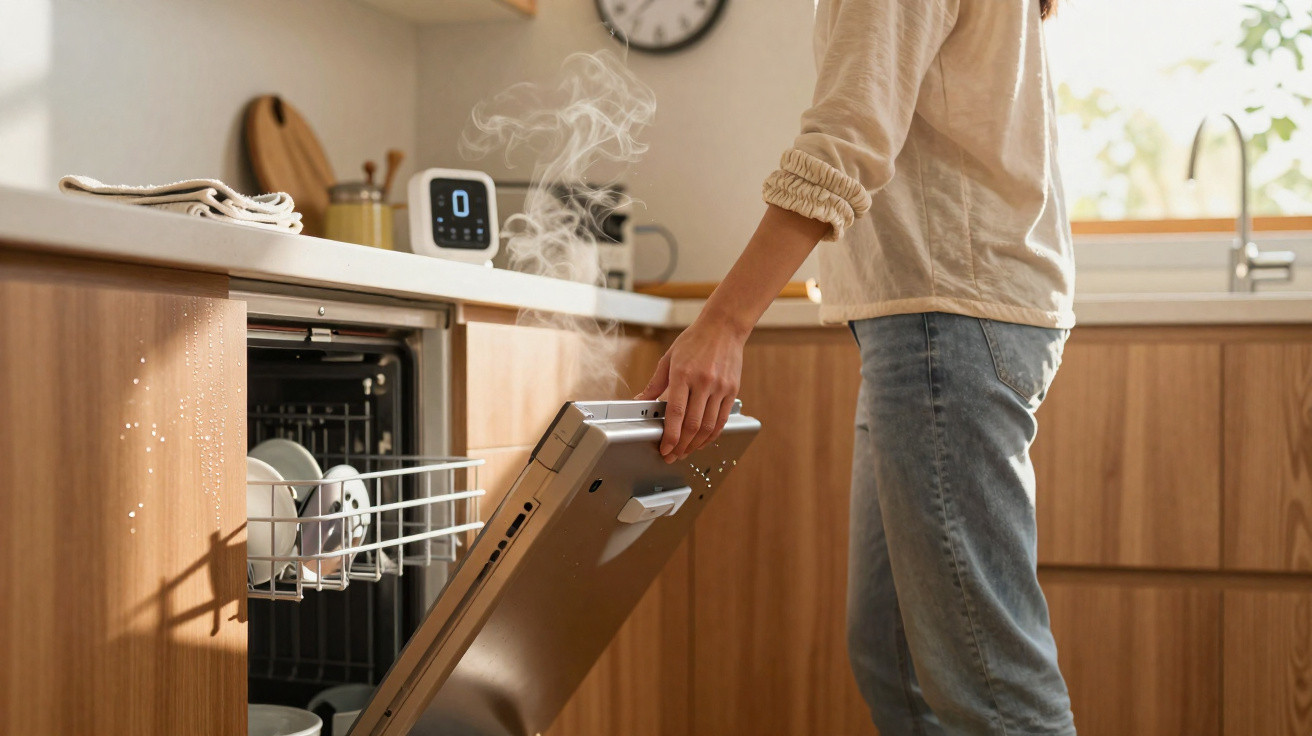
The simplest approach is an invisible five-minute rule. Before leaving the kitchen, do anything that takes no more than five minutes. No lengthy deliberation and no internal debate. Put the plates in the dishwasher, give the saucepan a quick scrub with the brush, wipe the worktop once and sweep crumbs into the bin. Think of it as a tiny closing ritual after every meal. Just as some people automatically switch off the hallway light before bed, take one last mental look around the kitchen: has anything been left that will bother me tomorrow? If so, do it now rather than later. This mini-routine takes discipline at first, but it surprisingly quickly becomes an automatic gesture.
The most common stumbling block is the phrase “I’ll do it in a minute” - the secret sibling of “I’ll start exercising tomorrow”. Let us be honest: nobody manages it every single day. There will be days when you are tired, ill, irritated, in love, stressed or simply lazy. It would be dishonest to claim that a kitchen must always shine. The point is different: when dealing with things immediately is your default, exceptions can still happen. One evening of pizza boxes is then not a disaster, but genuinely just one evening. However, if you skip your ritual three or four times in a row, the balance quickly tips. Allow yourself ordinary human lapses without questioning the underlying habit.
“The cleanest kitchen is not the one where nothing is ever left out. It is the one where nothing is left out for long.”
- Introduce a mini-ritual after every meal
- Only tackle what fits into five minutes - not the entire household
- It is better to spend 7 minutes each evening than 70 minutes once a week
- Do not dramatise mess; calmly “breathe it away” and put it away
- Deliberately give the kitchen one quick look before leaving the room
Why a clean kitchen changes more than its appearance
A tidy kitchen feels different before you have even properly looked at it. The air seems lighter, your movements are smoother and your eyes do not first have to count obstacles. People often say that a clear kitchen makes them more inclined to cook, eat more healthily and try new recipes. The hurdle is lower when you do not first need to make space. At the same time, the guilty feeling in the back of your mind eases - that vague “I really should...”. In an already busy everyday life, every unnecessary source of stress quietly drains energy. A reasonably clear kitchen can be a small but reliable anchor point: a place where you do not feel as though you have failed.
Interestingly, the habit of dealing with things straight away soon carries over into other areas of life. Once you begin tidying up immediately after cooking, you may start wondering why shoes stay in the middle of the hallway for so long. Or why a used glass remains on the coffee table in the living room when the sink is only three extra steps away. You are training your brain to “finish rather than postpone”. It is nothing dramatic, more like gently resetting a compass. Suddenly, a cluttered kitchen table no longer feels “normal”, but like something that takes more energy from you than the two minutes needed to clear it.
Viewed entirely practically, a clean kitchen is not a moral standard but a useful one. Grease marks harden, washing-up water turns cloudy and smells settle in. What takes three wipes today may require cream cleaner and considerable elbow grease tomorrow. Those with little time benefit most from dealing with things straight away because it divides cleaning into tiny portions. Instead of scrubbing burnt-on marks for half an hour on Sunday, you spend a few minutes on Monday, Tuesday and Wednesday. It may seem unremarkable, but that is where the quiet luxury lies: work that never becomes a big job in the first place. And a room that never fully conspires against you.
It is striking how much this one habit is also a conversation with yourself. When you put things away straight away, you are essentially telling yourself: “I treat the place where I nourish myself with respect.” That sounds more grand than it is in everyday life. In reality, it is made up of small, almost silent gestures - the cloth that is always within reach, the drawer that is closed again immediately. Perhaps this approach reminds you of your grandmother’s kitchen, which always seemed somehow orderly despite constant cooking. Or perhaps it is an entirely new standard you want for yourself because you are tired of feeling that you are always catching up with tidying. A clean kitchen is not a Pinterest project; it is the result of tiny, unremarkable choices. Every day. Sometimes despite your inner resistance. That is precisely where its quiet strength lies.
| Key point | Detail | Benefit for the reader |
|---|---|---|
| Dealing with things straight away as a habit | Complete small tasks immediately after cooking | Less visible chaos and no overwhelming backlog of cleaning |
| Five-minute rule | Only do tasks that take no more than five minutes | A low barrier to starting that fits easily into any routine |
| Emotional effect | Less underlying stress and greater ease | More energy and more desire to cook and maintain healthy routines |
FAQ:
Question 1: I often have no energy left in the evening - how can I still begin this habit?
Start with just one tiny goal: for example, always leave the worktop clean. Do not aim for perfection; simply choose one fixed, small step. Once that is established, the rest will almost follow on its own.Question 2: What if I do not have a dishwasher?
A clear system helps: fill a bowl or sink with hot water straight after eating, quickly rinse only the plates and cutlery, and deal with the rest later. The important thing is making a start, not achieving complete perfection.Question 3: How do I persuade housemates or my partner to join in?
Do not only talk about “tidiness”; explain the feeling behind it: walking into a relaxed kitchen in the morning. Agree simple rules, such as everyone putting away their own dishes immediately and no shared pile.Question 4: My kitchen is already completely chaotic - where should I start?
Choose one area: the sink or the worktop. Clear and clean only that space completely. From then on, apply the deal-with-it-straight-away rule there. Order will grow bit by bit instead of overwhelming you.Question 5: How do I keep going long term without slipping back into old patterns?
Link the habit to something you already do: for instance, put on music immediately after eating and tidy up for “the length of one song”. Once the process is attached to a routine, it becomes much more stable.

Comments
No comments yet. Be the first to comment!
Leave a Comment